

More news on this day
Thousands of passengers across Europe faced hours-long waits and missed connections as air traffic data showed 1,899 delayed flights and about 50 cancellations affecting major hubs in Spain, England, France, Italy, Ireland and the Netherlands, disrupting operations for KLM, British Airways, ITA Airways, Ryanair and several other carriers.
Get the latest news straight to your inbox!
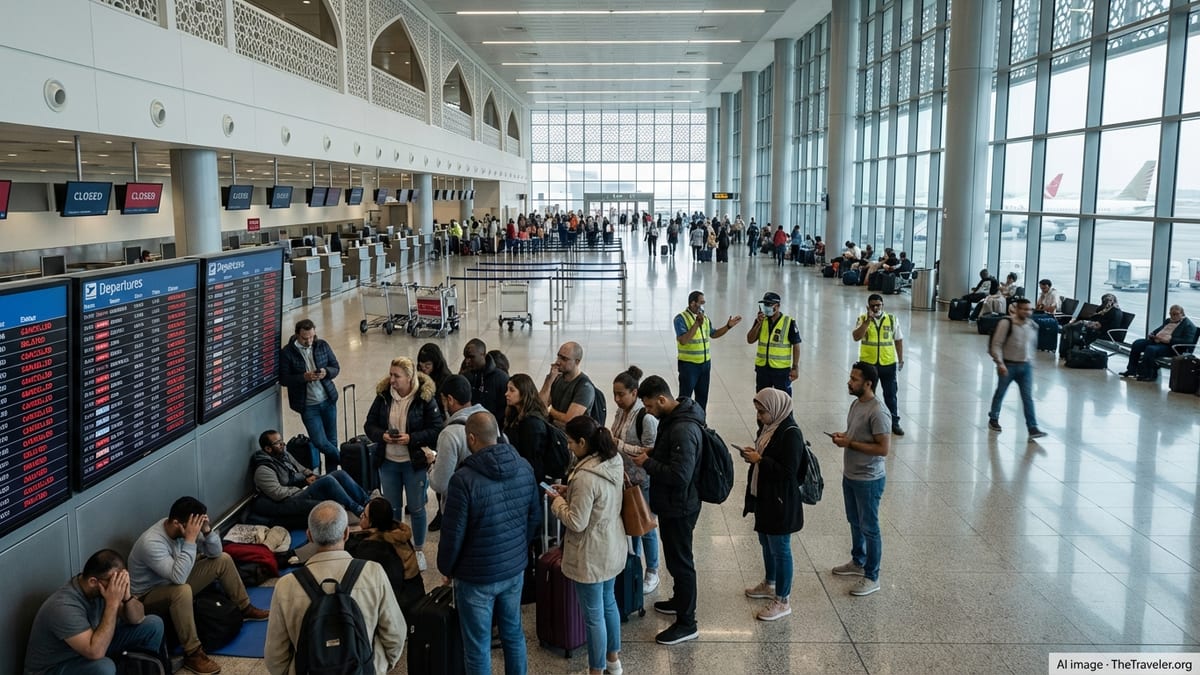
Major Hubs in London, Paris, Rome and Madrid Buckle Under Strain
Published flight-tracking and aviation-analytics data for early April indicate that disruption has been concentrated at Western Europe’s largest airports, including London’s main hubs, Paris Charles de Gaulle and Orly, Rome Fiumicino, and Madrid Barajas. These airports serve as primary transfer points for intra-European and long-haul traffic, turning local operational issues into continent-wide knock-on delays.
In London, where British Airways and several low-cost carriers run dense short-haul schedules, clustered departure delays led to tight turnaround times and missed slot allocations, compounding congestion throughout the day. Reports from recent operational summaries suggest Heathrow has consistently been among the European airports with the highest number of cancellations when schedules come under pressure, a pattern that appears to be resurfacing this week.
Paris and Amsterdam, key hubs for Air France and KLM respectively, are also featuring prominently in delay statistics. Recent network disruption over the past week has shown that even a modest number of outright cancellations by these carriers can mask a far larger pool of flights departing more than an hour behind schedule, as limited spare aircraft and crew availability reduce flexibility.
Further south, Rome and Madrid have been contending with their own constraints. Publicly available airport and airline data for late March highlighted how ground handling bottlenecks in Spain, including at Madrid Barajas, already created long queues and baggage delays. Those strains are now feeding into early April operations, with late-arriving aircraft from earlier rotations forcing airlines to hold departures or reassign aircraft at short notice.
Spain, France and Italy Exposed by Ground Handling and Capacity Issues
The current wave of disruption is unfolding against a backdrop of structural challenges in several key markets, particularly Spain, France and Italy. In Spain, recent industrial action affecting ground handling at multiple airports led to hundreds of delayed departures at the end of March. While that action has eased, recovery of aircraft positioning and crew rosters has lagged behind, leaving fragile schedules vulnerable to relatively small operational shocks.
France continues to grapple with recurring capacity constraints and air traffic management restrictions. Eurocontrol reporting for the first months of 2026 has pointed to elevated air traffic flow management delays in French airspace, often multiplying down-route as aircraft transit towards the UK, Spain and Italy. For airlines such as Air France, easyJet and Vueling, which operate dense point-to-point networks through French airports, this can quickly translate into rolling delays throughout the day.
Italy has also experienced transport-system strains this year, including widely reported infrastructure and security incidents on its rail network. While unrelated to aviation directly, these events underscore the broader fragility of national transport logistics. At airports such as Rome Fiumicino and Milan Malpensa, tight staffing levels and high traffic volumes mean recovery from any disruption is slow, particularly for carriers relying on quick aircraft turnarounds.
Combined, these factors help explain why Spain, France and Italy are again appearing among the countries with the highest counts of delayed and cancelled flights. The latest figures of roughly 1,899 delays and about 50 cancellations in a single day align with wider seasonal trends, where European aviation data for January and March already showed thousands of disrupted flights across the continent on peak days.
Impact on KLM, British Airways, ITA Airways, Ryanair and Other Carriers
The operational stress is being felt most clearly at airlines whose business models depend on tight scheduling and dense short-haul networks. Low-cost carriers such as Ryanair, along with network airlines like KLM, British Airways and ITA Airways, have all been listed among the operators with significant delays or cancellations in recent daily disruption summaries.
Ryanair, which bases large fleets at airports in Ireland, the UK, Spain and Italy, is particularly exposed when multiple national airspaces experience restrictions simultaneously. Even if the airline maintains a relatively low formal cancellation rate, long rotations across several countries means a delay early in the day can cascade through four or five subsequent flights, compounding passenger frustration.
KLM and its partners are facing similar challenges in the Netherlands, where Amsterdam Schiphol remains a key European transfer hub. Recent coverage of network performance in March already highlighted triple-digit daily delays for KLM alone on some days, signaling how quickly a hub-and-spoke operation can be knocked off balance when severe weather, staffing issues or airspace restrictions occur elsewhere in Europe.
British Airways and ITA Airways, with their main bases at London Heathrow and Rome Fiumicino, are also heavily represented in the affected schedules. Publicly available flight-performance reports in recent weeks showed British Airways repeatedly among the European carriers with the highest number of delayed flights on days of widespread disruption, while ITA has been working to stabilize its schedule amid strong seasonal demand and limited spare capacity.
Ireland and the Netherlands Feel the Knock-On Effects
Ireland and the Netherlands, both heavily reliant on aviation for international connectivity, are feeling the secondary impacts of constraints originating elsewhere in Europe. Dublin and Amsterdam serve not only as gateways to their home countries but also as transfer points for transatlantic traffic and onward European itineraries, so any disruption reverberates widely.
For Ireland, Ryanair’s large presence at Dublin and other Irish airports, combined with continuing tensions over fuel costs and regional airspace restrictions related to the Middle East, has kept schedules tight. When connecting flights from Spain, France or Italy arrive late or are cancelled, aircraft and crews are left out of position, prompting delays on services that were otherwise planned to operate normally.
In the Netherlands, Amsterdam Schiphol’s status as KLM’s primary hub magnifies these issues. Data and anecdotal traveller reports from the first quarter of 2026 describe instances where a relatively small number of outright cancellations at Schiphol corresponded with dozens of late departures and missed connections for transfer passengers. That pattern appears to be repeating as delays ripple through networks in early April.
These knock-on effects mean that even passengers flying between seemingly unaffected city pairs can find themselves caught up in the wider disruption. A flight from Amsterdam to a smaller regional airport, for example, may be delayed because the aircraft is arriving late from Spain or Italy, leaving travellers with little visibility on the root cause of their delay.
What Passengers Can Expect in the Coming Days
Industry data and recent trend analyses suggest that the current level of disruption, with nearly 1,900 delayed flights and dozens of cancellations on peak days, is unlikely to ease immediately. Aviation performance reports for January and February showed that European networks were already operating close to capacity in many airspaces, meaning any new weather disturbance, industrial action or technical outage can easily trigger widespread effects.
Passengers flying through London, Paris, Amsterdam, Rome, Madrid and major Irish airports over the coming days should be prepared for potential schedule changes, including last-minute gate swaps and extended wait times on the ground. Travel-rights organizations continue to emphasize that under European passenger-protection rules, travellers on flights delayed by several hours or cancelled at short notice may be entitled to care, rerouting and, in some circumstances, financial compensation.
Publicly available guidance from airlines and consumer groups advises travellers to monitor their flight status frequently through official airline channels and airport information boards, and to keep digital copies of boarding passes and receipts for any extra expenses incurred. While airlines are gradually rebalancing their fleets and crew rosters, the legacy of delays from late March and early April means Europe’s skies may remain congested and prone to further disruption in the short term.