

More news on this day
Air travel across Europe faced severe disruption this weekend as more than 100 flights were cancelled and over 1,300 delayed across Germany, the United Kingdom, France, Italy, Ireland and other countries, leaving thousands of passengers stranded or scrambling to rebook at major hubs including Paris, London, Munich and Amsterdam.
Get the latest news straight to your inbox!
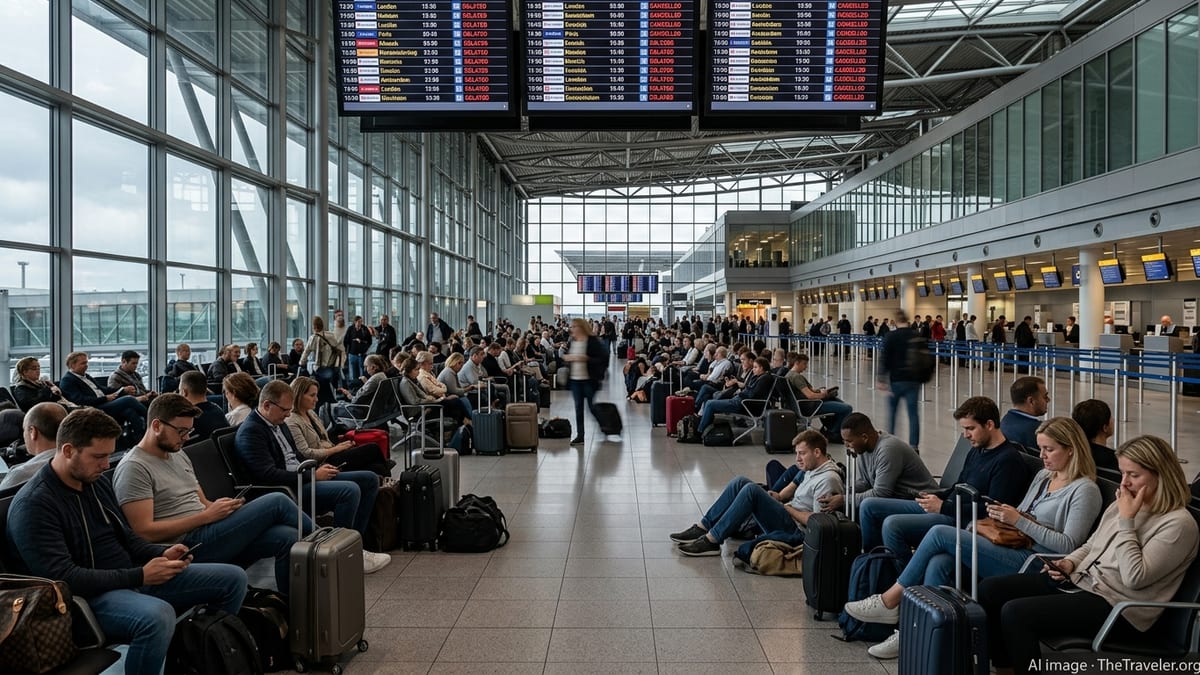
Wide‑Ranging Disruptions Across Major European Hubs
Flight tracking data and European aviation updates indicate that a combined 108 flights were cancelled and around 1,360 were delayed over a 24 hour period, affecting a swath of airports in Western and Central Europe. Services operated by British Airways, Lufthansa, Swiss, SAS and other carriers were among those most heavily impacted, with ripple effects stretching across domestic and long haul networks.
London, Paris, Munich and Amsterdam saw some of the most visible disruption as bad weather, capacity constraints and ongoing industrial unrest converged. Knock on delays meant that even routes not directly affected by cancellations experienced significant schedule slippage, with passengers reporting missed connections and extended waits in crowded terminals.
In several cases, aircraft and crew became out of position for subsequent rotations, compounding initial problems. Publicly available operational summaries show that once early morning flights were delayed or cancelled, afternoon and evening departures at key hubs increasingly struggled to recover, contributing to the high overall delay count.
The disruption was not confined to a single country or airline, which made rerouting more complex. With multiple hubs simultaneously affected, options to rebook passengers on alternative same day services were limited, especially on popular business routes and long haul connections.
British Airways, Lufthansa, Swiss and SAS Face Network Strain
British Airways, operating primarily from London Heathrow and London Gatwick, experienced a wave of delays on short haul routes to European capitals as well as select long haul departures. Aviation monitoring platforms showed departure boards with a mix of late departures and a smaller number of outright cancellations, particularly on services to and from mainland Europe where weather and congestion were most acute.
Germany’s Lufthansa, already navigating recent strike activity and a tightly scheduled network, saw cancellations and long delays on services touching Frankfurt and Munich. Social media posts and passenger forums described overnight rebookings, missed onward connections and difficulty securing alternative flights on already busy routes to and from North America, Asia and the Middle East.
Swiss and SAS were also drawn into the wider disruption. Swiss services linking Zurich and Geneva with London, Paris and other European hubs encountered substantial delays, while SAS flights connecting Scandinavia with continental Europe and the United Kingdom were affected by slot restrictions and knock on congestion. Combined, these impacts created a patchwork of irregular operations across alliances and codeshare partners.
Because many itineraries were sold as through tickets across multiple carriers, delays on one segment frequently cascaded across entire journeys. Passengers reported being moved between British Airways, Lufthansa, Swiss, SAS and partner airlines as carriers attempted to keep travellers moving despite limited spare capacity.
Stormy Weather, Strikes and Capacity Limits Combine
The latest wave of disruption comes in the context of an unsettled late winter and early spring period for European aviation. Recent European windstorms have brought strong crosswinds, heavy rain, fog and snowfall to parts of the United Kingdom, France, Germany, the Netherlands and Italy, periodically reducing runway availability and forcing ground handling pauses at major hubs.
Industrial action has added another layer of complexity. In Germany, strike activity among aviation workers has repeatedly affected schedules at major airports, prompting precautionary cancellations by Lufthansa and associated carriers. Elsewhere in Europe, air traffic control and ground handling staff shortages have periodically limited the number of aircraft that can safely move through already congested airspace.
Capacity constraints at busy hubs such as London Heathrow, Paris Charles de Gaulle and Amsterdam Schiphol mean that once delays begin to accumulate, recovery can be slow. Airport and airline data show that even relatively small numbers of cancellations can create extended knock on effects because there is little slack in schedules and limited spare aircraft available to step in.
Publicly available statistics from European aviation bodies have repeatedly highlighted how tightly wound the system remains, with high load factors and dense scheduling leaving little margin for error when weather, strikes or technical issues intervene.
Passengers Face Long Queues, Missed Connections and Overnight Stays
For passengers, the immediate impact of the latest disruption was visible in long check in and customer service lines, crowded departure halls and improvised overnight stays in airport hotels and seating areas. Travellers shared images and accounts of busy terminals at London, Paris, Munich, Amsterdam and other affected airports as they waited for updates on revised departure times.
With flights cancelled or heavily delayed, many passengers were forced to rebook for the following day or accept itineraries involving additional connections or longer total travel times. In some cases, travellers opted to purchase new tickets on alternative carriers when original options were no longer practical, hoping to claim reimbursement later under applicable regulations.
Families returning from school holidays, business travellers heading to time sensitive meetings and long haul passengers connecting through European hubs all reported disruption. Some described being rebooked automatically via airline apps or websites, while others sought assistance at airport service desks during already busy peak periods.
Travel forums and social channels reflected a mix of frustration and pragmatism, with some passengers advising others to monitor flight status closely, prepare for potential overnight delays and keep documentation of expenses incurred during extended waits.
What Travellers Should Know About Their Rights
For flights departing from or arriving in the European Union, as well as the United Kingdom, a framework of passenger rights generally applies when services are cancelled or heavily delayed. Under European air passenger regulations, travellers on eligible flights may be entitled to care, including meals and accommodation during long delays, and in some cases financial compensation depending on the cause and length of the disruption.
The level of assistance can vary based on flight distance, length of delay and whether the disruption is considered outside the airline’s control, such as severe weather or air traffic control restrictions. When cancellations occur, passengers are typically offered a choice between a refund of the unused portion of their ticket or re-routing at the earliest opportunity, subject to available seats.
Consumer advocates and travel specialists often recommend that affected travellers keep boarding passes, booking confirmations, receipts for meals and accommodation, and any written notices of delay or cancellation. These documents can be important when submitting claims to airlines or, if necessary, to national enforcement bodies or dispute resolution schemes.
Given the current pattern of weather related and industrial disruptions in Europe, publicly available guidance frequently advises passengers to allow extra connection time, travel with flexible itineraries where possible and check the status of flights repeatedly in the hours leading up to departure, rather than relying on a single early update.