

More news on this day
Air travel across Europe has been severely disrupted as 143 flights were cancelled and a further 1,273 delayed in a fresh wave of operational turmoil affecting major hubs from the United Kingdom and France to Germany, Italy and Scandinavia.
Get the latest news straight to your inbox!
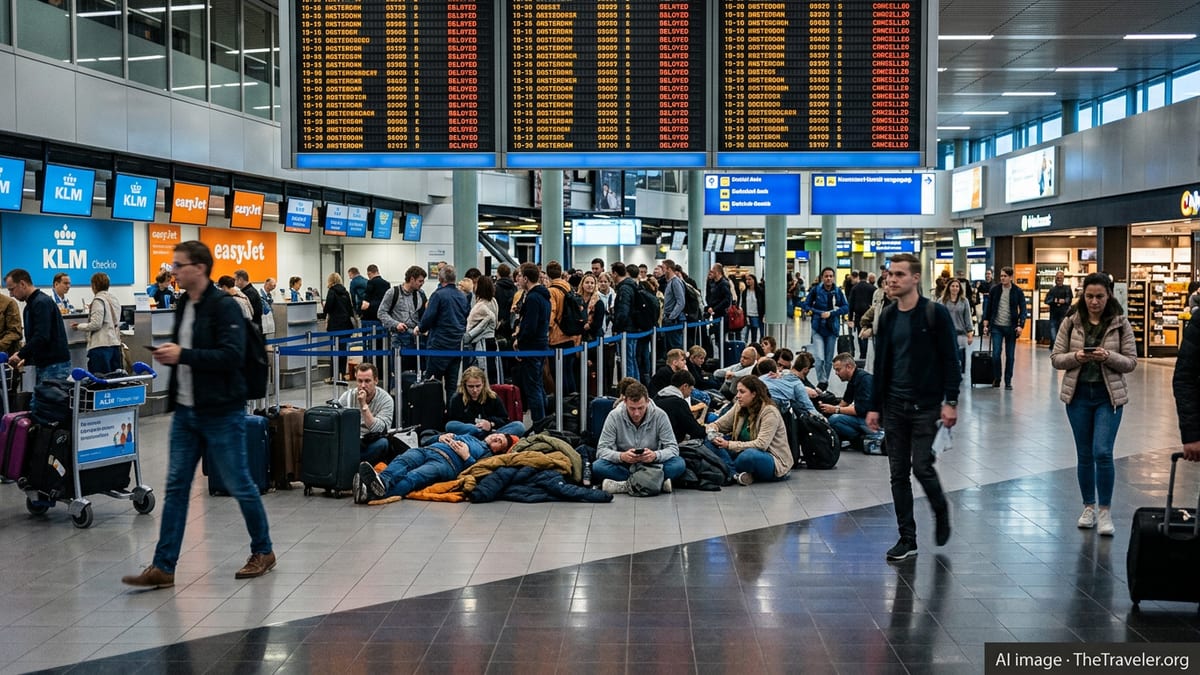
Major Hubs Struggle With a New Wave of Disruption
Published coverage indicates that the latest round of disruption has hit a broad swathe of European airspace, with airports in the United Kingdom, Denmark, France, Germany, Italy and the Nordic region among the most affected. Travel industry reports describe hundreds of passengers stranded or facing extensive waits as departure boards across multiple terminals filled with red and amber alerts.
The tally of 143 cancellations and 1,273 delays reflects a continent-wide pattern similar to several recent disruption spikes in late 2025 and early 2026, when widespread delays and more than a hundred cancellations were reported in a single operating day. The impact has again fallen heaviest on passengers using major hubs such as Frankfurt, Paris, London and key Scandinavian and Italian airports, where dense schedules leave limited room to absorb operational shocks.
Flag carriers and large network airlines, including Lufthansa, Swiss, Virgin Atlantic, British Airways and others, feature prominently in reports on the latest disruption. Low cost and regional operators have also been affected, particularly on intra-European routes where tight turnaround times and congested airspace make knock-on delays more likely.
Although the disruption has not reached the scale of historic shutdowns linked to volcanic ash or continent-wide IT failures, the concentration of delays and cancellations in a single day has again underscored how quickly European air travel can seize up when pressures accumulate.
Weather, Airspace Restrictions and Operational Strain Combine
Reporting from aviation data providers and travel platforms points to a familiar mix of causes behind the current wave of disruption. Adverse weather at several hubs has forced temporary traffic-flow restrictions, while periods of low visibility and strong winds have reduced runway capacity and slowed arrivals and departures.
At the same time, a patchwork of airspace constraints continues to complicate long-haul and regional planning. Recent incidents involving airspace closures and military activity in parts of the Middle East have already prompted wide reroutes on Europe to Asia and Europe to Gulf corridors, lengthening flight times and tightening aircraft availability. When those pressures intersect with local bottlenecks in Europe, even short-lived restrictions can trigger long sequences of late arrivals and missed connections.
Operational challenges at airport and airline level, including staffing imbalances and tight aircraft rotations, further amplify the problem. Analyses of recent months show that when carriers operate highly intensive schedules, even minor early-morning delays can cascade across the day and ultimately contribute to cancellations late in the schedule. That pattern appears to be repeating in the current disruption, with late-evening flights and regional feeders among the most vulnerable.
Industry observers note that while each disruption spike has its own specific trigger, the underlying risk factors remain consistent: crowded skies, busy hubs operating close to capacity, and a system where small shocks can rapidly become cross-border issues.
Passengers Face Long Queues and Missed Connections
For travelers, the immediate impact has been felt in long queues at check-in, security and customer service desks as passengers attempt to rebook or reroute. Social media posts and travel-platform updates describe crowded terminals, with rolling departure time changes and late gate information contributing to confusion.
Reports indicate that connecting passengers have been particularly hard hit. With cluster delays affecting departures across multiple hubs, missed onward flights have forced many travelers into unplanned overnight stays or lengthy detours via secondary airports. This echoes previous disruption days in late 2025 and early 2026, when large numbers of passengers were stranded in transit hubs after widespread rolling delays.
Families heading for school holidays and business travelers on tight itineraries are among those most affected, especially on popular routes linking the United Kingdom, Germany, France, Italy, Spain and the Nordic region. Airports that serve as gateways between Europe and long-haul destinations in North America, the Middle East and Asia have also seen queues build quickly as disrupted flights create bottlenecks at immigration and baggage reclaim.
Travel advisors and passenger-rights organizations continue to recommend that travelers monitor airline apps and airport information screens closely, arrive early for departures, and keep essential items in hand luggage in case checked bags are delayed during irregular operations.
Spotlight on EU261 Rights and Possible Compensation
The latest wave of disruption has once again drawn attention to passenger protections under European Union rules. Regulation EC 261/2004 sets out common standards for compensation and assistance when flights are cancelled, heavily delayed or when boarding is denied. Under these rules, eligible passengers on flights departing from EU, EEA and certain aligned airports may be entitled to fixed-sum compensation, meals, refreshments, hotel accommodation and rebooking options, depending on the circumstances.
Legal and consumer guidance emphasizes that compensation often hinges on whether the disruption was within an airline’s control or caused by extraordinary circumstances such as severe weather or certain air traffic management restrictions. When airlines cite such extraordinary events, passengers may still be entitled to care and rerouting, even if cash compensation is not payable.
In recent months, specialist claims firms and consumer advocates have reported increased demand as travelers seek redress for delayed and cancelled flights across Europe. With 143 cancellations and 1,273 delays recorded in the current episode, similar patterns are expected, particularly if investigations attribute a significant share of problems to operational or staffing decisions rather than unavoidable external events.
Travelers are being urged in public guidance to retain boarding passes, booking confirmations and any written communication from airlines, as this documentation can be important when asserting rights or pursuing later claims.
What Today’s Chaos Signals for Europe’s Peak Travel Season
The disruption comes as European aviation prepares for another busy spring and summer, with demand data and booking trends pointing to passenger volumes approaching or surpassing pre-pandemic levels on many routes. Airline capacity has grown steadily, and airports report that peak-period movements are again pressing against infrastructure and staffing limits.
Industry analyses of recent months suggest that, without additional resilience measures, Europe may face recurring bouts of travel chaos when severe weather, strikes, IT glitches or airspace constraints coincide with already stretched operations. Episodes such as the current one, featuring more than a thousand delayed flights and over a hundred cancellations in a short time frame, are viewed by analysts as warning signs for the months ahead.
Some carriers and airports have already signaled adjustments ahead of the high season, including schedule smoothing, additional buffer time in rotations, and targeted recruitment for ground handling, security and air traffic management roles. However, the effectiveness of these efforts will only become clear as peak travel weekends arrive.
For travelers planning trips in the coming weeks, the latest disruption serves as a reminder to build flexibility into itineraries, consider longer connection times and monitor developing conditions at key hubs. While Europe’s aviation network remains capable of moving millions of passengers each week, the events surrounding 143 cancellations and 1,273 delays highlight how sensitive that system remains to sudden stress.