

More news on this day
Europe’s air travel network is facing another wave of disruption as data from flight-tracking and airport monitoring platforms indicates that 231 flights have been cancelled and around 1,449 delayed across major hubs in Germany, England, the Netherlands, Portugal and Denmark, affecting carriers including Lufthansa, easyJet, SAS, KLM, Iberia and several smaller operators.
Get the latest news straight to your inbox!
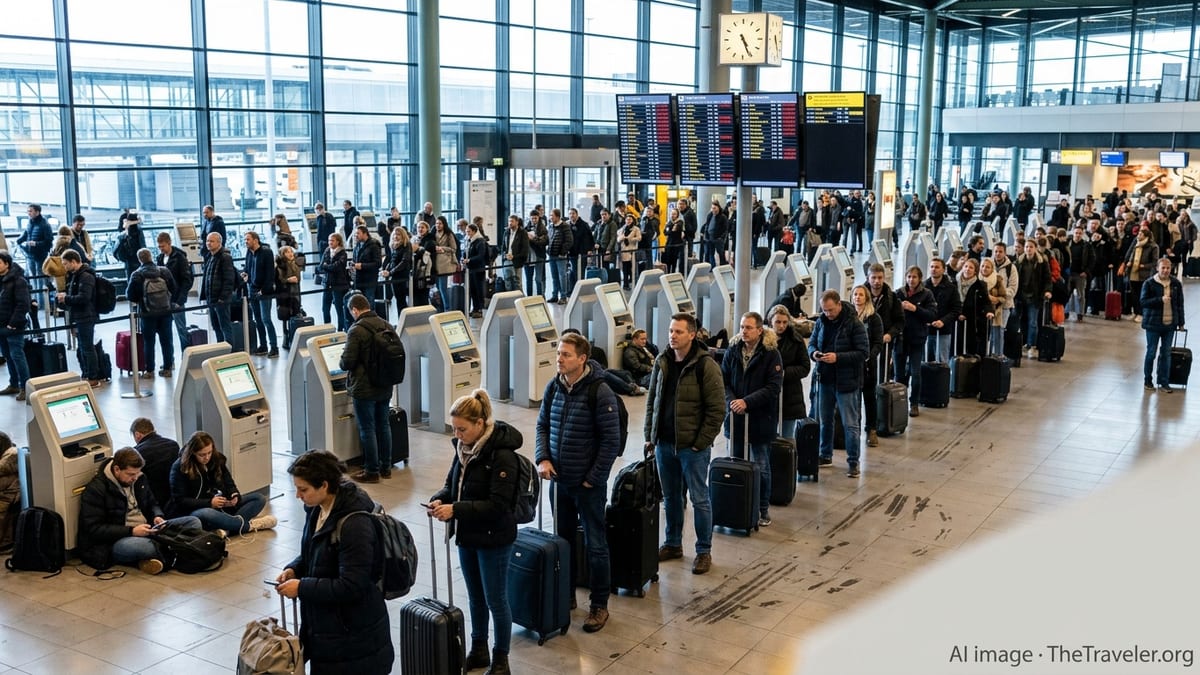
Major Hubs Struggle Under Fresh Wave of Disruption
The latest disruption is concentrated at some of Europe’s busiest airports, with Frankfurt, London’s main gateways, Amsterdam Schiphol, Madeira and Copenhagen all reporting clusters of cancellations and long delays. Publicly available statistics from aviation analytics platforms show that these hubs, which act as primary transfer points for the continent, have again become bottlenecks as schedules unravel.
Frankfurt and London remain particularly exposed because of their dense networks of connecting flights. Delays on early wave departures have translated into missed connections and aircraft out of position, pushing knock-on effects well into the evening. Reports indicate that services between the five affected countries are among the hardest hit, but ripple effects are visible on routes extending into Scandinavia, southern Europe and long haul destinations.
Amsterdam and Copenhagen, both critical links between northern and western Europe, have also seen significant pressure. Flight data summaries suggest that departures to and from these hubs have incurred some of the highest average delays of the day, leaving passengers facing prolonged waits at boarding gates and arrival halls as airlines work through congested schedules.
On the fringes of the mainland network, Madeira has again emerged as a particular pinch point. The island airport’s challenging weather and limited runway capacity mean that relatively small operational issues can quickly cascade into a series of cancellations and diversions, compounding the wider disruption experienced across the continent’s larger hubs.
Flag Carriers and Low Cost Airlines Both Affected
The disruption is cutting across airline business models, impacting major network carriers and low cost operators alike. Flight-tracking tallies cite cancellations and extended delays for Lufthansa services at Frankfurt, KLM and easyJet departures from Amsterdam and London, and SAS operations touching Copenhagen. Iberia flights connecting Iberian and northern European hubs have also appeared in recent disruption summaries.
Because many of these carriers operate complex hub and spoke networks, a single late arrival can affect several onward departures. When an aircraft misses its scheduled turnaround slot in Frankfurt or London, subsequent rotations to Amsterdam, Copenhagen or Madeira are often pushed back or cancelled altogether, leaving passengers scrambling to rebook.
Low cost and leisure focused airlines are not immune. Schedules published earlier in the season show dense patterns of flights linking northern capitals with vacation destinations in Portugal and Spain. When conditions deteriorate or capacity is constrained in one location, carriers such as easyJet can quickly build up queues of delayed aircraft and crews, with a visible impact on punctuality for the remainder of the day.
The breadth of airlines involved also complicates the response. With multiple operators sharing popular corridors, a disruption affecting one carrier’s early services can drive congestion at security and boarding areas that then slows down competitors, even when their own operations are running closer to schedule.
Weather, Strikes and Structural Strain Converge
The latest wave of cancellations and delays is unfolding against a backdrop of recurring shocks to Europe’s aviation system. In recent weeks, coverage across European media has pointed to a combination of adverse weather in the North Atlantic, localized storms around key hubs such as Madeira and northern Europe, and industrial action affecting parts of the network.
Earlier strike activity at German airports, including walkouts that disrupted Lufthansa operations, highlighted the vulnerability of major hubs when staffing or labor relations deteriorate. While today’s figures reflect a different operational picture, analysts note that schedules remain finely balanced after a winter of repeated interruptions, leaving little slack to absorb fresh disruptions.
Weather remains a persistent factor. Seasonal storms over the Atlantic and North Sea can force air traffic control capacity reductions, reroutings or temporary ground stops, particularly at coastal and island airports such as Madeira and exposed hubs in northern Europe. When these coincide with high travel demand days, cancellations can quickly escalate from isolated incidents into network wide headaches.
Structural issues within the European air traffic system also play a role. Industry reports have repeatedly flagged chronic congestion at a handful of major airports, including London, Frankfurt and Amsterdam, where runway and airspace slots are already close to capacity. In such conditions, even minor technical problems, late crews or aircraft maintenance issues can lead to disproportionate levels of disruption.
Passenger Impact From Frankfurt to Madeira
For travelers, the numbers translate into long queues, missed connections and, in some cases, overnight stays. Terminals at Frankfurt, Heathrow and Schiphol have reported heavy crowds as passengers whose flights were cancelled or heavily delayed seek rerouting options, while others wait out extended ground times for aircraft that have yet to reach the gate.
On Madeira, local media coverage describes a pattern of morning cancellations and diversions whenever crosswinds or low visibility exceed operational limits. With a smaller pool of daily flights and limited alternative routing options, passengers bound for or departing the island can face particularly long waits for the next available seat.
In Copenhagen and other northern hubs, disruption has been most visible on routes linking Scandinavia with Germany, the United Kingdom, the Netherlands and Portugal. Travelers on business and leisure itineraries have reported multi hour delays and late night arrivals as airlines attempt to complete as many rotations as possible despite squeezed operating windows.
The timing of the latest wave of disruption, coming at the start of the northern spring travel period, adds to the strain. Many flights are running close to full, reducing rebooking options and raising the likelihood that passengers whose flights are cancelled will need to accept significant schedule changes or overnight accommodation before onward travel becomes available.
What Travelers Can Expect in the Coming Days
While operations typically stabilize within a day or two after a major disruption, aviation data and previous episodes suggest that knock on effects can linger. Aircraft and crew positioning often remains out of sync with published schedules for several rotations, meaning that delays can persist even once weather patterns improve or staffing levels return to normal.
Industry commentary indicates that carriers are focusing on protecting core trunk routes between primary hubs such as Frankfurt, London and Amsterdam, while selectively trimming frequencies on secondary links to rebuild resilience. For passengers, that can translate into fewer same day alternatives if a flight is cancelled, particularly on thinner routes connecting to Madeira or smaller regional airports.
Regulations in the European Union provide a framework for compensation and care in cases of extended delay or cancellation, but entitlements depend on the cause of disruption and precise timings. Passenger advocacy organizations continue to advise travelers to keep boarding passes, monitor airline communications closely and document expenses incurred while awaiting rebooking.
With forecasts pointing to ongoing periods of unsettled weather and a busy calendar of travel in the months ahead, analysts expect Europe’s aviation network to remain under intermittent pressure. For now, today’s tally of 231 cancellations and 1,449 delays across five countries offers another reminder that even a mature, high frequency air travel system can be vulnerable when multiple stress factors converge.