

More news on this day
Europe’s already strained aviation network has been hit by a fresh wave of disruption, with current operational data indicating 261 flights cancelled and around 1,446 delayed across major hubs in Germany, Ireland, Denmark, Norway, England and neighbouring countries, affecting carriers including British Airways, Lufthansa, SAS, Air Nostrum and several regional operators.
Get the latest news straight to your inbox!
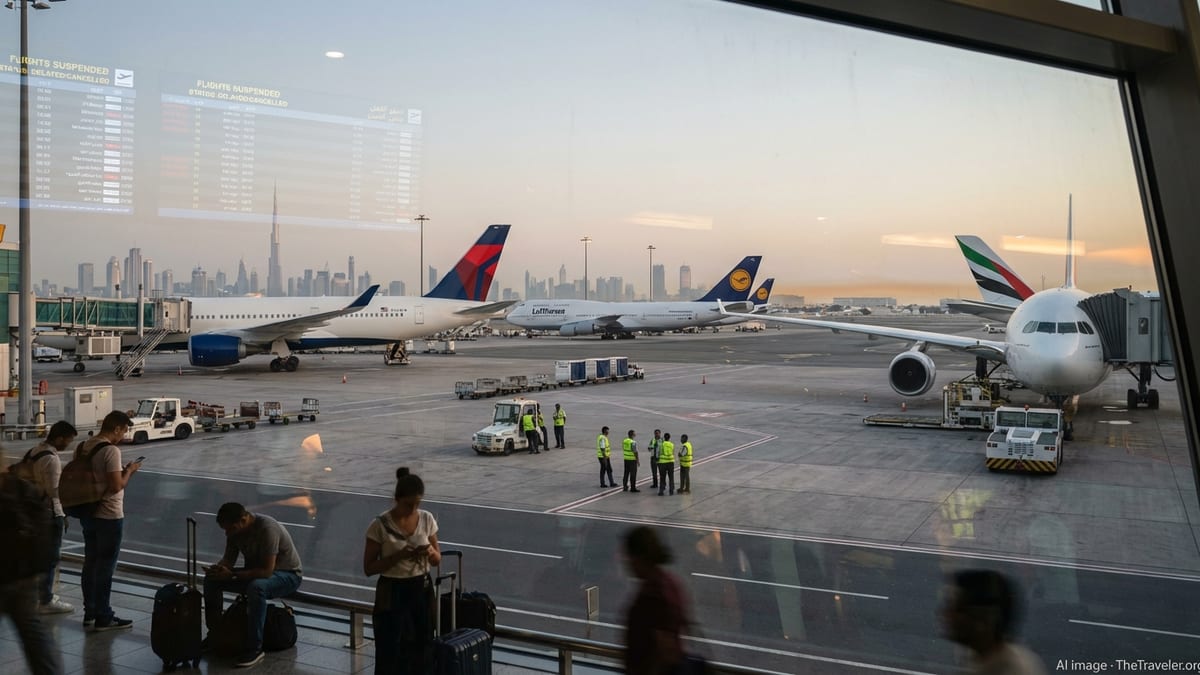
Major Hubs From Frankfurt To London Bear The Brunt
The latest figures point to widespread disruption at some of Europe’s busiest airports, including Frankfurt, Dublin, Copenhagen, Oslo and multiple London hubs. Flight tracking and airport monitoring data show cancellations and long delays stacking up across short and medium haul routes, particularly those linking German, Irish, Nordic and UK airports.
In Germany, Frankfurt has emerged as one of the focal points, with cancellations and rolling delays affecting Lufthansa and partner services on intra-European routes as well as connections to long haul networks. Publicly available operational updates indicate that knock-on delays are spreading to other German airports as aircraft and crew struggle to return to normal rotations.
In Ireland, Dublin is reporting growing queues at check in and security as morning disruption spills into the rest of the day’s schedule. Regional and transatlantic services are both affected, with passengers facing last minute gate changes and rebooking as airlines consolidate lightly loaded flights to free up capacity elsewhere in the network.
Data from Denmark and Norway show that Copenhagen and Oslo, usually regarded as relatively punctual Nordic hubs, are also contending with elevated levels of disruption. Scandinavian carrier SAS, along with other operators flying into the region, is reported to be managing a mix of cancellations and extended ground holds, particularly on services linking the Nordic capitals with London and continental European cities.
British Airways, Lufthansa, SAS And Regional Carriers Impacted
The disruption is cutting across airline business models, affecting major network airlines, low cost carriers and regional operators alike. British Airways services from London to German and Nordic destinations are among those experiencing delays and cancellations, while onward connections for transfer passengers are proving difficult to secure at short notice.
Lufthansa, a key operator at Frankfurt and a major connector for traffic across central Europe, is managing a particularly complex operational environment. When flights are cancelled or heavily delayed at a hub of this size, aircraft and crew quickly end up out of position, which in turn affects later departures across the airline’s network. Public data show this pattern repeating across several consecutive days.
SAS is also heavily exposed, given its role in linking Denmark and Norway with the wider continent. Disruptions at Copenhagen and Oslo are rippling through to secondary Scandinavian airports, where shorter runways, tighter schedules and fewer alternative services can make recovery slower once delays begin to accumulate.
Alongside these larger brands, regional airlines such as Air Nostrum and CityJet are feeling the strain. These carriers often provide feeder services into bigger hubs; when a long haul or trunk route is delayed or cancelled, the smaller connecting flights can be the first to be cut or rescheduled, leaving passengers in smaller cities with limited options.
Weather, Congestion And Industrial Tensions Combine
The current wave of disruption is unfolding against a backdrop of several overlapping pressures on Europe’s aviation system. Recent coverage across specialist travel outlets indicates that a sequence of spring storms and strong winds has affected operations at key airports, particularly around the North Atlantic corridor and the North Sea approaches that serve the UK, Ireland, Scandinavia and northern Germany.
Beyond weather, data published by European air traffic and performance monitoring bodies highlight persistent congestion and so-called reactionary delays, where a late arriving aircraft triggers a chain of subsequent delays as it attempts to catch up with its timetable. Even relatively modest weather disruption early in the day can therefore reverberate across the network well into the evening.
Industrial tensions in several countries are compounding these operational challenges. Reports in recent weeks point to strike actions and staffing shortages at airports and among ground handling providers in parts of Germany and other European states. While not every cancellation or delay is directly linked to industrial action, the reduced resilience in staffing levels makes it more difficult to absorb sudden surges in demand or adverse weather.
The result is a fragile system in which any single factor, such as a storm front or a localized technical problem, can tip multiple airports into rolling disruption. Travellers are increasingly finding that even flights departing from seemingly unaffected cities are delayed because their aircraft or crew have been held up elsewhere in the network.
Passengers Face Long Queues And Tight Rebooking Options
For passengers, the immediate impact is being felt in long queues at check in, security and customer service desks across the affected airports. Images and descriptions shared via public platforms and news coverage over recent days show crowded departure halls in London, Frankfurt, Dublin, Copenhagen and Oslo as travellers attempt to rebook or obtain information about their flights.
Because the disruption spans multiple countries at the same time, spare capacity on alternative services is limited. Many European routes are already running with high load factors in the spring travel period, meaning that same day rebooking is often difficult, particularly for larger groups or those requiring connecting itineraries.
Overnight disruption is also becoming more common as delays drift into late evening and early morning hours. Some travellers arriving at hubs late at night are finding that onward connections have already departed or been cancelled, with accommodation around airport zones rapidly booking up as airlines and passengers seek last minute rooms.
The pattern is especially challenging for business travellers and those with time-sensitive journeys, such as cruises, major events or family occasions. In many cases, publicly available information suggests that passengers are turning to rail or long distance coach services to bridge shorter cross-border journeys where possible, although these alternatives can themselves become crowded when the aviation sector experiences large-scale disruption.
Know Your Rights Under EU261 And UK261
The situation is once again drawing attention to passenger protections under European air travel rules. Regulation EC 261/2004, often referred to as EU261, sets out common standards for assistance and, in some cases, financial compensation when flights are cancelled or severely delayed. The framework applies to flights departing from airports in the European Union, as well as to services into the EU operated by EU-based carriers.
Following the United Kingdom’s departure from the EU, similar protections are provided under UK261 for flights departing from UK airports and for services into the UK operated by UK or EU airlines. In practice, this means that many of the flights currently disrupted between Germany, Ireland, Denmark, Norway and England fall under one of these two regimes.
Under these regulations, passengers whose flights are significantly delayed or cancelled are generally entitled to care and assistance. Public guidance from regulators and consumer organisations explains that this typically includes meals, refreshments, access to communication and, where necessary, hotel accommodation and transport between the airport and the hotel when an overnight stay is required.
Eligibility for cash compensation depends on several factors, including the length of the delay, the distance of the flight and the cause of the disruption. In cases where delays are attributed to extraordinary circumstances such as severe weather or certain types of air traffic control restrictions, compensation may not be payable, although the right to care usually still applies. Travellers are advised by consumer groups to retain receipts, keep boarding passes and request written confirmation of the cause and duration of any delay to support potential claims.