

More news on this day
European air travel faced another bout of turbulence on April 4, 2026, as publicly available flight status boards indicated at least 305 delayed and 45 cancelled services across the UK, Switzerland, the Netherlands and neighboring countries, disrupting operations for carriers including KLM, Ryanair, Iberia and others at hubs such as Dublin and Zurich.
Get the latest news straight to your inbox!
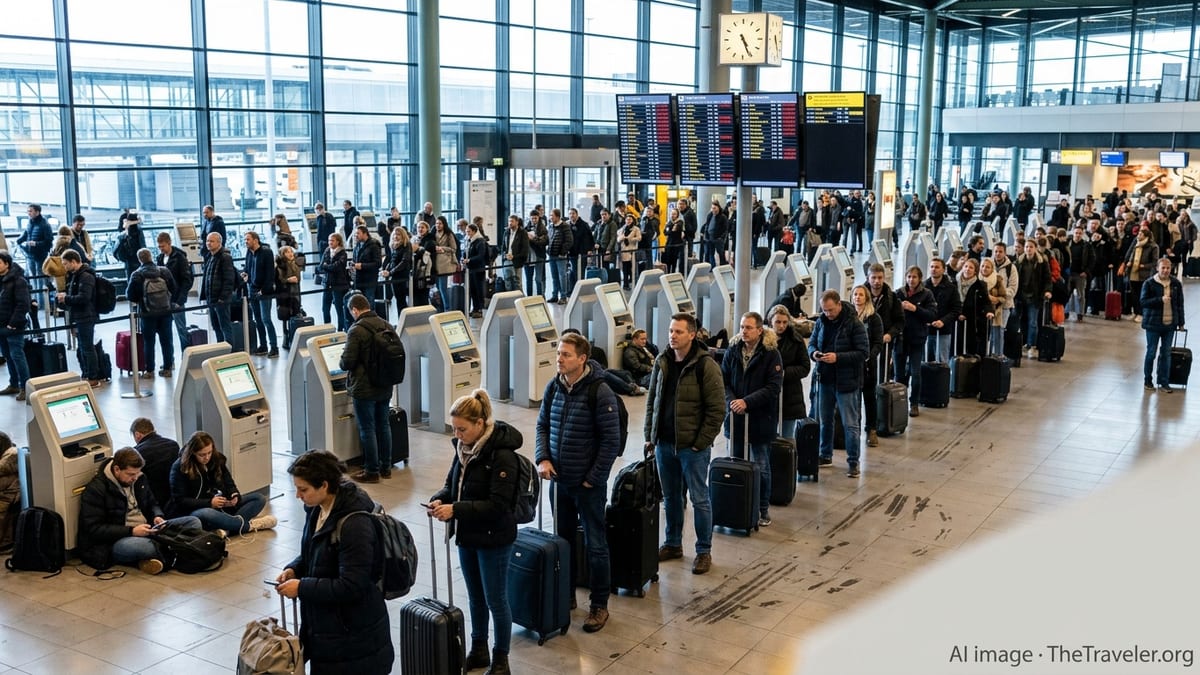
Widespread Disruption Across Northern and Western Europe
Reports from airport dashboards and aviation data aggregators on April 4 point to a concentrated band of delays and cancellations stretching across northern and western Europe, with the UK, Switzerland and the Netherlands among the most heavily affected. The tally of at least 305 delayed flights and 45 outright cancellations reflects a fresh wave of operational strain just as early spring traffic begins to build.
Amsterdam Schiphol, London area airports and Zurich feature prominently in the disruption picture, with knock-on effects at secondary airports handling connecting traffic. Published coverage describes dozens of services pushed back by more than an hour, forcing airlines to re-sequence aircraft and crews and compress already tight turnaround windows.
The pattern mirrors recent episodes in late 2025 and early 2026, when clusters of delays at a handful of large hubs rapidly spilled across the wider European network. Historic punctuality data for airports such as Dublin and Zurich already indicated relatively high average delay minutes per flight in peak periods, and the latest operational day appears to be testing those margins again.
While the precise combination of triggers varies by airport, early indications from aviation tracking services highlight a mix of weather-related constraints, air traffic flow management regulations and residual staffing pressures in ground handling and air traffic control as contributing factors.
Key Carriers Hit, Including KLM, Ryanair and Iberia
The disruption has significant implications for several of Europe’s best known airlines. Data from flight trackers on April 4 shows KLM facing rolling schedule pressure at Amsterdam, with outbound services to the UK and Ireland departing behind time and return sectors consequently compressing the evening schedule. As the dominant carrier at Schiphol, any operational squeeze on KLM tends to ripple swiftly through connecting itineraries.
Ryanair, which operates dense point to point networks across the UK, Ireland and continental Europe, appears prominently in the day’s delay statistics as well. Its large presence at Dublin and other regional airports means even relatively short holds can cascade into missed connections for passengers attempting informal self connections between low cost legs and long haul services.
Iberia and other flag and hybrid carriers are also feeling the effects. Services linking Madrid and Barcelona with northern European hubs such as Amsterdam, Zurich and London have recorded extended turnaround times, increasing the likelihood of missed onward connections to Latin America and Africa for some travelers. Additional regional operators, including Swiss and Aer Lingus, are reported to be managing pockets of disruption within their networks as they attempt to reposition aircraft and crews.
Smaller European and leisure airlines, which typically have thinner schedules and fewer spare aircraft, are particularly vulnerable when an entire rotation is lost to a cancellation. In those cases, passengers can be left waiting many hours, or even into the following day, for the next available departure on the same route.
Dublin, Zurich and Other Hubs Under Pressure
Dublin and Zurich are among the airports most visibly affected by the latest wave of disruption. Flight status boards at Dublin have shown arrivals and departures bunching through the afternoon and evening, revisiting a familiar pattern after earlier episodes in February in which hundreds of flights experienced delays or cancellations in a single day.
Zurich, a key connecting point for traffic between Europe and intercontinental destinations, is experiencing its own strains. Aviation data services tracking recent operations into and out of the Swiss hub have highlighted a series of late arrivals from other European cities, compressing minimum connection times for onward flights and forcing some rebookings. Previous punctuality reports already placed Zurich below some peer hubs on on time performance, and the latest figures are unlikely to improve that record.
Elsewhere, airports in the UK and the Netherlands are also grappling with infrastructure and capacity constraints. Amsterdam Schiphol has faced recurring bottlenecks linked to runway availability, terminal congestion and air traffic regulations, while UK airports continue to manage a busy schedule in the context of constrained airspace and ongoing sector wide staffing adjustments.
Even airports that are not at the center of today’s disruption may still see indirect effects. Aircraft and crews delayed in one country frequently operate later rotations elsewhere, meaning that an issue originating in Amsterdam or Zurich can ultimately translate into an unexpected delay hours later at a smaller regional field.
Passenger Impact and Rights Under EU261
For passengers, the immediate effects include missed connections, extended waits at departure gates and an uptick in last minute itinerary changes. Some travelers report being rebooked from direct flights onto multi leg routings via alternative hubs as airlines work to protect as many journeys as possible with constrained resources.
Publicly available consumer guidance notes that most passengers departing from or arriving in the European Union, the United Kingdom, Switzerland and several associated jurisdictions may benefit from protections similar to, or derived from, the EU261 framework. These rules can entitle eligible travelers to assistance such as meals, refreshments and hotel accommodation during long delays, as well as financial compensation in certain circumstances where the disruption is not caused by extraordinary events.
Specialist claims services and national enforcement bodies advise that eligibility often depends on factors including the length of delay at final arrival, the distance of the flight and whether the disruption was within the airline’s control. Weather related air traffic restrictions may fall outside compensation rules, while technical or staffing problems on the airline’s side are more likely to be covered.
Travel experts routinely recommend that passengers keep boarding passes and written notifications of changes, monitor their flight status through official airline channels and, where appropriate, file formal claims once their journey is complete. The clustering of delays on April 4 suggests that a significant number of travelers across Europe may now fall into that category.
Strategies for Travelers Facing Ongoing Disruptions
The latest disruptions come against a backdrop of elevated global air travel volatility in 2026, from weather and infrastructure challenges in Europe to airspace closures and schedule reductions affecting long haul connections through the Middle East and parts of Asia. For passengers planning trips through European hubs in the coming days, this broader context increases the value of cautious itinerary planning.
Independent travel advisories increasingly suggest allowing longer connection windows when routing through busy hubs such as Amsterdam, London, Dublin and Zurich, particularly when combining separate tickets on low cost and full service carriers. Booking through tickets on a single airline or alliance can also reduce the risk of being stranded, as the operating carrier has clearer responsibility to provide rebooking solutions when connections misalign.
On the day of travel, aviation analysts emphasize the importance of monitoring flights closely via airline apps and airport information screens, arriving early where feasible and being prepared for gate or timing changes at short notice. Passengers facing cancellations are often advised to act quickly to secure alternative options, as seat availability on later flights can shrink rapidly once disruption sets in.
With early spring demand building and the European network still exposed to weather and capacity shocks, the April 4 wave of 305 delays and 45 cancellations serves as another reminder that travelers may need to factor additional flexibility, time and contingency planning into their journeys across the continent in the weeks ahead.