

More news on this day
Thousands of air passengers across Europe are facing significant disruption today as 1,899 flights are reported delayed and around 50 services cancelled across key hubs in Spain, England, France, Italy, Ireland and the Netherlands, heavily affecting operations for KLM, British Airways, ITA Airways, Ryanair and several other carriers.
Get the latest news straight to your inbox!
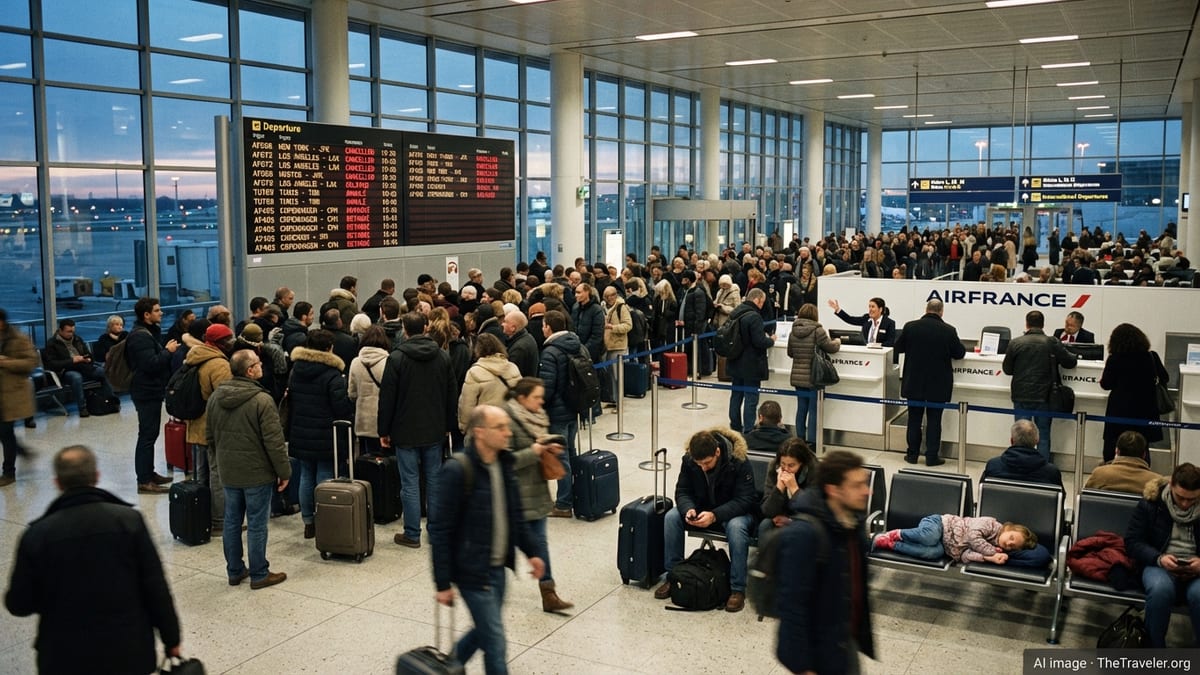
Major Hubs From London To Madrid Struggle With Knock-On Delays
Publicly available aviation data and recent disruption reports indicate that the latest wave of delays is concentrated at some of Europe’s busiest airports, including London Heathrow and Gatwick, Paris Charles de Gaulle and Orly, Amsterdam Schiphol, Rome Fiumicino, Madrid Barajas and Dublin. Together, these hubs handle hundreds of thousands of passengers per day, magnifying the impact when schedules start to slip.
Recent tallies from European disruption monitors show that on some days in late March and early April, more than 1,300 flights across the continent were delayed and over 50 were cancelled, with London and Paris frequently among the worst affected for both late departures and cancellations. Those patterns are repeating as airlines move into the busy spring travel period, leaving terminals crowded with passengers waiting for new departure times or rebooked itineraries.
Madrid Barajas in particular has recorded more than 200 disrupted flights in a single day this week, according to passenger rights trackers, while earlier compilations of data highlighted London Heathrow as one of Europe’s leading airports for outright cancellations. As delays accumulate at major hubs, even short disruptions in the morning can cascade into widespread schedule problems by afternoon and evening.
Smaller but strategically important airports in the UK and Ireland are also feeling the strain, with schedule cuts and retimed services between regional cities and London feeding into the broader network disruption. The combination of congested airspace, tight turnaround schedules and high passenger loads means that once problems arise, recovery can take many hours.
KLM, British Airways, ITA And Ryanair Bear The Brunt
Flag carriers and large low cost airlines are at the sharp end of the current disruption, simply because they operate so many of the flights now running late. Recent analyses of European operations published by travel and legal advisory sites list KLM, British Airways, ITA Airways, Vueling, Wizz Air and others among those logging the highest numbers of delayed or cancelled departures on some of the most heavily disrupted days.
In the Netherlands, earlier operational problems at Amsterdam Schiphol in January led to hundreds of KLM cancellations and delays over several days, and consumer guidance compiled since then notes that the airline has continued to manage a tight schedule into the spring season. Passengers on routes connecting Amsterdam with London, Paris, Rome and Spanish cities remain vulnerable to knock-on disruption whenever Schiphol’s capacity is reduced by weather or air traffic management constraints.
British Airways has recently faced multiple waves of delays on flights departing from London Heathrow, including dozens of late services in a single day during March. These delays ripple through to onward connections across Europe and beyond, affecting travelers bound for Rome, Madrid, Amsterdam and other key cities. Italian flag carrier ITA Airways, which relies heavily on Rome Fiumicino as a hub, is similarly exposed when disruptions hit central European air corridors.
Ryanair, one of Europe’s largest low cost carriers with extensive operations from Ireland, the UK, Spain and Italy, is affected both by local airport issues and by wider systemic pressures such as fuel cost volatility and air traffic control capacity. The airline has warned in recent public comments that sustained jet fuel supply problems or further geopolitical shocks could force cuts to schedules in the coming months, underscoring the fragility of current timetables.
Weather, ATC Constraints And Geopolitics Combine To Disrupt Skies
The immediate causes of the 1,899 delays and 50 cancellations are varied, but they build on months of strain across Europe’s aviation system. Winter and early spring brought heavy snow and freezing conditions to parts of northern Europe, with snowfalls and ice reported at Schiphol and other Dutch airports earlier in the year, forcing widespread cancellations and ground handling delays that left airlines working through backlogs.
Separate disruption reports highlight a persistent pattern of air traffic control issues, particularly related to staff shortages and strike action in parts of Europe. In earlier episodes, French air traffic control strikes alone were cited by carriers as having delayed or cancelled the journeys of hundreds of thousands of passengers on overflights between the UK, Spain and other destinations. When ATC capacity drops even in one country, flights across the region often have to be rerouted or slowed, creating long sequences of delays.
Geopolitical tensions are adding another layer of risk. The conflict involving Iran and the wider Middle East region has already prompted some airlines outside Europe to cancel or retime services because of jet fuel price spikes and supply concerns. Recent coverage in UK media notes that carriers and industry leaders are monitoring fuel supply closely, warning that sustained disruptions could prompt additional schedule cuts in late spring and early summer.
For passengers, the result on days like today is a patchwork of causes that can be difficult to untangle. A flight from London to Rome might be late because of crew duty time limits triggered by an earlier delay, while a departure from Madrid to Amsterdam might be held on the ground because of restrictions on traffic entering crowded northern European airspace.
Passengers Face Long Queues, Rebookings And Compensation Questions
At airport terminals across Europe, the disruption is translating into long queues at check in desks and transfer counters, crowded boarding areas and a surge in demand for last minute hotel rooms. Social media posts and passenger reports from recent disruption days describe travelers sleeping on terminal floors, standing in lines for hours and scrambling to secure alternative connections via secondary hubs.
Passenger rights organizations and legal services are using this latest episode to remind travelers of their protections under European air passenger regulations. Under these rules, travelers whose flights are significantly delayed or cancelled on eligible routes may have rights to care, rebooking and in some circumstances financial compensation, depending on the cause and duration of the disruption and on the timing of the airline’s notification.
Guides published in recent weeks encourage affected passengers to keep boarding passes, booking confirmations and any written notice from airlines explaining the cause of delay or cancellation. They also recommend documenting out of pocket expenses for meals, accommodation and alternative transport, as such records can support later reimbursement or compensation claims where applicable.
However, recent case studies also show that claiming compensation can be complex. Airlines frequently refer to extraordinary circumstances such as severe weather or air traffic control restrictions when declining payouts, and several consumer advisories urge passengers to challenge such denials when evidence suggests that operational or staffing decisions played a role.
Outlook: A Fragile Network Heading Into Peak Season
The timing of the current wave of disruption is particularly sensitive, as Europe moves from the late winter period into the busy Easter and early summer travel season. Forecasts from aviation data providers and European air traffic bodies suggest that overall flight volumes in 2026 are returning to or surpassing pre pandemic levels, especially on leisure routes linking the UK, Ireland, the Netherlands, France and Italy with Spanish beach destinations.
Industry trend reports released over the past year point to a structural challenge for European aviation: demand is rebounding, but air traffic management capacity, airport staffing and ground handling resources have not always kept pace. When combined with increasingly frequent weather extremes and geopolitical shocks, the system remains vulnerable to exactly the kind of continent wide disruption now playing out.
For travelers planning spring and summer trips through London, Paris, Amsterdam, Rome, Madrid or Dublin, current events underline the value of flexible itineraries, longer connection times and robust travel insurance. Passenger advocacy groups also recommend monitoring flight status closely in the 24 to 48 hours before departure and being prepared to rebook quickly if airlines begin adjusting schedules.
As airlines like KLM, British Airways, ITA and Ryanair navigate fuel price uncertainty, staffing constraints and congested airspace, operational resilience will likely be tested repeatedly in the months ahead. Today’s figure of 1,899 delays and 50 cancellations across Europe may prove to be a warning sign of further turbulence to come for the continent’s travelers.