

More news on this day
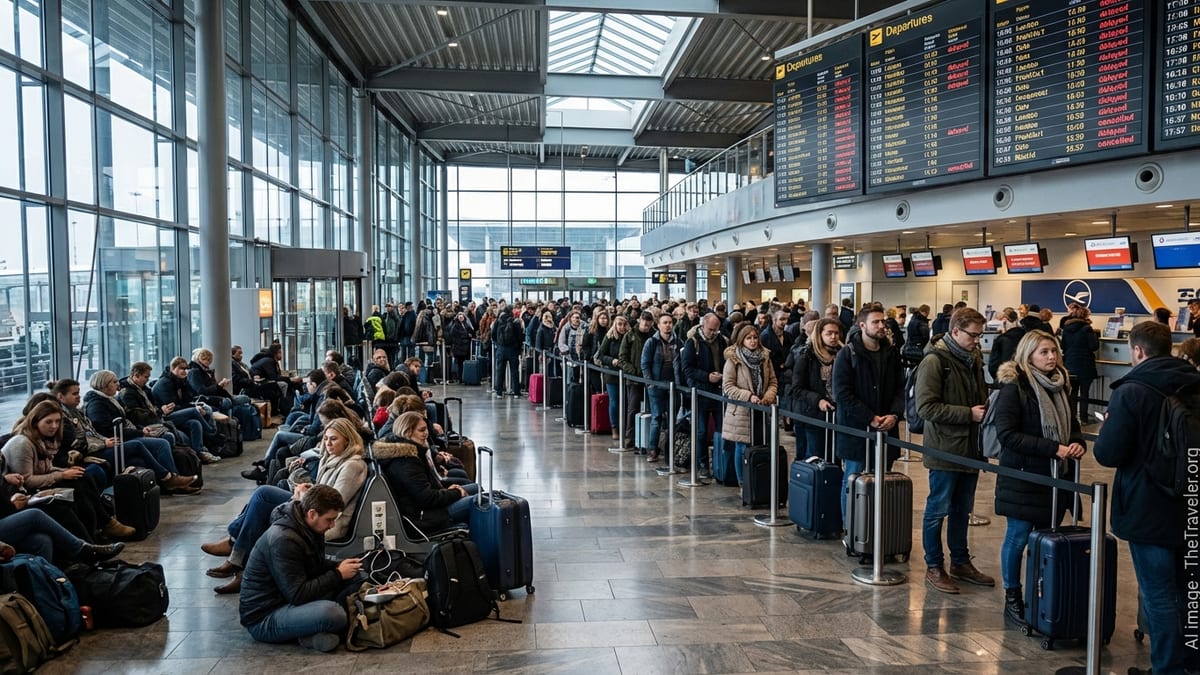
Thousands of passengers across Europe faced long queues, missed connections and overnight airport stays today as five key aviation markets reported 661 delayed and 68 cancelled flights, with the fallout rippling across long haul networks linking Dubai, Doha and other global hubs.
Get the latest news straight to your inbox!
Five European Markets Buckle Under Mounting Flight Disruption
Data from major European hubs in France, the United Kingdom, Germany, the Netherlands and Spain on March 11 indicates that at least 729 flights either departed late or were grounded entirely, underscoring how fragile aviation schedules remain amid ongoing geopolitical tensions and airspace constraints. While overall cancellations are below the worst peaks seen earlier this month, the combination of hundreds of delays and dozens of outright scrubs has translated into a day of rolling disruption for travelers trying to move between Europe, the Middle East, Asia and North America.
Operational reports from airline and airport dashboards show that delays were spread throughout the day rather than concentrated in a single weather event or technical outage, creating knock on effects across connecting banks of flights. In practice, this meant missed onward departures, rebookings onto already congested services and mounting pressure on ground handling and customer service teams from Paris Charles de Gaulle to London Heathrow and Frankfurt.
Industry analysts say the numbers recorded today build on several days of elevated disruption. Monitoring sites reported more than 300 cancellations and over 2,000 delays across Europe on March 9, already putting pressure on airlines as they attempted to restore aircraft positioning and crew rosters ahead of the busy working week. With additional delays on March 10 and the fresh wave of problems today, many carriers are now working with significantly less operational slack than they would typically expect in mid March.
Although Europe’s air traffic control network was not reported to be suffering a single systemic failure, a patchwork of local weather constraints, staffing bottlenecks and route restrictions over the Middle East have combined to squeeze capacity on some of the continent’s most heavily used corridors. That has forced airlines to trim frequencies, adjust routings and, in some cases, pre emptively cancel services to prevent aircraft and crews from becoming stranded far from base.
Global Carriers From Qatar Airways To Delta Feel The Strain
The disruptive impact extends well beyond European low cost and regional operators, with global long haul carriers reporting significant knock on effects to their networks. Services operated or marketed by Qatar Airways, Delta Air Lines, Qantas, Emirates and other major brands were among those affected as delays at key European gateways cascaded onto connecting flows bound for the Gulf, North America, Africa and Asia.
Qatar Airways has already been contending with limited schedules in and out of Doha because of the wider Middle East crisis, and today’s delays in Europe added a new layer of complexity for passengers traveling via Hamad International Airport. Travelers booked on itineraries from London, Frankfurt, Madrid and Milan to Doha, and onward to destinations in Asia and Africa, reported missed connections and last minute re routings as ground staff tried to piece together workable alternatives.
US carrier Delta also faced challenges on its transatlantic services linking London and continental Europe with hubs such as Atlanta, New York and Detroit. Even moderate departure delays of 30 to 60 minutes in Europe can push arrival times into early evening congestion banks in the United States, complicating crew duty limits and increasing the risk of further downstream delays, particularly during a period of already tight staffing.
For Dubai based Emirates and Qantas, which share a long running partnership on routes between Europe, the Middle East and Australia, delays at European origin airports constrained the tightly timed overnight operations that funnel passengers into Dubai and onward to Asia Pacific. With Dubai itself experiencing days of disruption and temporary suspensions on certain services in early March, any fresh irregularities in Europe are feeding into an already fragile recovery pattern.
Hubs From Dubai To Zurich And London Grapple With Knock On Effects
Dubai International, one of the world’s busiest long haul hubs, has been at the center of recent operational challenges, including temporary suspensions and heavily adjusted schedules on flights to and from Europe. Although local conditions have improved compared with the sharp disruptions seen earlier this month, today’s wave of European delays has meant some inbound flights departed late, forcing late night and early morning arrival banks in Dubai to be retimed or consolidated.
In Europe, major interchange points including London Heathrow, Zurich, Amsterdam and Frankfurt saw crowded departure halls as rolling delays accumulated throughout the day. At Heathrow, where cancellations have been relatively limited, airlines instead leaned heavily on departure slippage, resulting in aircraft waiting longer for departure slots and passengers spending extended periods in gate areas watching their boarding times repeatedly pushed back.
Smaller but strategically important airports such as Luxembourg also felt the consequences of regional schedule instability. With fewer daily frequencies and more limited backup aircraft and crews, even a small number of delayed or cancelled flights can severely restrict same day rebooking options. For passengers connecting in Luxembourg to larger hubs, that often translated into overnight stays and complex rerouting via alternative cities.
Zurich, which plays a pivotal role in connecting European feeder traffic to long haul services into the Middle East and Asia, reported growing departure queues and longer than usual turnaround times as ground handling teams worked through consecutive late inbound arrivals. Airlines warned that some delays would persist into the late evening and potentially into the early morning of March 12 as aircraft and crews slowly returned to their planned rotations.
Passengers Face Long Queues, Patchy Information And Limited Alternatives
For travelers caught in today’s disruption, the experience has been marked by a familiar mix of uncertainty and fatigue. Social media posts from passengers in London, Paris, Frankfurt and Madrid described long queues at service desks, limited availability of same day alternatives and confusion over whether delays were related to weather, staffing or wider geopolitical issues affecting airspace routing.
Hotels near major airports in London, Paris and Frankfurt have already been booking up quickly over the past several days of irregular operations, leaving some stranded passengers facing higher last minute prices or having to seek rooms in city centers accessible only via late night ground transport. With some airlines reluctant to commit to early rebooking on routes still vulnerable to sudden changes, many travelers have opted to wait at the airport in the hope that delayed services would eventually operate.
Consumer advocates note that while European Union air passenger rights rules can provide compensation in certain circumstances, the increasingly complex mix of causes behind today’s disruptions makes it difficult for travelers to know what they are entitled to. Carriers have pointed to air traffic control restrictions, airspace routing issues over the Middle East and severe congestion at certain hubs as grounds for classifying many of the delays as outside their direct control.
At the same time, some airlines have proactively relaxed rebooking rules, allowing passengers due to travel in the coming days to switch dates or routings without change fees. This flexibility has helped reduce the number of travelers converging on already stretched airports but has also created longer wait times on call centers and chat channels as customers seek to adjust their plans.
Airlines Work To Stabilize Schedules Amid Ongoing Airspace Pressures
Operational teams across the affected airlines spent much of the day trying to smooth out their networks, prioritizing aircraft positioning and crew rotations on trunk routes that feed major hubs such as London, Paris, Frankfurt, Amsterdam, Zurich and Dubai. By the afternoon, some carriers reported modest improvements in on time performance, but warned that residual delays were likely to persist into the next operating day.
One complicating factor remains the situation in Middle Eastern airspace, where conflicts and associated restrictions have diverted or limited certain overflight corridors. This has forced carriers operating between Europe and destinations in the Gulf, South Asia and beyond to fly longer alternative routings or adjust departure times to secure viable slots, adding more volatility to schedules that were already finely balanced.
Industry observers caution that, with the northern hemisphere summer season approaching, any prolonged constraints on air traffic capacity in Europe or the Middle East could quickly translate into larger scale disruption if demand continues to rise as forecast. Airlines have added capacity back into their networks in anticipation of strong leisure and corporate travel, but many are still operating with lean margins in terms of spare aircraft, crews and ground resources.
For now, aviation authorities and carriers are urging passengers with upcoming travel to monitor their flight status closely, use airline apps and official channels for the latest information, and build in additional time for connections wherever possible. With today’s 661 delays and 68 cancellations illustrating how quickly pressure can spread across multiple countries and hubs, both airlines and travelers are bracing for further days of unsettled skies ahead.