

More news on this day
Hundreds of air travelers across Europe faced severe disruption as a fresh wave of operational problems and adverse weather triggered at least 85 flight cancellations and 1,577 delays, snarling schedules for British Airways, SAS, Virgin Atlantic, Lufthansa and other major carriers at airports including London, Zurich, Berlin and Athens.
Get the latest news straight to your inbox!
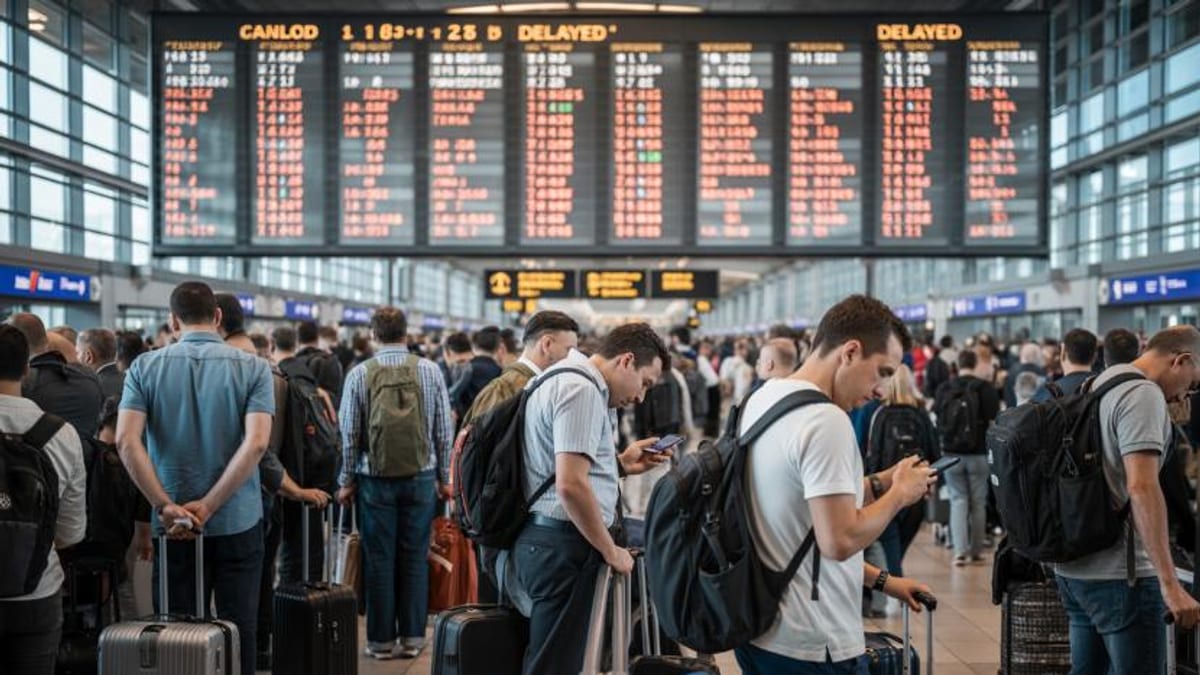
Image by Travel And Tour World
Widespread Disruption Across Key European Hubs
According to publicly available airport and flight-tracking data, the latest bout of disruption has concentrated on some of Europe’s busiest hubs, including London’s main airports, Zurich, Berlin and Athens. The pattern shows clusters of cancellations on short haul intra European routes combined with extensive knock on delays to long haul services.
Aggregated figures from aviation tracking platforms indicate that at least 85 flights were cancelled across the United Kingdom, France, Germany, Norway and several neighboring states in a single operational window, while a further 1,577 flights were delayed. The disruption has affected both departures and arrivals, creating bottlenecks throughout the network.
Reports from major airports describe departure boards dominated by late running services, with many flights pushed back by more than an hour. Crowded terminals and lengthening queues for customer service desks have been a common feature, as passengers attempt to rebook or secure onward connections.
The effect has been particularly visible on pan European corridors linking London, Frankfurt, Zurich, Berlin and southern gateways such as Athens, where even minor schedule disturbances tend to ripple quickly through already busy timetables.
Flag Carriers and Network Airlines Under Pressure
The disruption has hit Europe’s largest network airlines hardest, with British Airways, Lufthansa, SAS and Virgin Atlantic all experiencing a mix of cancellations and rolling delays. Low cost and regional operators feeding traffic into these hubs have also reported knock on impacts as aircraft and crews fell out of rotation.
Publicly available flight status pages for British Airways and Lufthansa show a concentration of issues on routes linking the United Kingdom and Germany with Switzerland, the Nordic countries and Mediterranean destinations. Late arriving aircraft have been a significant factor, with one delay often cascading into further schedule changes over the course of the day.
Norwegian and SAS have reported punctuality challenges on services within Scandinavia and between Norway, Germany and the United Kingdom. Operational data indicates that some evening departures were either heavily delayed or consolidated, reducing options for travelers attempting to complete same day returns.
For Virgin Atlantic, delays on transatlantic services out of London have largely stemmed from congestion and ground handling constraints during busy departure banks. While outright cancellations have remained limited for some long haul carriers, extended departure holds have nevertheless caused missed connections and rebookings at European hubs.
Weather, Congested Skies and Staff Constraints
A combination of adverse weather, congested airspace and localized staffing constraints has contributed to the current disruption. Meteorological summaries for parts of western and central Europe point to periods of strong winds, low cloud and showers, conditions that often trigger flow restrictions at major hubs.
EUROCONTROL network updates and recent performance reports highlight how even temporary air traffic flow management measures can quickly translate into airport level delays when schedules are dense. Zurich and Athens in particular have been cited in previous months for recurring capacity related constraints during peak hours, and similar patterns appear to have re emerged during the latest episode.
Alongside weather and traffic flow limitations, ground handling and staffing pressures remain an ongoing theme at several European airports. Industry analyses published over recent seasons have repeatedly noted that recruitment and training have struggled to keep pace with demand recovery, leaving operators vulnerable when conditions deteriorate or when small incidents accumulate.
The combination of these factors can create so called reactionary delays, where an aircraft that begins the day on time gradually falls further behind schedule with each sector. Once a certain threshold is reached, airlines often cancel selected services in order to reset rotations and restore some stability to their timetables.
Impact on Travelers in London, Zurich, Berlin and Athens
For passengers, the immediate consequences have ranged from missed meetings and lost holidays to unexpected overnight stays. Travelers transiting London, Zurich, Berlin and Athens have faced particular uncertainty, as delayed feeder flights jeopardized onward long haul connections or final legs home.
At London airports, reports from passenger forums and social media describe lengthy waits at customer service counters and crowded departure lounges as travelers queued to be reprotected on alternative flights. Some passengers were rebooked via secondary airports or routed through other European hubs in an attempt to bypass the worst affected locations.
In Zurich and Berlin, local media coverage and airport information feeds indicate sustained pressure across afternoon and evening departure waves. Flights to and from key business destinations such as Frankfurt, Munich, London and Scandinavian cities have been among those most frequently affected, leading to disrupted day trips and complex re itineraries.
Athens has also reported disruption on both inbound and outbound routes, particularly for passengers connecting from northern and western Europe to the Greek islands and other eastern Mediterranean destinations. Even when flights eventually departed, late arrivals have meant missed ferries and ground transfers, extending travel days well into the night.
Passenger Rights and What Affected Travelers Can Do
The scale of cancellations and delays has renewed attention on passenger protections under European rules. Public guidance from consumer organizations points travelers toward Regulation EC 261, which sets out rights to assistance, rerouting and in certain circumstances financial compensation when flights are cancelled or significantly delayed.
In general, travelers departing from an airport in the European Union, the United Kingdom, Switzerland, Norway or Iceland, or flying into these areas on an EU or UK carrier, may be covered by these rules. Eligibility often depends on the length of the delay on arrival, the distance of the flight and whether the disruption is considered to be within the airline’s control.
Passenger advocacy groups advise affected travelers to document their disruption carefully by saving boarding passes, screenshots of delay notifications and receipts for any essential expenses. They also recommend submitting claims directly to airlines first, and only escalating to national enforcement bodies or alternative dispute resolution schemes if responses are unsatisfactory.
With forecasts indicating that periods of unsettled weather and high traffic volumes are likely to continue across Europe in the coming weeks, analysts suggest that travelers build in additional buffers for connections, monitor flight status closely and consider earlier departures where possible in order to reduce the risk of severe disruption to their plans.