

More news on this day
Air travel across Europe was thrown into fresh turmoil today as airports in the United Kingdom, Spain, Germany and several other countries reported 340 delayed and 78 cancelled flights, disrupting operations for carriers including Lufthansa, Ryanair and other major airlines at hubs such as London and Barcelona.
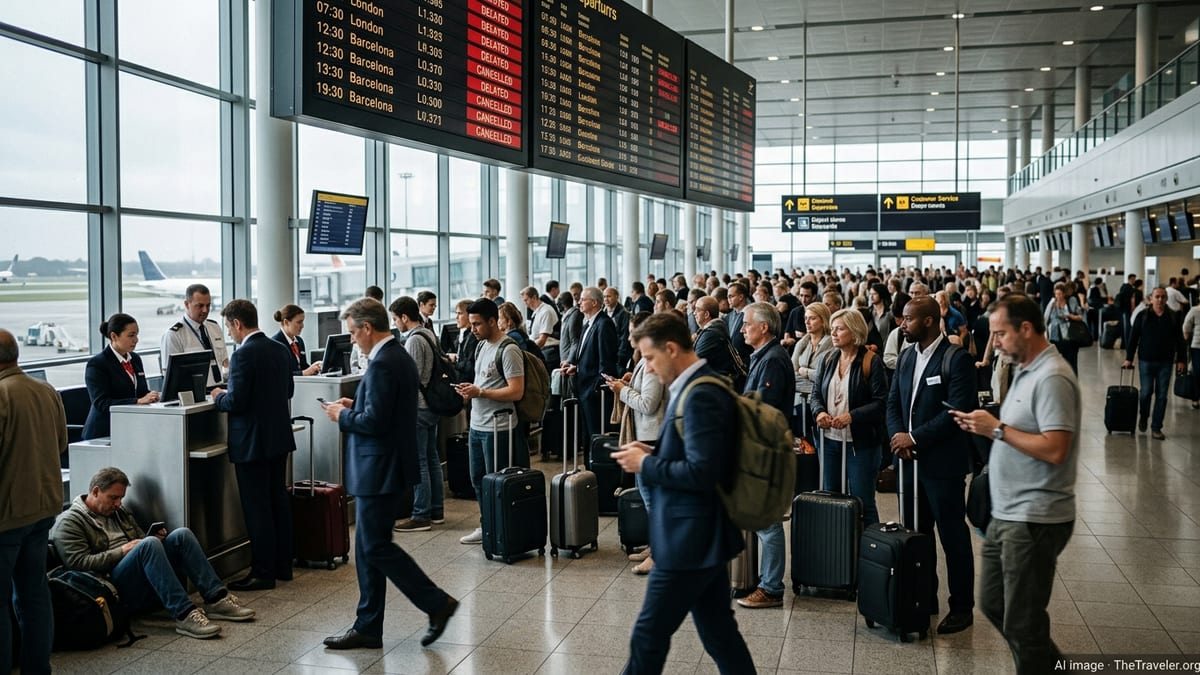
Major Hubs in the UK, Spain and Germany Bear the Brunt
Operational data from airport authorities and aviation tracking services on Thursday, March 5, indicate that disruption is concentrated at some of Europe’s busiest hubs. London’s airports, including Heathrow, Gatwick and London City, reported growing clusters of late departures and missed connections as delays elsewhere rippled through already tight schedules. Similar problems were being seen in Barcelona, one of southern Europe’s key short-haul and leisure gateways, where late inbound flights created knock-on congestion at departure gates.
In Germany, Frankfurt and Munich recorded dozens of delayed departures, with additional cancellations linked to aircraft and crew being out of position after earlier schedule changes. Lufthansa, which has already been operating a revised winter timetable, was forced to juggle aircraft rotations while attempting to protect key long-haul services. In Spain, congestion at Barcelona and Madrid added pressure to a system already stretched by heavy seasonal demand.
Budget carrier Ryanair, together with other high-frequency short-haul airlines, was particularly exposed to the cascading effect of relatively small delays across multiple legs. With aircraft scheduled on tight turnarounds, even modest air traffic control restrictions or weather-related slowdowns in one part of the network translated into rolling delays elsewhere, affecting flights in and out of the UK, Spain, Germany and their neighbouring markets.
As the day progressed, airport displays across Europe showed a familiar pattern: clusters of departures pushed back by 30 to 90 minutes, a smaller but highly disruptive number of outright cancellations, and frustrated passengers trying to rebook at service desks and via airline apps.
Knock-on Effects From Wider Airspace and Weather Disruption
The latest wave of disruption is unfolding against a backdrop of broader operational challenges for European aviation. In recent days, airspace restrictions and reroutings linked to instability in the Middle East have forced airlines to adjust flight plans, extend block times and occasionally suspend services. These longer routings have squeezed aircraft and crew availability, leaving carriers with less slack when fresh issues emerge closer to home.
Weather has also played a significant role. A series of late-winter systems bringing strong winds, low cloud and intermittent rain across parts of western and central Europe has led air traffic managers to impose flow restrictions at busy hubs, slowing the rate at which take-offs and landings can safely occur. Even short-lived ground stops or runway configuration changes can rapidly build queues of aircraft, which then feed into wider network delays.
For airlines such as Lufthansa and Ryanair, which operate dense pan-European networks, these external constraints come on top of continued staffing and maintenance pressures. Industry analysts note that while capacity has largely recovered to or surpassed pre-pandemic levels, crew availability and ground handling resources have not always kept pace, leaving operations vulnerable when multiple stress factors coincide.
The result is that seemingly moderate headline figures, such as 340 delayed and 78 cancelled flights, can translate into a much larger pool of affected passengers as disruptions propagate across connecting banks of flights in London, Barcelona, Frankfurt, Munich and beyond.
Lufthansa, Ryanair and Other Carriers Struggle to Maintain Schedules
Among the airlines most affected today are Lufthansa and Ryanair, reflecting their scale and central role in European connectivity. Lufthansa has spent much of the week managing a complex operational picture, including prior large-scale adjustments to its winter schedule and temporary suspensions on certain Middle Eastern routes. Its German hubs, especially Frankfurt, have seen a mix of delays and targeted cancellations as the carrier prioritises long-haul links and high-demand business routes.
Ryanair, by contrast, faces the challenge of maintaining high-frequency low-cost operations in an environment where air traffic control capacity and weather can erode the tight turn times that underpin its model. Delays at one or two key airports can quickly push back entire sequences of flights, leading to rolling disruption across the UK, Spain, Germany and secondary hubs across the continent.
Other European and Gulf-based carriers have not been spared. British Airways, Iberia, Vueling, easyJet and several Middle Eastern airlines have reported schedule adjustments or isolated cancellations affecting links with London, Barcelona, Frankfurt and other cities. For passengers, this has meant everything from relatively minor departure slippages to overnight stays and complex re-routing via alternative hubs.
Despite the disruption, airlines insist they are working to minimise customer impact by consolidating lightly booked flights, upgauging aircraft where possible, and deploying standby crews. However, with airport terminals visibly crowded and phone lines stretched, many travellers have faced long waits for assistance and limited same-day alternatives.
Passengers Face Long Queues, Missed Connections and Hotel Scrambles
Across affected airports, scenes were marked by long queues at check-in counters and transfer desks, with many passengers learning of delays only upon arrival at the terminal. At London and Barcelona in particular, travellers reported lengthy waits at customer service points as airline staff attempted to rebook those whose flights had been cancelled or whose connections had become unworkable.
Families heading to or from half-term breaks, business travellers relying on same-day returns and tour groups connecting onto cruises or package holidays were among those hit hardest. For some, even a moderate delay led to missed onward flights from hubs such as Frankfurt, Munich or Madrid, forcing last-minute hotel bookings in already busy airport districts.
Many passengers turned to airline apps and third-party tools to monitor live departure times, rebook flights and request vouchers for meals and accommodation. Yet intermittent website slowdowns and backlogs in call centres left some feeling stranded, particularly older travellers or those less comfortable navigating digital channels under stress.
Several airport operators issued advisories urging passengers to arrive early, allow additional time for security and border controls, and check their flight status repeatedly before setting out. Ground transport providers, including rail links and long-distance buses, reported increased demand from travellers abandoning air plans altogether on short-haul routes.
What Travellers Should Do if Their Flight Is Affected
Travel experts advise that passengers caught up in the current disruption should first confirm their flight’s latest status via official airline channels before heading to the airport. If a flight shows as significantly delayed or cancelled, contacting the carrier’s app or call centre early can improve chances of securing a favourable rebooking, especially on popular routes to and from London, Barcelona, Frankfurt and other key hubs.
Under European air passenger rights rules, many travellers departing from or flying within the EU, as well as from the UK under broadly similar regulations, may be entitled to assistance such as meals, refreshments and hotel accommodation when delays or cancellations are substantial and not caused by extraordinary circumstances. In some situations, financial compensation may also be due, although eligibility depends on the cause and length of the disruption and the distance of the flight.
Passengers are encouraged to keep boarding passes, booking confirmations and receipts for any extra costs they incur, such as meals or overnight stays, in case they need to submit claims later. Documenting the cause and length of a delay using screenshots of departure boards or airline messages can also be helpful.
With further knock-on effects possible in the coming days as airlines and airports work through backlogs, travellers planning to fly through Europe’s busiest hubs are being urged to build extra flexibility into their itineraries, consider earlier departures where available and prepare for longer-than-usual days on the move.