

More news on this day
Thousands of air travelers across Europe have been hit by fresh disruption as KLM, easyJet and Air Europa cancelled 63 flights and delayed a further 322 services, snarling traffic at major hubs including Amsterdam, London and Madrid and leaving passengers scrambling to rebook at the height of the winter travel season.
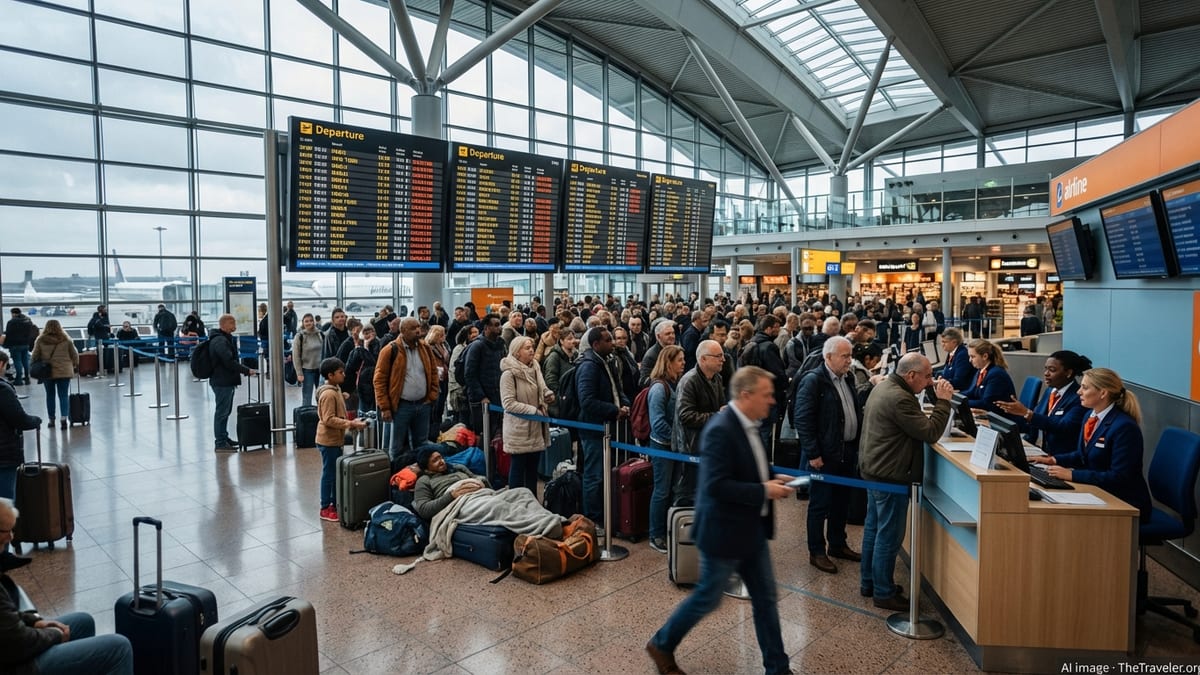
New Wave of Cancellations Hits Key European Hubs
The latest data from European aviation monitoring platforms on Thursday, February 19, 2026, show a concentrated spike in cancellations and delays involving KLM, easyJet and Air Europa, particularly across the Netherlands, England and Spain. In total, the three carriers scrapped 63 flights and delayed 322 more within a 24 hour period, compounding a winter already marked by repeated operational shocks.
Amsterdam Schiphol, London’s major airports and Madrid Barajas were among the hardest hit, reflecting their role as connective hubs for both intra-European and long haul travel. While disruption was most visible at these three airports, knock on effects were reported at secondary airports in Spain, the UK, and neighboring countries as aircraft and crews fell out of position.
The latest wave comes on the heels of a wider pattern of instability in Europe’s skies this winter. In late January, for example, thousands of passengers were stranded when more than 1,400 flights were delayed and nearly 80 were cancelled in a single day across Spain, Finland, France, the Netherlands, Germany, Turkey and England, hitting carriers including KLM, Air France, Iberia, Lufthansa and British Airways. That set the backdrop for what has become a rolling series of interruptions for travelers.
KLM Operations Under Pressure After Amsterdam Winter Disruptions
KLM has faced particular scrutiny after a bruising start to 2026 in its home hub of Amsterdam. Heavy snow and shifting crosswinds in early January forced Schiphol Airport to reduce runway capacity and suspend ground handling and de-icing at times, prompting hundreds of cancellations and large numbers of delays for KLM and other airlines. The group’s parent company, Air France KLM, has since confirmed that the severe-weather and de-icing crisis will cost it an estimated 90 million euros in the first quarter of the year.
Although Thursday’s figures for KLM are far smaller than the January peak, they underscore how fragile operations remain when winter weather, staffing constraints and already tight schedules intersect. According to the latest disruption reports, KLM accounted for a significant share of the 63 cancellations, particularly on short haul routes into and out of Amsterdam, as the carrier tried to stabilize rotations and free capacity for longer-haul services.
The airline has maintained that it is doing “its very best” to rebook affected passengers and has urged travelers to keep contact details updated in its app or booking profiles so they can receive automatic rebooking notices, digital boarding passes and disruption alerts. In parallel, KLM has kept travel alerts in place for several regions, including weather related changes in France and schedule adjustments in the Middle East, signaling that operational risk remains elevated beyond the Netherlands.
Consumer advocates note that the combination of January’s de-icing fiasco and February’s renewed disruptions is likely to trigger a surge in compensation claims under European passenger rights rules. For eligible flights, passengers whose journeys are significantly delayed or cancelled can in many cases pursue cash compensation and reimbursement of incidental expenses such as hotels and meals.
easyJet Delays Ripple Across England and Beyond
In England, easyJet again found itself at the center of a web of delays as tight aircraft rotations and congested airspace around London turned relatively minor schedule issues into a larger pattern of late departures and arrivals. London Gatwick and London Luton saw the highest concentrations of disruption among the low cost carrier’s operations, though knock on delays spread to regional airports serving routes into the UK capital.
Industry analysts point out that easyJet’s point to point model, while efficient in normal conditions, can be vulnerable when multiple rotations are disrupted in quick succession. A short delay early in the day can cascade across several subsequent flights served by the same aircraft and crew, particularly during the busy morning and evening peaks when spare capacity is limited.
Other UK based and UK focused carriers have faced similar issues this winter, as seen in January when airports such as London Heathrow and London Gatwick were part of a Europe wide spike in delays and cancellations. The latest figures tied specifically to easyJet highlight how even without a single dramatic weather event or technical failure, routine winter pressures can still leave aircraft out of position and passengers waiting in crowded terminals.
Passengers at London airports on Thursday reported departure boards dotted with orange coded “delayed” statuses and queues at customer service desks as travelers sought reroutings to continental hubs including Amsterdam, Madrid and Paris. For some, the delays meant missed connections onto non European long haul routes and rebookings that stretched into the following day.
Air Europa and Spanish Hubs Struggle With Ongoing Strain
In Spain, Air Europa’s disruptions were centered on Madrid Barajas, a key gateway for both European and transatlantic flying. The carrier joined a broader group of airlines grappling with operational strain at Spanish hubs after a February marked by a series of incidents and congestion spikes. Just days earlier, Madrid and Barcelona collectively recorded nearly 400 delayed flights and a double digit number of cancellations in a single day after an emergency landing and weather related ripple effects unsettled schedules.
For Air Europa, Thursday’s cancellations and delays affected a mix of Iberian peninsula routes, European city pairs and selective long haul departures. Industry data indicate that while the majority of the carrier’s flights still operated, a small but disruptive share either left substantially late or were removed from the schedule entirely as crews and aircraft became misaligned.
Barcelona El Prat and several Spanish regional airports also saw secondary disruption, not only for Air Europa but for competitors such as Iberia and low cost operators that rely on tight turnarounds. Analysts note that Spain’s dual hub structure, with Madrid and Barcelona serving large volumes of both European and South American traffic, means that even localized disruption can quickly generate international consequences, particularly for travelers connecting between Europe and Latin America.
Travelers passing through Spanish airports reported long queues at rebooking counters and, in some cases, confusion over which carrier was responsible for onward segments booked under codeshare agreements. Passenger rights groups warned that such confusion can delay access to hotel vouchers, meal coupons and rebooked itineraries, especially when disruptions cross airline alliance boundaries.
Weather, Staffing and Congested Skies Combine to Disrupt Travel
The latest wave of cancellations and delays cannot be pinned on a single cause. Instead, industry observers point to a convergence of winter weather hazards, lingering staffing challenges in ground handling and air traffic control, and a travel market that has largely recovered in volume without fully rebuilding its operational buffers.
Across northern Europe, snow, freezing temperatures and strong winds have been recurring themes since early January, forcing airports to activate de-icing protocols and, at times, suspend ramp operations for safety reasons. These measures, while essential, introduce delays into already compact turnaround times and can quickly reduce available runway capacity, particularly at constrained hubs like Amsterdam Schiphol.
Meanwhile, air navigation service providers in several European countries have warned of staffing constraints and high workload in control centers, issues that can lead to flow control measures, airborne holding patterns and ground delays. Airlines and airports, still rebuilding workforces after the pandemic era, have struggled to maintain adequate buffers when sickness spikes or localized incidents require rapid redeployment of staff.
The result has been a travel environment where even modest disruptions can snowball into broader instability. When large hubs such as Madrid, Amsterdam, London or Paris experience significant delays, the effect often spreads quickly to secondary airports, as aircraft arrive late to begin their next legs or miss their planned maintenance windows.
Passengers Face Long Queues, Missed Connections and Uncertain Plans
For passengers, the statistics on cancellations and delays translate into very personal stories of missed family events, disrupted business trips and lost holidays. On Thursday, travelers across Amsterdam, London and Madrid described crowded terminals, long lines at airline desks and, in some cases, difficulty obtaining clear information about rebooking options.
At Amsterdam Schiphol, where memories are still fresh of previous seasons’ chaotic queues, travelers reported renewed congestion at departure halls as KLM and partner airlines worked to reshuffle affected customers onto later flights. Some long haul passengers connecting from regional European services were forced to stay overnight after missed transatlantic departures, adding hotel scrambles to their woes.
In London, easyJet customers shared accounts of departure boards repeatedly pushing back estimated take-off times, complicating onward rail and hotel plans. And in Madrid, Air Europa passengers described boarding, deplaning and reboarding sequences as crews and ground staff tried to navigate evolving slot allocations and aircraft assignments.
Travelers relying on multiple carriers for a single itinerary, particularly when tickets were booked through online travel agencies or separate point to point segments, sometimes discovered that each airline considered only its own individual flight obligations, leaving gaps in responsibility for missed onward connections. Consumer rights organizations urged passengers in such situations to document every delay and keep receipts for out-of-pocket costs in case reimbursement claims become possible later.
What Stranded Travelers Can Do Right Now
With disruption levels elevated across several major European airports, experts advise travelers to take a proactive approach rather than waiting in physical queues whenever possible. Airline apps and websites often show rebooking options before they are announced over loudspeakers in the terminal, and some carriers allow customers to self-select alternative flights at no extra fee when schedules unravel.
Passengers are also urged to familiarize themselves with their rights under European passenger protection rules. Depending on the circumstances of a delay or cancellation, travelers departing from an EU or UK airport, or flying into the region with an EU or UK carrier, may be entitled to fixed-sum compensation in addition to refunds for unused tickets and coverage of reasonable meals and accommodation. Specialized claim firms have reported rising demand as repeated weather and operational crises push more passengers to seek financial redress.
Travel planners recommend building longer connection windows into itineraries over the remainder of the winter season, especially when connecting between separate tickets or crossing between airline alliances. A connection that appears comfortable on paper when operations are smooth may prove risky in an environment where rolling delays are common.
For future trips, industry insiders suggest choosing flights earlier in the day, when possible. Morning departures are statistically less likely to be affected by the cumulative delays that tend to build up later, and they offer more fallback options if rebooking becomes necessary. Travelers with critical, time sensitive commitments are also encouraged to consider overnight stays at hub cities rather than same day tight connections.
Airlines and Airports Under Pressure to Restore Confidence
The continuing disruptions at KLM, easyJet, Air Europa and other European carriers have added fresh pressure on airlines and airport operators to reinforce resilience as travel demand remains high. While many carriers reported strong financial results for 2025, including record revenues and profits for some groups, the operational side of the business has repeatedly shown signs of strain.
In response, airlines are reviewing schedules, fleet utilization and crew planning to identify vulnerabilities exposed by the winter season. For KLM, the January de-icing crisis has already triggered an internal investigation into supply-chain and operational decision making, with executives vowing to reduce the risk of similar incidents in future winters. Other carriers are weighing whether to build more slack into rotations, even at the cost of lower short term capacity.
Airports, for their part, are revisiting snow-removal, de-icing and staffing plans, as well as terminal crowd-management strategies to prevent scenes of gridlock when disruption hits. Large hubs such as Amsterdam, Madrid and London are also working with air navigation service providers on flow-management plans designed to limit knock-on effects when conditions deteriorate.
For travelers, however, the immediate reality is that European air travel remains vulnerable to weather shocks and operational bottlenecks. Until airlines and airports can consistently absorb the unexpected without cascading cancellations and delays, passengers may continue to face days like Thursday, when a tally of 63 cancelled and 322 delayed flights across a handful of carriers is enough to send itineraries unraveling across the continent.