

More news on this day
Thousands of air travelers across Europe are facing another day of severe disruption, with at least 47 flight cancellations and 586 delays reported on Tuesday across the UK, Germany, Turkey and the Netherlands, snarling operations for Turkish Airlines, British Airways, United Airlines, KLM, Finnair, SAS and other major carriers at key hubs including London, Frankfurt, Istanbul, Amsterdam and Madrid.
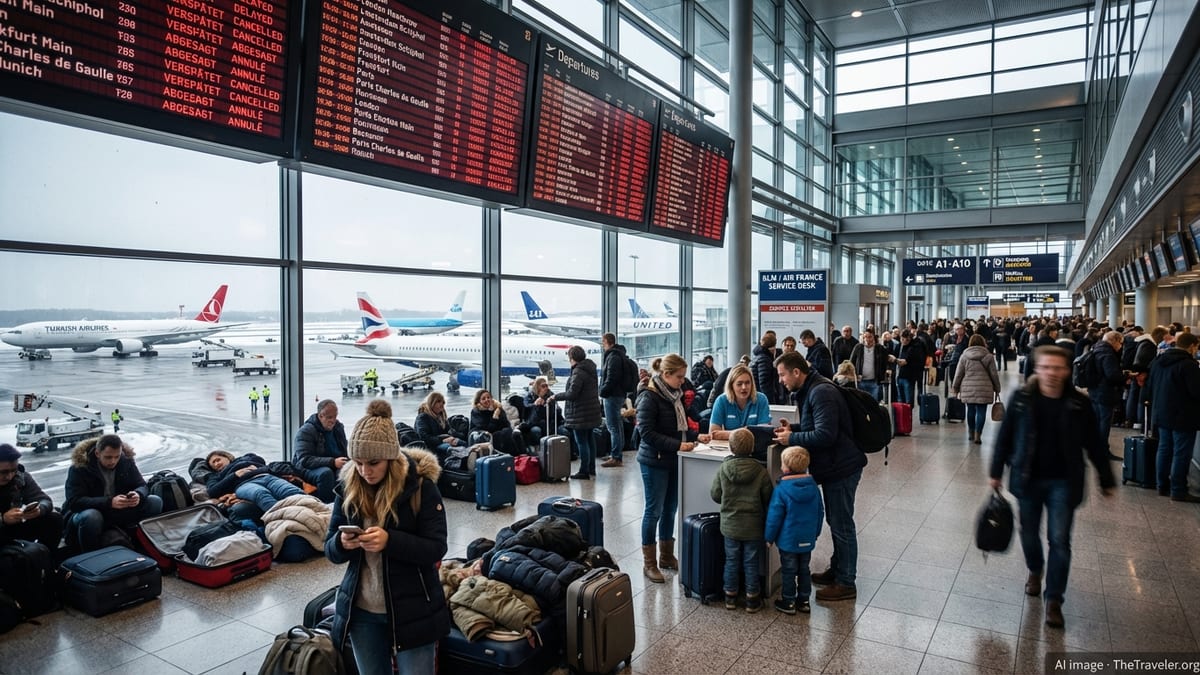
Storms, Staffing Strains and Transatlantic Knock-On Effects
The latest wave of disruption follows days of pressure on Europe’s aviation network, as winter storms over the continent and powerful weather systems over the United States combine with ongoing staffing and ground-handling constraints. Airports from London Heathrow and Gatwick to Frankfurt and Amsterdam Schiphol have reported rolling delays since the weekend, with Tuesday’s cancellations adding to already stretched schedules.
Air traffic analysts say part of the disruption stems from a winter storm that swept through northern Europe on 19 February, triggering widespread delays at Amsterdam, Frankfurt and other hubs and leaving airlines with aircraft and crew out of position. Those issues have been compounded by a severe snowstorm along the US East Coast, which on Monday and Tuesday forced additional cancellations on transatlantic routes serving New York and other major American gateways. As European carriers divert or scrub services to and from the United States, ripple effects are being felt on intra-European connections.
Operational pressures on the ground are also adding to the strain. Airport authorities and airline representatives have cited ground staff shortages, tight crew rosters and congested de-icing operations in northern hubs as factors that make it harder to recover once a disturbance begins. With aircraft and personnel scattered across the network, seemingly minor schedule changes can escalate into broader disruption by mid-day.
Industry observers note that while Europe’s aviation sector has largely rebounded in terms of passenger demand since the pandemic, staffing and infrastructure have not always kept pace. That mismatch leaves the system particularly vulnerable to weather shocks such as this week’s combination of snow, strong winds and freezing temperatures across key air corridors.
Major Airlines Hit: Turkish, British, United, KLM, Finnair, SAS and More
Among the hardest hit by Tuesday’s turmoil are Europe’s largest network carriers. Turkish Airlines has reported a string of schedule adjustments at Istanbul Airport, where early-morning operations were slowed by poor visibility and residual congestion from previous days. Passengers connecting from Asia and the Middle East to European cities like London, Frankfurt and Madrid have encountered missed connections and rebookings as the airline juggles aircraft rotations.
British Airways has again found itself at the center of disruption in London, with the bulk of cancellations and delays concentrated at Heathrow, Europe’s busiest international hub. Data from airport operations show BA accounting for a significant share of Tuesday’s affected flights, particularly on short-haul services to Germany, the Netherlands and Scandinavia. Several transatlantic departures, including services shared with American Airlines and other partners, have also faced extended delays as aircraft arrive late from storm-affected US airports.
United Airlines, a key transatlantic player, has been coping with weather and airspace restrictions on both sides of the Atlantic. Flights between US East Coast cities and European hubs such as London and Frankfurt have been among the most affected, with knock-on delays for onward connections within Europe. Passengers arriving late into London and Frankfurt have reported missed evening departures to secondary European destinations, forcing unscheduled overnight stays.
KLM, Finnair and SAS have each experienced notable disruption across northern Europe. At Amsterdam Schiphol, KLM has been working through a backlog of delayed services after earlier weather-related problems, while Finnair and SAS have warned travelers of longer-than-usual waiting times and potential last-minute changes on flights linking Scandinavia with the UK and continental Europe. All three carriers have urged passengers to make full use of mobile apps and self-service tools to adjust itineraries when seats become available.
Key Hubs Buckle: London, Frankfurt, Istanbul, Amsterdam, Madrid
London remains one of the focal points of the current breakdown. Heathrow has reported dozens of delayed departures and arrivals on Tuesday, with operations teams struggling to clear aircraft from congested stands between waves of long-haul flights. Gatwick and other UK airports have also reported weather-related slowing, particularly during early morning and late evening peaks. Travelers describe crowded terminals, long queues at customer-service desks and frequent gate changes announced with little warning.
In Germany, Frankfurt Airport has been grappling with a heavy concentration of delayed services, especially on European feeder routes that connect to long-haul flights. Even where individual flights are not cancelled, delays of 60 to 90 minutes have become common, complicating connection windows for passengers heading onward to North America, the Middle East and Asia. Munich and other German airports have seen smaller clusters of disruption, but remain under pressure as airlines divert traffic away from the most congested hubs.
Istanbul Airport, a vital bridge between Europe, Asia and Africa, has experienced rolling delays on Turkish Airlines and partner carriers as crews and aircraft reposition after earlier storms. Passengers report extended waits at transfer security checkpoints and passport control, with some forced into overnight hotel stays after missing tightly timed onward services to Western Europe. The airport operator has urged travelers with tight connections to allow extra time to move between distant gates in the sprawling terminal complex.
Further west, Amsterdam Schiphol and Madrid Barajas are both facing residual disruption. In Amsterdam, strong winds and low cloud earlier in the week reduced runway capacity, and KLM along with partner airlines are still working through delayed rotations. Madrid, while less affected by northern European snow, has been hit by the transatlantic ripple effect, as late-arriving aircraft from the United States and northern Europe throw off carefully planned daily schedules.
Passengers Stranded and Scrambling for Alternatives
For passengers, the numbers translate into hours of uncertainty and improvised travel plans. Many travelers waking up to cancellation notices on Tuesday morning found rebooking options limited, especially on business-heavy routes between major capitals. With school holidays and winter getaways still in full swing in several European countries, spare seats on alternative flights have been scarce.
Social media posts from London, Frankfurt and Amsterdam show long lines forming at airline service counters, with some customers being told the next available seat to their destination may not be until later in the week. Others have resorted to overnight trains or long-distance coaches to reach key cities such as Paris, Brussels or Berlin, then picking up flights from there. Hotel occupancy near affected airports has surged, with last-minute rates climbing as stranded passengers search for accommodation.
Families traveling with young children and elderly passengers have faced particular challenges, as they navigate crowded terminals and changing gate information. Reports from Istanbul and Madrid describe passengers sleeping on benches and terminal floors while awaiting early-morning rebooked flights. Airport staff and volunteers have distributed water and basic refreshments at some hubs, but many travelers say information has been inconsistent and waiting times for assistance remain long.
Despite the frustration, aviation experts note that safety remains the overriding priority. Airlines and air traffic controllers are required to reduce operations when crosswinds exceed safe limits, visibility drops below minimums or de-icing cannot be completed in time. While that can mean painful delays and missed connections, especially in a finely tuned European network, operators insist that schedule reliability cannot come at the expense of flight safety.
What Travelers Can Do if Their Flight Is Affected
With further disruptions possible as airlines work to restore normal patterns, passengers scheduled to fly through London, Frankfurt, Istanbul, Amsterdam, Madrid or other major European hubs this week are being urged to monitor their flights closely. Most airlines now push real-time updates through mobile apps and text messages, which often provide earlier warnings of schedule changes than airport departure boards.
Travel agents and airline advisers recommend that passengers traveling on multi-leg itineraries build in longer connection times where possible, particularly when crossing the North Atlantic or transferring through weather-prone hubs in northern Europe. Where connections are tight, customers may wish to voluntarily move to earlier feeder flights if seats are available, reducing the risk of being stranded mid-journey.
Across Europe, consumer protections require airlines to assist passengers during severe disruption, including providing meals, refreshments and accommodation in certain circumstances, as well as rebooking or refund options when flights are cancelled. Travelers are being encouraged to keep receipts for any additional expenses incurred and to check their eligibility for compensation based on the specific cause and duration of delays.
For now, aviation authorities and airlines are focused on clearing backlogs and stabilizing schedules before the next weather system moves through. With aircraft and crew still scattered across the continent and beyond, passengers booked on Turkish Airlines, British Airways, United, KLM, Finnair, SAS and other affected carriers should be prepared for the possibility of further last-minute changes as Europe’s strained air network slowly recovers.