

More news on this day
Thousands of air travelers across Europe are facing widespread disruption as more than 150 flights are canceled and over 3,000 delayed, hitting major hubs in Germany, the United Kingdom, France, Türkiye and Switzerland and impacting carriers including Lufthansa, easyJet, KLM, Air Dolomiti and others.
Get the latest news straight to your inbox!
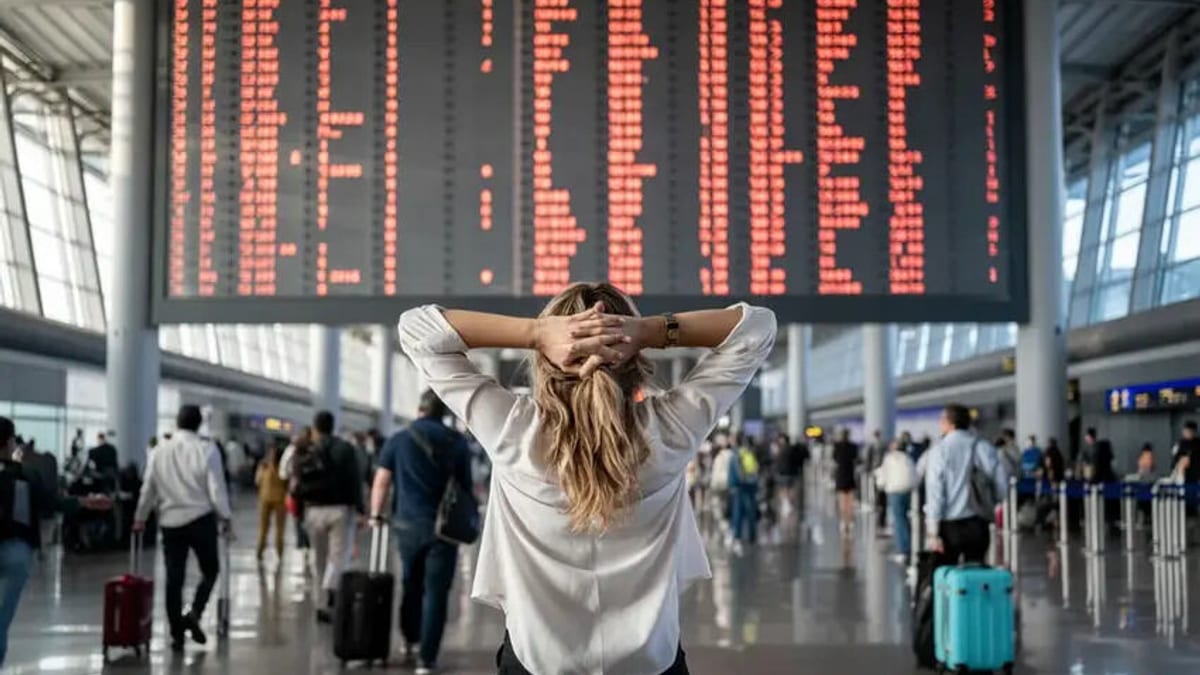
Image by Travel And Tour World
Major Hubs From Frankfurt to Istanbul Buckle Under Strain
Publicly available flight-tracking data and regional media reports indicate that disruption has clustered around Europe’s busiest hubs, with Frankfurt, London, Paris, Istanbul and Zurich all reporting wave after wave of delays. Secondary airports serving these systems, including Munich, Amsterdam and Milan, have also absorbed knock-on effects as aircraft and crews fail to arrive on time.
Frankfurt, the primary hub for Lufthansa and an important base for group subsidiary Air Dolomiti, has seen some of the heaviest pressure. The airport functions as a linchpin for long-haul traffic between Europe, North America, the Middle East and Asia, so the cancellation of even a modest number of rotations rapidly cascades into missed connections and crowded transfer halls.
In London and Paris, a mix of weather-related congestion, sector restrictions and capacity constraints in surrounding airspace has translated into chronic delays for short-haul services. According to published coverage on recent storms and airspace bottlenecks, flights operating between the British capital, northern France, the Low Countries and western Germany have been particularly vulnerable, often accruing delays of more than an hour even when not canceled outright.
Istanbul and Zurich, each a strategic hub linking Europe to wider regional networks, are wrestling with similar challenges. Turkish and Swiss carriers, alongside international partners, have been forced to thin schedules or consolidate services as crews and aircraft fall out of position, leaving passengers in Türkiye and Switzerland facing sudden cancellations and late-night diversions.
Lufthansa Group, easyJet and KLM Among Hardest Hit
The current disruption is landing hardest on the carriers with the densest European networks. Lufthansa Group, which includes Lufthansa, Swiss, Austrian Airlines, Brussels Airlines, Eurowings and regional operator Air Dolomiti, is managing a complex mix of weather-related interruptions, airspace detours and ongoing labor tensions that have already prompted schedule adjustments for the spring and summer season.
Operational briefings and financial-market commentary on the group’s summer capacity plans highlight the scale of its ambitions, with expanded frequencies from German hubs and a strong focus on transfer traffic. When storms, airspace constraints or industrial actions intervene, that dense timetable quickly translates into dozens of cancellations in Frankfurt and Munich and additional disruption in Zurich, Vienna and Brussels.
Low-cost carrier easyJet, a staple at London airports and key bases across France, Switzerland and the Netherlands, is also experiencing significant knock-on effects. The airline’s business model relies on high aircraft utilization and tight turnaround windows; when early-morning rotations are delayed or scrubbed due to weather or air-traffic restrictions, subsequent flights suffer rolling delays that can last the entire day.
Amsterdam-based KLM is similarly exposed through its central role at Schiphol, where recent winter storms and de-icing backlogs have already caused waves of cancellations and delays. Regional reporting on earlier weather episodes at the Dutch hub shows how quickly schedules unravel when runway capacity is reduced, and those same vulnerabilities are now surfacing again as the wider European network comes under strain.
Weather, Airspace Closures and Labor Disputes Converge
The immediate triggers for the latest round of disruption differ from country to country, but they share a common theme: multiple stress factors hitting an already stretched system. In Germany and neighboring states, severe winter storms earlier this year disrupted rail and air operations, and subsequent bouts of unsettled weather have periodically reduced airport capacity, particularly at exposed hubs such as Frankfurt and Hamburg.
At the same time, ongoing military tensions and airspace closures in parts of the Middle East have forced many Europe to Asia services to reroute through alternative corridors. Recent analyses of traffic flows describe Cairo and other North African airports emerging as diversion and transit hubs as airlines avoid high-risk skies, adding flight time and complicating crew scheduling for European and Turkish carriers.
Labor relations are adding a further layer of volatility. Negotiations over pay and conditions for flight and cabin crews at several major airlines, including within the Lufthansa Group, have produced strike threats and work stoppages in recent months. Even when industrial action is limited in duration, it can trigger extensive schedule thinning as airlines seek to protect long-haul operations by canceling shorter intra-European sectors.
These overlapping pressures are playing out against a backdrop of strong demand. Industry briefings for the current season point to passenger volumes that in many markets are above last year’s levels, leaving airlines and airports with little slack to absorb sudden disruptions without resorting to cancellations.
Passengers Face Long Queues, Missed Connections and Confusing Rebookings
For travelers caught in the middle of this turbulence, the most visible symptoms are familiar: long queues at check-in and transfer counters, crowded gate areas, and departure boards filled with rolling delay estimates. Social media posts and trip reports from affected passengers describe missed connections in Frankfurt, Zurich and Amsterdam, with some travelers forced to wait until the following day for an available onward seat.
Short-notice cancellations are particularly disruptive for those relying on tight onward connections or traveling for time-sensitive reasons. Online discussion forums show examples of itineraries where a feeder flight within Europe is canceled while a long-haul segment technically remains scheduled, leaving passengers uncertain about whether to proceed to the hub or request a full rebooking.
As airlines triage their networks, many are prioritizing long-haul and high-yield services, reassigning aircraft from shorter routes. This practice, common in times of stress, helps maintain key intercontinental links but results in disproportionate disruption on regional legs between secondary cities, including routes linking Germany, France, the United Kingdom and Türkiye.
Accommodation and meal support vary by carrier and location, and travelers have reported uneven access to timely information. In some cases, passengers only learn of cancellations at the airport, compounding crowding at customer service desks as thousands attempt to secure alternative flights, refunds or overnight lodging.
What Travelers Can Expect in the Coming Days
Operational forecasts and airline schedule filings suggest that while the most acute disruption may ease as weather systems move on and airspace patterns normalize, residual delays are likely to persist. Aircraft and crews remain out of position after several days of irregular operations, meaning that even flights listed as on time may be vulnerable to last-minute changes.
Travel analysts note that the broader European aviation system is operating with limited resilience. Many airlines cut staffing and reduced fleets during the pandemic recovery period, and although capacity has since grown, recruitment, training and maintenance pipelines have not fully caught up with demand. This leaves carriers more exposed when confronted with the combination of bad weather, complex rerouting and labor unrest.
Passengers scheduled to travel through Frankfurt, London, Paris, Istanbul, Zurich and other major hubs in the coming days are being advised by consumer groups and travel advisers to monitor flight status frequently, allow additional connection time where possible and keep digital copies of booking confirmations and receipts for any extra expenses incurred.
Regulatory frameworks in the European Union, the United Kingdom and Türkiye set out compensation and care obligations for airlines in cases of long delays and cancellations, although eligibility depends on the precise cause of disruption and the operating carrier. With more than 150 cancellations and thousands of delays already logged across the continent, pressure is likely to build on carriers to process rebookings and reimbursements swiftly as Europe’s busy spring travel season gathers pace.