

More news on this day
Hundreds of passengers across Europe faced unexpected overnight stays and missed connections as widespread disruption led to 1,838 delayed flights and 90 cancellations, snarling operations at major hubs in the Netherlands, France, Germany and other countries and affecting carriers including Lufthansa, KLM and easyJet.
Get the latest news straight to your inbox!
Major Hubs Hit Across Western Europe
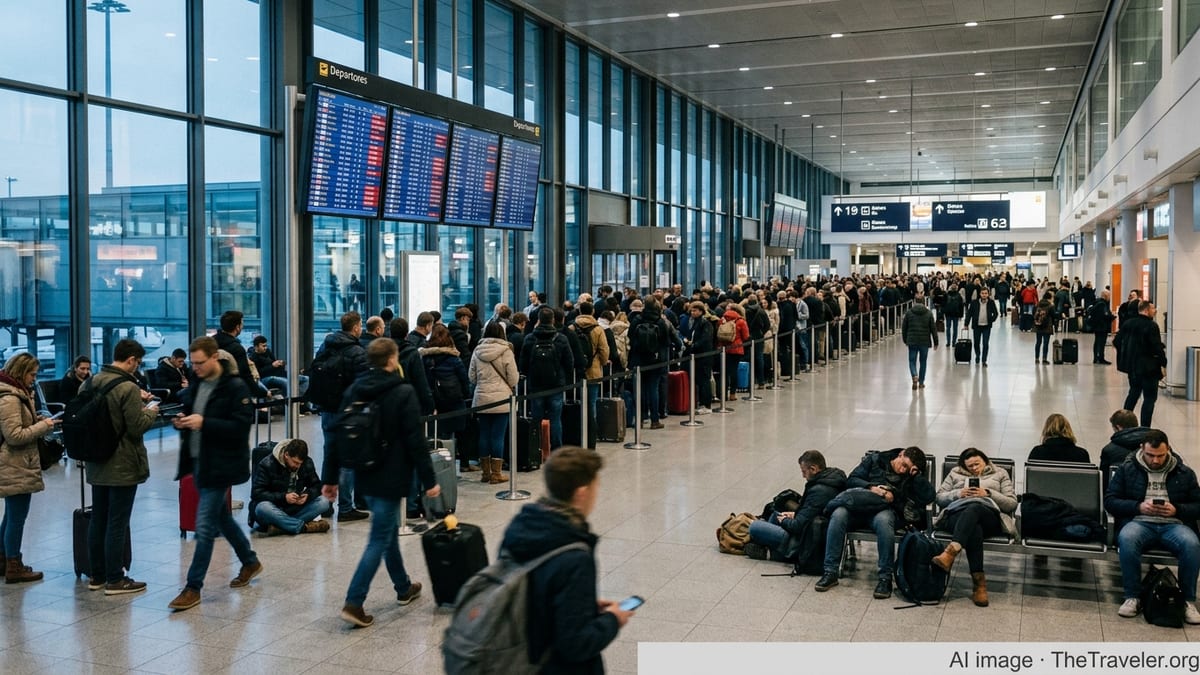
Reports from European aviation tracking platforms and airport operations updates describe a difficult travel period centred on some of the continent’s busiest hubs, including Amsterdam Schiphol, Paris Charles de Gaulle and Munich. The disruption involves a combined 1,838 delayed departures and arrivals and 90 outright cancellations across multiple countries, leaving terminals crowded with stranded travellers and improvised sleeping areas.
Publicly available flight data indicates that airports in the Netherlands, France and Germany have been among the hardest hit, with knock-on effects at secondary hubs in neighbouring states as aircraft and crews fell out of position. While the precise balance of delays and cancellations varies by country, the cumulative impact has left passengers facing long queues for rebooking, baggage issues and uncertainty about when they will reach their destinations.
The disturbance is notable not only for its scale but also for its geographic spread, with no single airport closure responsible. Instead, a combination of capacity constraints, weather-related slowdowns and congestion in busy air corridors appears to have contributed to widespread schedule instability.
Industry observers note that Europe’s tightly interlinked aviation network can quickly amplify local problems. Once aircraft rotations are disrupted at one or two key hubs, delays can cascade through multiple cities within hours, particularly during already busy travel periods.
Lufthansa, KLM, easyJet and Others Among Most Affected
According to aggregated operational data, large network carriers and prominent low-cost airlines have both been swept up in the disruption. Lufthansa and KLM, with their extensive hub operations in Germany and the Netherlands, are recorded among the most affected, while easyJet and other short-haul operators have also faced schedule challenges across routes touching France and neighbouring markets.
Published statistics on European on-time performance show that the region’s largest carriers already operate under tight margins for punctuality, leaving limited room to absorb additional stress. When multiple factors coincide, from air traffic control constraints to adverse weather or local staffing pressures, airlines can be forced into broad rescheduling that ripples across their networks.
For travellers, the airline brand has often mattered less than the origin or destination of a flight. Passengers flying with Lufthansa, KLM, easyJet and various partner or codeshare airlines have experienced similar disruption when their journeys connect through the same congested hubs. This has resulted in long rebooking lines, rerouted itineraries through alternative airports and, in some cases, involuntary overnight stays far from home.
Aviation analysts point out that in such scenarios carriers typically prioritise restoring core hub operations and longer-haul services first. Shorter regional segments, including feeder and holiday routes, can bear the brunt of cancellations and extended delays while airlines rebuild their schedules.
Stranded Travellers Face Long Queues and Limited Options
Scenes described in recent coverage from European news outlets and passenger reports show crowded departure halls, limited seating and makeshift rest areas at key airports. With hundreds of flights operating off-schedule, stranded travellers in cities such as Paris, Munich and Amsterdam have reported waiting hours for assistance at customer service counters or for updates via mobile apps and airport information boards.
In some terminals, airport operators have provided cots, blankets and basic refreshments, reflecting the expectation that some passengers will remain in the building overnight. Families with children, elderly travellers and those with tight onward connections have been particularly exposed to the disruption, often needing last-minute changes to accommodation and ground transport plans.
Publicly available information also highlights the challenge of rebooking in a constrained system. When a high volume of flights is delayed or cancelled simultaneously, spare seats on later departures can be scarce, especially on popular intra-European routes. As a result, some travellers have been rebooked via indirect routings through secondary hubs or asked to return to the airport on subsequent days.
Travel advisers note that digital channels, including airline apps and online self-service tools, can sometimes secure new itineraries more quickly than waiting in physical queues. However, when disruptions reach this scale, even digital systems may be slow or overloaded, leaving passengers reliant on a mix of channels and, in some cases, third-party travel agencies.
Operational Pressures Behind the Wave of Delays
While specific causes vary by airport and time of day, operational data and regional aviation analyses point to several recurring pressures behind the 1,838 delays and 90 cancellations. Seasonal weather patterns can temporarily reduce runway capacity or require additional spacing between aircraft, slowing arrivals and departures. Air traffic control bottlenecks in busy European corridors further constrain how many flights can safely operate per hour.
At the same time, airlines and airports in the Netherlands, France, Germany and neighbouring countries continue to adjust to high demand amid lingering staffing and infrastructure constraints. When schedules are built close to maximum capacity, any unexpected disruption can quickly lead to long backlogs that take many hours, or even days, to clear.
Analysts also point to the cumulative effect of earlier disruptions. If aircraft and crews arrive late from previous rotations, the knock-on effect can be visible throughout the day’s schedule, especially at banks of connecting flights in hub airports. In Europe’s densely interconnected network, a delay on a single feeder flight can cause dozens of missed connections further down the line.
Historical studies of disruption in European aviation indicate that recovery can be uneven across the region. Some airports may restore near-normal operations relatively quickly, while others, particularly those that experienced the heaviest initial impact, may continue to see elevated delay and cancellation rates for several days.
What Travellers Can Expect in the Coming Days
Airline and airport operations updates suggest that while the immediate peak of disruption may ease, residual effects are likely to persist as carriers reposition aircraft and crews and work through backlogs of displaced passengers. Even after the bulk of cancellations has passed, travellers can continue to encounter delays, altered departure times and last-minute gate changes.
Industry guidance recommends that passengers due to travel through affected hubs in the Netherlands, France, Germany and neighbouring countries monitor their flight status closely on the day of departure. Flexible itineraries, longer connection times and contingency plans for accommodation can help reduce the impact if further disruption occurs.
Consumer advocates frequently highlight that under European passenger rights regulations, travellers on eligible flights may be entitled to assistance such as meals, communication and accommodation during extended waits, as well as compensation in some scenarios. The applicability of such rules depends on the specific cause of disruption, the length of delay and the route and airline involved.
With hundreds of travellers still working their way to final destinations, the episode serves as another reminder of the vulnerability of Europe’s air network to concentrated periods of strain. For many passengers stranded in Paris, Munich and other hubs, the experience has turned what was meant to be a routine journey into an unplanned, and often exhausting, extension to their trip.