

More news on this day
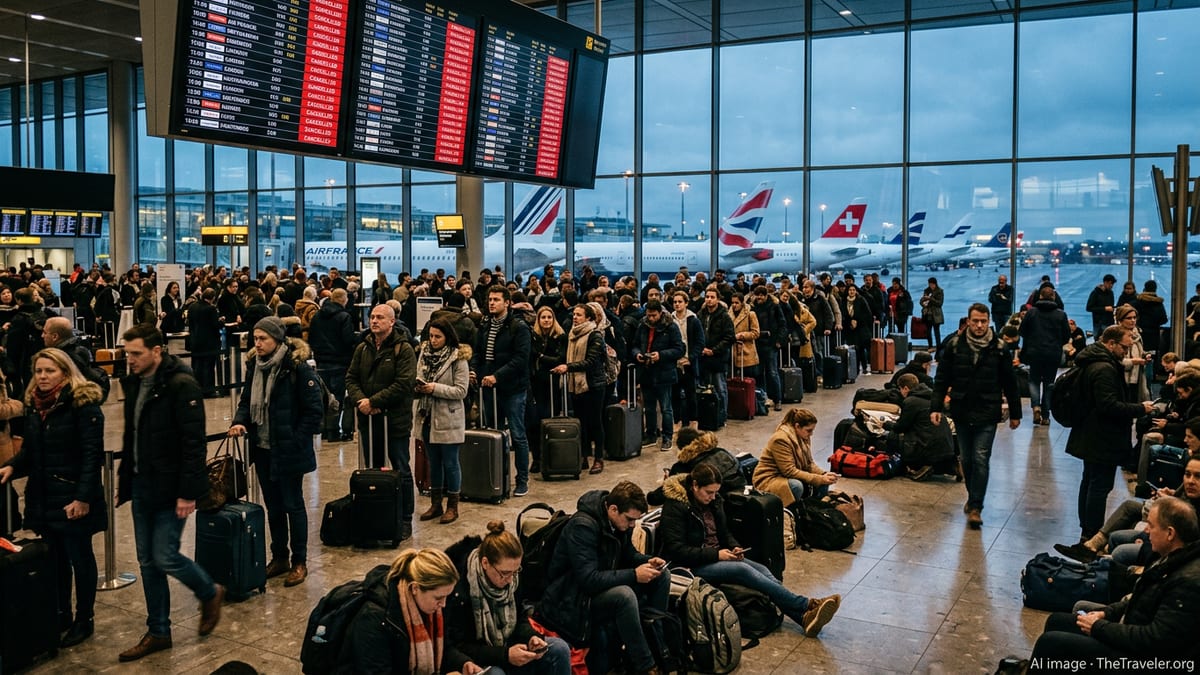
Hundreds of passengers were stranded at key hubs including London, Paris, Dubai, Zurich and Helsinki on Monday after a fresh wave of 89 flight cancellations by European carriers deepened an already severe spell of global aviation disruption.
Major European Hubs Grapple With Fresh Wave of Cancellations
Operational data compiled by airline and airport sources on 3 March show at least 89 services scrapped across Europe and the Gulf by a cluster of major carriers, including Air France, British Airways, Iberia, SWISS, Finnair and Norwegian Air Sweden. The cancellations were concentrated at London Heathrow, Paris Charles de Gaulle, Dubai International, Zurich, Helsinki-Vantaa and several secondary airports, leaving departure halls crowded with passengers seeking scarce rebooking options.
In London, British Airways trimmed a mix of short- and medium‑haul rotations as aircraft and crews remained out of position following a turbulent weekend for European aviation. At Paris Charles de Gaulle, Air France cancelled a series of departures to Nordic capitals and Southern Europe, with travellers reporting long queues at ticket counters and automated rebooking kiosks quickly overwhelmed.
Further east, Dubai International again emerged as a critical pressure point, with European flag carriers cutting services into and out of the Gulf hub. While Middle Eastern airlines cautiously resumed limited flying, tighter slot availability and altered routings led European partners to pare back frequencies, amplifying the knock‑on effect for passengers connecting between Europe, Asia and Africa.
In Zurich and Helsinki, SWISS and Finnair were forced to cancel multiple rotations, particularly on routes that normally rely on overflying the Middle East and adjacent airspace. Norwegian Air Sweden, which feeds Nordic passengers into larger hubs, also removed several services from its schedule, compounding disruption for travellers who depend on one or two daily frequencies.
Airspace Closures and Operational Constraints Drive the Disruption
Airline executives and aviation analysts said the 89 cancellations were the latest visible ripple from a broader crisis triggered by recent airspace closures across the Middle East. With key corridors either shut or heavily restricted, long‑haul flights between Europe and Asia have been forced onto lengthy diversion routes, burning more fuel and requiring additional crew, which in turn leaves fewer aircraft and staff available for short‑haul rotations.
Carriers have also had to reposition aircraft that diverted away from Gulf hubs over the weekend, a complex logistical task that has spilled into the new week. Some jets remain parked at out‑of‑sequence airports, while flight and cabin crews have exceeded duty‑time limits and must rest before returning to service. Airlines have responded by consolidating flights, prioritising routes with high volumes of connecting traffic and trimming thinner services at short notice.
Weather and local staffing issues added further strain at some airports. Ground‑handling teams in northern Europe reported slower‑than‑usual turnaround times amid wintry conditions, while air traffic control units continued to manage temporarily congested skies as rerouted flights converged on alternative corridors. Together, these factors created a fragile operating environment in which relatively small schedule changes quickly cascaded into outright cancellations.
Passengers Face Long Queues, Limited Options and Rising Costs
For passengers caught in the middle, the latest round of cancellations translated into hours of waiting and, in many cases, unexpected overnight stays. At Heathrow and Charles de Gaulle, departure boards showed clusters of cancelled flights on specific carriers, pushing anxious travellers into snaking customer‑service lines as they sought information on rebookings, hotel vouchers and compensation rights.
Families attempting to return to Europe from holiday destinations via Dubai reported being offered re‑routed itineraries that added as much as a full day to their journeys, often involving multiple connections through less busy hubs. Some travellers turned to high‑speed rail within Europe to complete the final legs of their trips when short‑haul flights were withdrawn.
Travel agents and consumer advocates said they had seen a spike in requests for last‑minute one‑way tickets, with prices jumping sharply on remaining seats as airlines scaled back capacity. Hotel operators near major airports reported a rise in distressed bookings from passengers stranded overnight, while airport hospitality services, from food outlets to lounges, saw surging demand.
Airlines Adjust Schedules as Recovery Proves Uneven
Air France, British Airways, Iberia, SWISS, Finnair and Norwegian Air Sweden all issued brief operational updates on Monday indicating that they were closely monitoring the situation and adjusting schedules in response to evolving airspace and capacity constraints. Several carriers described the cancellations as a combination of safety‑driven routing decisions and routine operational management, even as they acknowledged the severe inconvenience for customers.
Industry observers noted that network airlines are walking a tightrope between maintaining connectivity and guarding against further last‑minute disruptions. With long‑haul flights to and from Asia and parts of Africa now taking significantly longer than scheduled, carriers are building extra buffers into their rotations, sometimes by trimming marginal frequencies or temporarily suspending lightly booked services.
Recovery remained patchy across the network. While some morning flights out of London and Paris departed more or less on time, afternoon and evening services on affected airlines continued to be vulnerable to rolling schedule changes. Airport operators urged passengers to arrive early, stay in close contact with their airlines and be prepared for further last‑minute adjustments.
What Disrupted Travellers Can Do Now
Passenger rights groups reminded travellers that, under European consumer protection rules, customers whose flights are cancelled are generally entitled to a choice between a refund and rebooking at the earliest opportunity, along with care such as meals and accommodation where necessary. However, they cautioned that finding available seats in the current environment can be challenging, particularly on popular corridors linking Europe with the Gulf and onward to Asia.
Experts advised stranded passengers to use airline mobile apps and self‑service tools where available, as digital rebooking systems often update faster than airport counters during periods of heavy disruption. They also suggested that travellers consider rerouting via alternative European hubs with remaining capacity, even if that means adding an extra connection to reach their final destination.
With airlines signalling that schedules may remain volatile for several days, frequent flyers and corporate travel managers are reassessing near‑term plans. Some companies have instructed staff to delay non‑essential trips that would require connections through the Gulf or over affected airspace, while leisure travellers face difficult choices about whether to proceed with upcoming itineraries or postpone them until conditions stabilise.