

More news on this day
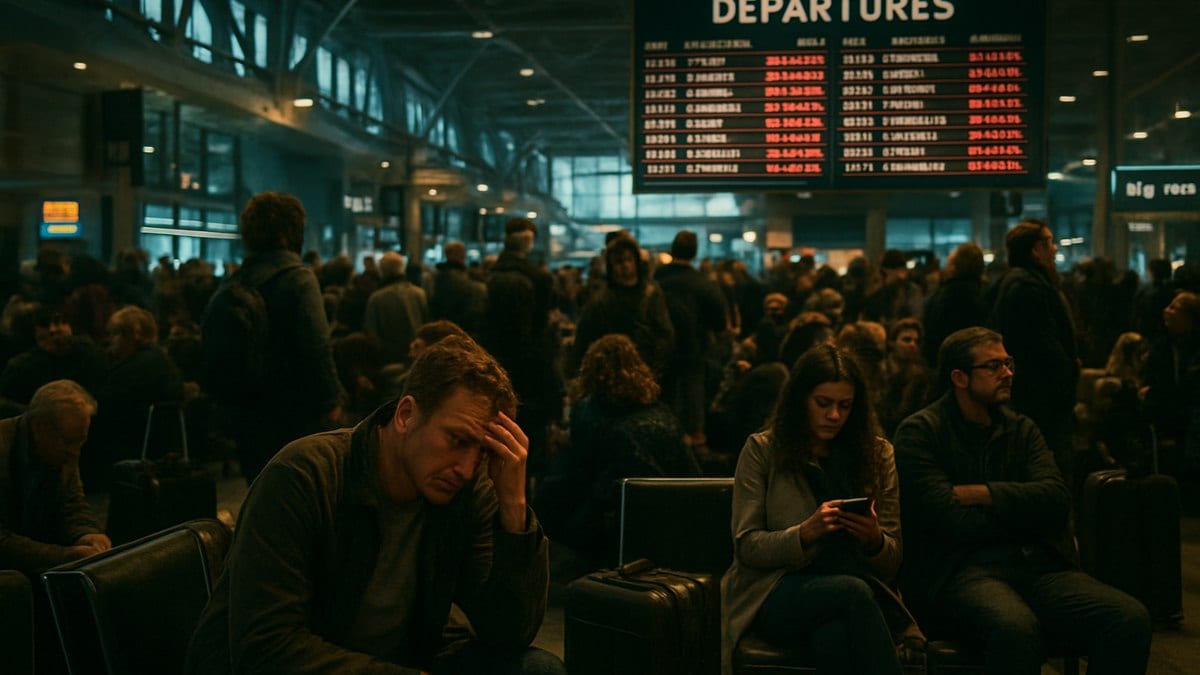
Europe’s aviation network has been plunged into fresh turmoil in early April 2026, with publicly available tracking data indicating more than 2,500 delayed flights in recent days and hundreds of passengers stranded at major hubs from Amsterdam to Rome.
Get the latest news straight to your inbox!
Easter Travel Surge Meets Mounting Operational Strain
The disruption has unfolded against one of the busiest travel periods of the year, as the Easter holiday surge pushed already stretched schedules across Europe close to capacity. Network statistics from Eurocontrol show that traffic entering 2026 was running slightly above 2025 levels, leaving less margin to absorb localized shocks such as storms, strikes and infrastructure problems.
Reports from aviation analytics providers and travel-industry briefings indicate that delays began to accumulate in the final days of March and intensified into the first week of April, particularly on short haul intra-European routes. Flights linking the United Kingdom, Denmark and northern European gateways have been especially affected, as congested air corridors and unsettled weather combined with ongoing airspace restrictions related to the Middle East conflict.
By the first week of April, a series of overlapping issues had produced a continent-wide backlog. Publicly available delay tallies compiled by travel advisories and specialist blogs for April 6 alone pointed to around 1,475 delayed flights and more than 170 cancellations across European airports, led by problems at Amsterdam Schiphol, London area airports and several Scandinavian hubs.
When these figures are combined with disruptions earlier in the week, including an estimated 1,273 delays reported across the UK, Denmark, France, Germany, Italy and other markets on April 5, the total easily exceeds 2,500 delayed services over just a few days. With average load factors high for the holiday period, even modest cancellation numbers have been enough to leave hundreds of travelers sleeping in terminals or scrambling for last minute hotel rooms.
Strikes in France and Italy Amplify Knock-On Delays
Labour unrest has remained a persistent fault line in Europe’s aviation system, and April 2026 is proving no exception. In France, cabin crew at a major low cost carrier based at Paris and regional airports called a nationwide strike for Easter Monday, April 6, placing a significant portion of that airline’s operations at risk of cancellation or long delay. Coverage from European travel outlets suggests that between a quarter and two fifths of services at the carrier’s six French bases were expected to be cancelled or heavily disrupted.
The French walkout is not an isolated episode. Italy is bracing for an air traffic control and aviation worker strike on April 10, with national and regional unions planning stoppages that could affect flights at Rome Fiumicino, Milan and other key gateways. Travel advisories warn that even passengers not flying to or from Italy could see their journeys affected, as rerouting and holding patterns spill delay minutes into neighbouring countries.
These strike actions feed into a broader pattern of staffing and cost pressures that has been building since traffic rebounded from the pandemic. Industry analyses and recent Eurocontrol briefings point to air traffic management capacity constraints as a continuing source of delay minutes, particularly in busy summer-style traffic patterns. When a major base experiences a labour stoppage, mispositioned aircraft and crew shortages ripple through the network for days afterward.
For passengers, the result can be a disruption that outlasts the headline strike day. Schedules on April 7 and beyond are already showing elevated delay risk for some low cost carriers with large French and Italian operations, as they work to reposition aircraft and crew after Easter Monday strikes and prepare for further industrial action later in the week.
Weather, Airspace Restrictions and Technical Issues Converge
Operational stress across the European network is not limited to labour disputes. A combination of adverse weather episodes, lingering impacts from winter storms and shifting airspace patterns linked to geopolitical tensions has narrowed the operating window for many airlines. Recent months have seen strong wind events and low-visibility conditions periodically constrain runway capacity at hubs such as Amsterdam, Frankfurt and London, forcing airlines to trim schedules or accept cascading delays.
At the same time, airspace closures and rerouting tied to conflict in the Middle East have altered some Europe Asia flows, adding flight time and complicating crew rostering. Travel alerts and passenger forums since late February describe long detours around conflict zones, technical refuelling stops in southern Europe and increased congestion along alternative routings, all of which can disrupt punctuality even when flights eventually operate.
Technology vulnerabilities are another emerging concern. Recent reports of cyber incidents affecting parts of the aviation ecosystem, including airport systems and airline interfaces, have underlined how quickly digital disruptions can translate into real world queues at check in and security. While not all of the early April delays are linked to cyber issues, the broader context has heightened scrutiny of any IT failure that can strand passengers in terminals.
Compounding these factors is a general shortage of slack in the system. Industry data shows that airlines have been running tight schedules to maximize aircraft utilization as demand recovers, leaving limited spare capacity to recover from out of sequence events. Once a bank of flights falls behind, turnaround times lengthen and knock on delays can persist well into the following day.
Major Hubs Under Pressure as Passengers Seek Alternatives
The brunt of the current disruption has been felt at Europe’s largest connecting hubs, where delayed or cancelled departures quickly translate into missed onward connections. Amsterdam Schiphol has emerged as one of the most affected airports in early April, with travel bulletins citing just under 300 delayed flights and around 20 cancellations on April 6, driven in large part by schedule issues at its main home carrier.
Other major hubs, including London Heathrow, Paris Charles de Gaulle, Frankfurt and Zurich, have also seen significant day of travel volatility. Flight status boards on April 5 and 6 showed clusters of late running departures and arrivals, with some long haul services departing several hours behind schedule after inbound aircraft arrived late from elsewhere in the network.
Secondary airports are not immune. Disruption at one hub can spill into supposedly quieter fields as carriers attempt to reroute passengers through alternative gateways or position aircraft for more favourable departure slots. Reports from Nordic and Baltic airports over the past week describe unusual peaks in traffic and ground handling strain as airlines react to capacity bottlenecks further south and west.
With hotel capacity near airports under pressure during the holiday period, many stranded travelers have opted to rebook on rail or long distance coach services where possible. However, cross border rail networks are themselves busy in the Easter window, and limited last minute availability means not all passengers can easily switch modes. For those needing to travel intercontinental, options are even more constrained, often requiring multi stop rebookings over several days.
What Passenger Rights and Industry Responses Look Like
The scale of the delays has renewed attention on passenger rights frameworks in Europe and the United Kingdom. Under Regulation EC261/2004 and related UK rules, travelers on flights departing from or arriving in many European jurisdictions may be entitled to compensation or care obligations when delays or cancellations meet certain thresholds and are within an airline’s control. Consumer organisations and specialist claims platforms are highlighting that labour disputes internal to an airline, such as cabin crew strikes, generally fall inside the compensation scope, while external factors like severe weather or air traffic control restrictions may not.
Publicly available guidance stresses that compensation typically depends on the length of delay at final arrival, the distance of the route and whether the disruption could reasonably have been avoided. Passengers are being urged by consumer groups to keep boarding passes, booking confirmations and receipts for meals or accommodation in case they need to file claims later. Travel advisors also recommend checking whether travel insurance policies include additional coverage for missed connections and extended delays.
On the industry side, airlines and airports are working to rebalance schedules and add resilience ahead of the peak summer season. Eurocontrol briefings and trade association commentary in recent months have called for investment in air traffic management capacity, better coordination of staffing plans and clearer communication with passengers when things go wrong. Some carriers have begun trimming marginal frequencies or building longer scheduled turnarounds into their timetables to create more buffer.
For now, however, the immediate outlook for travelers remains mixed. With more strikes scheduled in parts of Europe in mid April and the possibility of further weather and airspace disruptions, analysts expect episodes of mass delay to continue. Passengers planning trips in the coming days are being advised by travel planners to monitor flight status closely, allow extra time at airports and consider flexible itineraries that can absorb unexpected changes.