

More news on this day
Hundreds of travellers were left stranded across Europe this week as a fresh wave of disruption swept airports in the Netherlands, the United Kingdom, Italy and beyond, with 1,720 flights delayed and 61 cancelled, snarling operations for carriers including Lufthansa, KLM and Finnair at hubs such as London and Paris.
Get the latest news straight to your inbox!
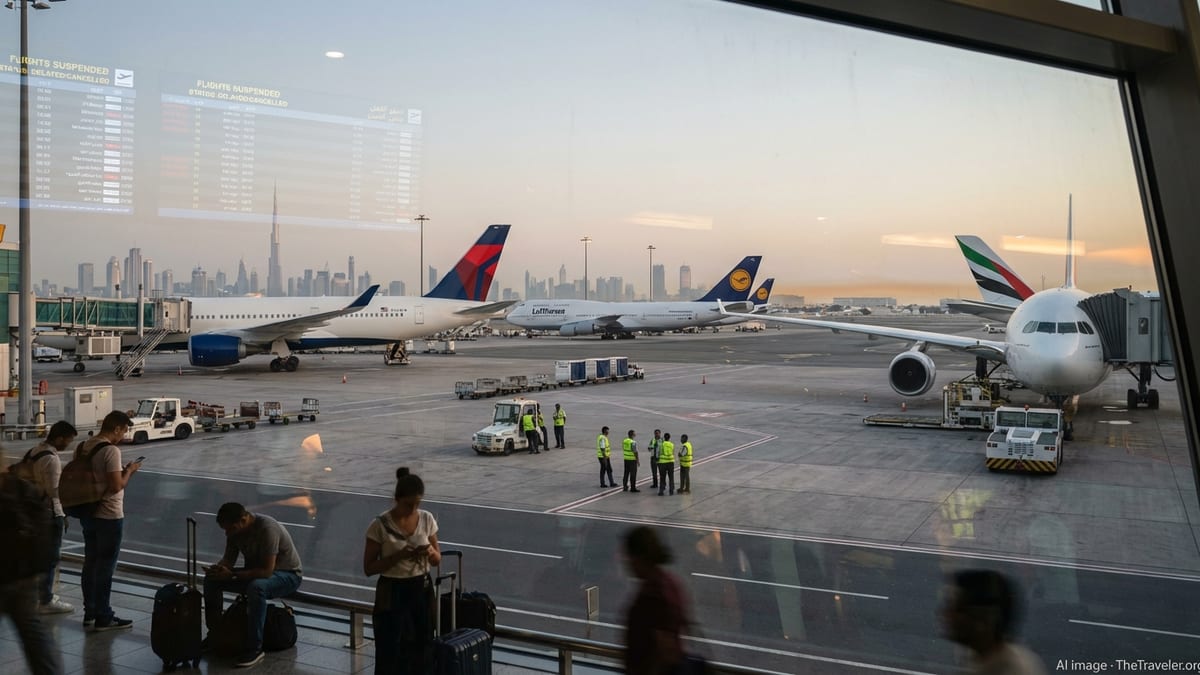
Wave of Delays Hits Key European Hubs
Operational data compiled from flight-tracking and passenger-rights platforms indicates that Europe entered the second week of April with elevated disruption levels, with at least 1,720 delays and 61 cancellations registered in a single 24-hour window across major airports. The disruption was concentrated in northern and western Europe, particularly in the Netherlands, the United Kingdom, France and Italy, where the combination of adverse weather and airspace flow restrictions constrained capacity at some of the continent’s busiest hubs.
Amsterdam Schiphol, London Heathrow and Gatwick, and Paris Charles de Gaulle featured among the worst-affected airports, according to published coverage. Reports describe high winds and heavy rain around the North Sea corridor feeding into wider network congestion, as aircraft and crews missed scheduled departure slots and struggled to recover through the day. In Italy, Rome Fiumicino and the Milan airports also reported sustained delays, adding pressure on intra-European and long-haul connections.
The headline figures mirror recent tallies showing more than 1,400 delays and around 20 cancellations in a comparable 24-hour period affecting England, France, Ireland, Italy, the Netherlands and Portugal. That earlier pattern, with pockets of disruption spread across multiple hubs rather than concentrated in a single airport, provides context for the latest spike in delays and cancellations and helps explain why relatively modest percentages of daily flights can still leave large numbers of travellers stranded.
Although some flights operated with only moderate delays, the clustering of disruptions in early morning and late-afternoon banks created bottlenecks that rippled across airline schedules. Once first-wave departures from London, Amsterdam or Paris left behind schedule, knock-on effects were felt on connecting services throughout the day, frequently turning an initial delay of less than an hour into missed onward flights for passengers bound for cities across Europe, North America and the Middle East.
Lufthansa, KLM, Finnair and Others Face Network Knock-On Effects
Airlines with dense European networks and heavy reliance on hub operations, including Lufthansa, KLM and Finnair, were particularly exposed to the cascading effects of delays. Publicly available statistics and industry analysis suggest that even when a relatively small share of an airline’s daily schedule is cancelled outright, late departures can quickly translate into missed connections and unplanned overnight stays.
KLM’s operations at Amsterdam Schiphol were among those under strain as late-arriving aircraft from elsewhere in Europe and beyond disrupted carefully sequenced turnaround times. When Schiphol experienced more than 190 delays and a cluster of cancellations on a recent day of poor weather, the impact was felt across routes linking Amsterdam with London, Paris, Rome and secondary European cities. Similar dynamics applied to Lufthansa within the German and wider European networks when weather and airspace restrictions intersected with peak traffic periods.
Finnair, which relies on tight connections over northern Europe for traffic between western Europe and Asia, has already been operating in a challenging environment as shifting demand and geopolitical factors alter traditional long-haul routings. In the latest disruption, any delay on feeder flights from hubs such as London and Paris to Nordic gateways risked undermining connection windows for onward services, increasing the risk of missed flights even if long-haul departures themselves remained technically on time.
Low cost and leisure-focused carriers were not exempt from the turbulence, although their point-to-point business models can sometimes provide more flexibility in recovery. Where airlines could rearrange aircraft rotations or swap equipment to protect the busiest leisure routes, they did so at the expense of less-trafficked services, which in some instances were more likely to be cancelled or pushed back significantly, further stranding passengers at smaller airports across the region.
Stranded Travellers in London, Paris and Beyond
The immediate human impact of the disruption was felt most acutely at major connecting hubs. In London and Paris, travellers arriving from secondary European cities or long-haul origins found themselves facing departure boards dominated by delayed flights and a handful of cancellations. Reports from airports highlight long queues at transfer and customer-service desks as passengers attempted to secure seats on later departures, overnight hotel rooms or alternative routings.
At Amsterdam Schiphol, where the Netherlands plays an outsized role in Europe’s air traffic network, even small shifts in weather conditions contributed to disproportionate effects for connecting passengers. When departure flows were slowed by air traffic management restrictions related to wind and rain, some inbound aircraft were placed in holding patterns or diverted, further compressing available turnaround times and leaving passengers on short connections with little margin.
In Italy, delays in Rome and Milan translated into missed links for travellers heading onward to southern Europe and North Africa, as well as those returning to northern European capitals. With separate reports already noting more than 220 delays in Rome and significant disruption at Milan’s airports in recent days, the latest spike added to a sense of rolling instability faced by spring travellers moving through the country.
Beyond the main hubs, regional airports across Denmark, Ireland, Switzerland and Portugal also reported knock-on disruption on the same day that saw hundreds of flights delayed across the network. For some travellers, this meant becoming stranded far from home or final destinations, as the final evening departures that might have rescued disrupted itineraries were themselves affected by aircraft arriving late from the larger hubs.
Weather, Airspace and Staffing Combine to Test Europe’s Aviation System
Aviation analysts point to the intersection of severe weather systems, airspace flow restrictions and ongoing staffing limitations as the underlying drivers of the recent turbulence. Earlier in April, storm systems over northern and western Europe produced high winds and heavy rain that are known to reduce runway capacity and lead to greater spacing between aircraft, slowing operations at precisely the airports that handle the largest volumes of traffic.
Separate coverage has also highlighted how airspace management measures, including temporary flow restrictions imposed for safety or military reasons, can force airlines to take longer routings or stagger departures. That, in turn, can push aircraft and crews out of position for subsequent flights, increasing the risk that a relatively short disruption window generates late-running services many hours later and in completely different parts of the network.
Staffing remains another pressure point. European airports and airlines have rebuilt workforces since the pandemic years but continue to operate with limited slack in key roles, particularly ground handling and security screening. On days when weather, airspace and peak seasonal demand converge, even minor bottlenecks at check-in, baggage handling or de-icing can contribute to delays that multiply as they spread through interconnected schedules.
Industry observers note that this spring’s pattern of recurring disruption is consistent with broader trends documented over recent seasons, where isolated storms or localized operational issues can nevertheless produce more than 1,000 delays and dozens of cancellations in a single day across Europe. The latest figures involving 1,720 delayed flights and 61 cancellations fit squarely within that emerging pattern, signalling that systemic vulnerabilities remain.
What Passengers Can Expect Under European Rules
For those stranded in London, Paris, Amsterdam and other affected airports, rights and remedies vary according to the cause and length of disruption. Under European Union rules covering flight delays and cancellations, passengers on eligible flights are generally entitled to re-routing or refunds when services are cancelled, and to assistance such as meals, refreshments and, where necessary, overnight accommodation when long delays occur.
However, recent guidance from passenger-rights platforms stresses that cash compensation is less likely to apply when disruption is linked primarily to severe weather or airspace restrictions, both of which are typically classified as extraordinary circumstances outside an airline’s direct control. In such situations, carriers are still expected to provide care and practical support but may not be obliged to pay additional compensation on top of rebooking or refunding tickets.
Travel experts continue to recommend that passengers caught up in such events keep detailed records of boarding passes, receipts and communications with carriers, as documentation can prove important when pursuing claims later. They also advise maintaining close contact with airlines through official digital channels in order to secure rebooking options before remaining seats sell out, particularly on peak routes linking major European hubs.
With recent days’ statistics underscoring the volatility of schedules across Europe, prospective travellers are being encouraged to build longer connection times into itineraries, favor earlier departures where possible and consider flexible bookings that allow for changes without high penalties. For those currently stranded or facing imminent travel through hubs in the Netherlands, the United Kingdom, Italy and neighbouring countries, the latest wave of delays and cancellations serves as another reminder that spring travel in Europe remains highly sensitive to weather and operational shocks.