

More news on this day
Thousands of travelers were left isolated across Europe today as severe winter weather and mounting operational pressures forced airlines from Lauda Europe to SAS, easyJet and KLM to cancel 136 flights and delay a further 2,042, disrupting journeys through Vienna, Bucharest, Paris, London, Tenerife and a string of other major and leisure hubs.
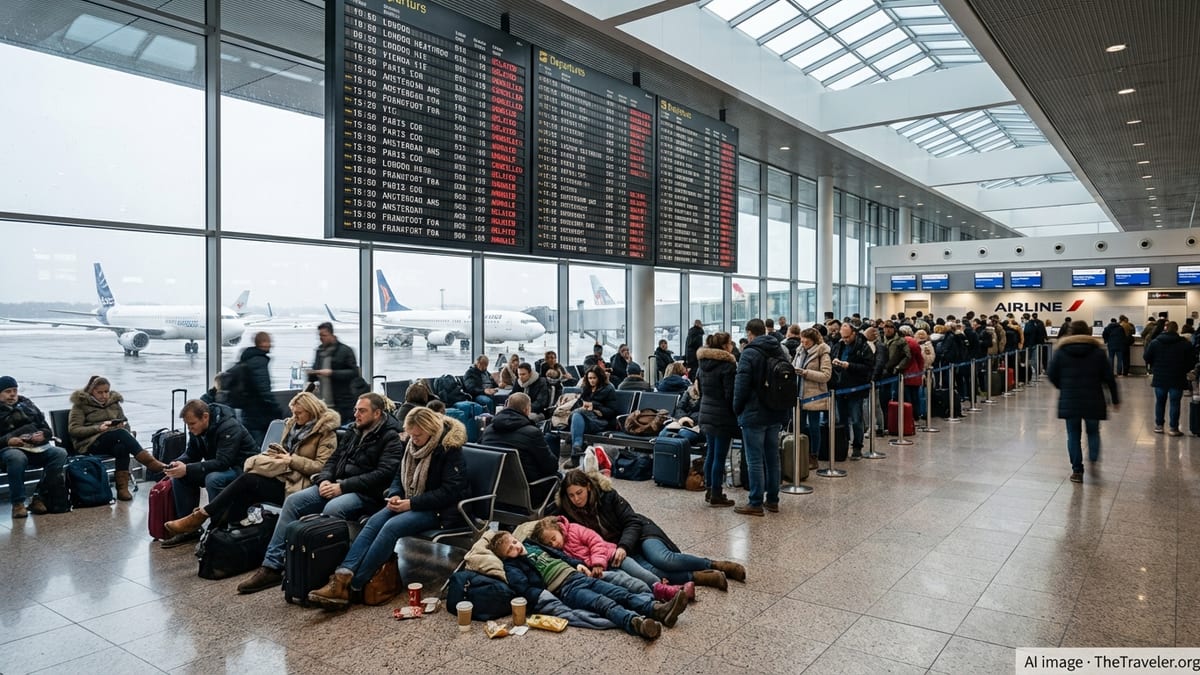
Fresh Wave of Disruption Sweeps European Skies
European air travel entered another day of severe disruption on Friday as a powerful winter pattern and strained airport operations triggered widespread delays and targeted cancellations from the North Sea to the Mediterranean. Aviation data compiled for February 20 indicates that at least 136 flights were canceled and around 2,042 delayed across key markets including Austria, Romania, France, the United Kingdom and Spain, leaving terminals jammed with stranded passengers and forcing last‑minute itinerary changes.
The latest turmoil follows a week of mounting weather‑related disruption, with airlines warning that the combination of snow, freezing rain and low visibility has cut runway capacity at several major hubs. Today’s figures highlight a shift in the disruption map: while Amsterdam, Frankfurt and other continental hubs were hardest hit earlier in the week, Vienna, London, Paris, Bucharest and Spanish leisure gateways such as Tenerife have now emerged as fresh bottlenecks.
Flag carriers and low‑cost operators alike have been caught up in the chaos. Regional players such as Lauda Europe, which serves Vienna and Mediterranean holiday routes, are grappling with short‑haul schedule gaps, while network carriers including SAS and KLM are battling knock‑on effects across their connecting banks. Budget operators easyJet and others continue to see large clusters of late‑running flights at London and Spanish airports, leaving travelers facing missed connections and curtailed city breaks.
Although most routes are still operating, the sheer volume of delayed flights has created rolling queues at check‑in desks, security lanes and customer service counters. Airlines say they are prioritizing safety and crew duty‑time limits, while promising to restore schedules as quickly as conditions allow. For many passengers already en route, however, the practical impact is an unplanned night on a terminal bench or in an airport hotel.
Vienna and Central Europe Grapple With Cancellations
Austria’s capital Vienna is again near the center of the storm, with Vienna International Airport reporting a sharp uptick in both delays and tactical cancellations. Today’s figures tie Austria into a wider Central and Northern European disruption pattern that has already produced more than a thousand delays this week across the region. Operations at Vienna have been constrained by periods of reduced runway capacity as snow showers and gusting winds move through the area, forcing flight spacing to be increased and some departures to hold on the tarmac for extended de‑icing.
Low‑cost carrier Lauda Europe, which bases aircraft in Vienna and operates dense rotations across Central and Southern Europe, has seen several departures scrubbed from the morning and afternoon schedules. While most affected flights involve intra‑European city pairs, the cancellations are reverberating across the network as passengers miss onward connections on partner and codeshare services. Travelers heading to and from holiday hotspots in Spain and Italy are among those reporting lengthy queues and limited same‑day rebooking options.
Other carriers serving Vienna, including major European groups and regional airlines, are also dealing with elongated turnarounds and late‑running aircraft arriving from already disrupted hubs such as Amsterdam and Brussels. Ground handlers report that de‑icing demand has outpaced equipment at peak hours, further slowing operations. Although airport authorities emphasize that safety margins are being rigorously maintained, they acknowledge that the combination of weather and tight winter timetables has left little room to absorb shocks.
Rail links into Vienna have so far held up better than air services, but many passengers arriving by train this morning found their outbound flights severely delayed or canceled, feeding frustration in the check‑in halls. With hotel inventory in the city under pressure from spillover demand, airlines have been urging passengers whose flights are not yet canceled to check their status before travelling to the airport.
Romania Still Feeling the Effects of Earlier Snowstorms
Romania, and particularly its capital Bucharest, remains in recovery mode after heavy snow earlier in the week disrupted operations at both Henri Coandă and Bucharest Băneasa airports. While today’s cancellation and delay counts in Romania are lower than at the regional mega‑hubs, they still contribute meaningfully to the overall tally of 136 cancellations and over 2,000 delays across the continent. Residual challenges from earlier runway closures, aircraft repositioning and crew schedule dislocation continue to ripple through Friday’s operations.
Earlier snowstorms forced diversions and cancellations on a range of carriers from regional operators to major international airlines, and Friday’s schedules show the lingering impact in the form of gaps in rotation patterns and aircraft starting the day out of position. Travelers outbound from Bucharest this morning reported short‑notice gate changes and rolling delay estimates as airlines worked to consolidate lightly booked services and make best use of available aircraft.
Passengers connecting through Romania to other parts of Europe have been particularly exposed, as relatively small buffers in regional schedules leave little margin when a late‑arriving aircraft or crew runs into further weather on the next leg. Aviation analysts note that Romania’s place on the eastern edge of the current weather system means that any renewed deterioration could quickly push today’s modest disruption numbers higher, especially if additional snow bands sweep across the Carpathian region.
Authorities in Bucharest say that both airports have full snow‑clearance and de‑icing teams on standby and that priority is being given to maintaining predictable operations, even if that means canceling some services in advance. Travelers, however, continue to report crowded terminal areas and limited seating as delayed passengers accumulate during peak waves of departures.
Paris and London Face Heavy Knock‑On Delays
In Western Europe, Paris and London are again among the most affected cities as the week’s wintry weather continues to play havoc with finely tuned hub operations. While the overall cancellation count at French and UK airports today is lower than the peaks observed earlier in the week at Schiphol and Frankfurt, the two capitals have recorded some of the highest volumes of delays, feeding into the Europe‑wide total of 2,042 impacted flights.
At the main Paris hub, passengers on early‑morning departures encountered queues stretching far beyond security as airlines consolidated flights and rebooked customers from previously canceled rotations. French carriers have concentrated cancellations on short‑haul and regional services to free up slots for long‑haul departures and key intra‑European connections. This triaging approach has helped keep most intercontinental flights operating but has left many domestic travelers facing significant disruption to business and leisure plans.
London’s airports are also feeling the strain, with a mixture of weather, air‑traffic flow restrictions and aircraft arriving late from mainland Europe conspiring to push back departures throughout the day. Carriers including easyJet and SAS have reported clusters of delays on continental European routes, where a single late rotation can cascade into schedule changes for the rest of the day. British operators have been advising customers to build additional time into their journeys and to expect longer queues at customer service desks as staff work through rebooking backlogs.
Air‑traffic management restrictions over parts of Western Europe have compounded local weather issues. When snowfall or strong crosswinds reduce the number of planes that can safely take off and land per hour, regulators impose flow controls that can ripple outward to airports hundreds of kilometers away. For Friday’s schedules, that has meant additional holding patterns and departure slots pushed back by 30 minutes or more, even at airports not directly affected by snow or ice at a given moment.
Spanish Leisure Routes From Tenerife Hit Holidaymakers
Spain’s role in today’s disruption has been especially visible at leisure gateways, with Tenerife and other Canary Island airports seeing delays stretch deep into the afternoon as aircraft cycle through late inbound arrivals from Northern and Central Europe. For holidaymakers heading to or from the sun, the impact has been acute: while Spain’s mainland airports are accustomed to winter traffic fluctuations, the islands rely on tight turnarounds to support dense seasonal schedules operated by low‑cost and charter carriers.
Flights linking Tenerife with UK, Austrian, French and Scandinavian cities have seen a mixture of outright cancellations and multi‑hour delays, contributing to the pan‑European total of 136 canceled services and nudging delay statistics higher as the day wears on. Carriers such as easyJet and SAS, which mix leisure and business routes, have had to juggle aircraft between higher‑yield city markets and heavily booked island services, occasionally leaving resort‑bound passengers at the back of the queue for scarce spare capacity.
On the ground in Tenerife, passengers describe crowded departure halls and long lines at airline service desks as they seek hotel vouchers, meal coupons and alternative flights. With many weekend departures already close to sold out, airlines have limited flexibility to rebook large tour groups or families, forcing some to accept routings with extra stops through Madrid, Barcelona or mainland European hubs.
Weather at the island airports themselves has been relatively benign, underscoring how tightly interconnected European flight operations have become. Disruptions in Vienna, London or Amsterdam can leave aircraft and crew in the wrong place for scheduled Tenerife rotations, even under clear skies in the Canaries. Tourism officials warn that if the pattern of winter weather systems continues into next week, the islands could see lingering knock‑on effects in the form of aircraft shortages and further schedule trimming.
Major Airlines Struggle to Stabilize Networks
Across the continent, some of Europe’s best‑known airlines are working to stabilize networks that have been tested repeatedly by this latest spell of winter weather. KLM, SAS, easyJet and other major operators are prominent in today’s disruption statistics, having already suffered high cancellation and delay counts earlier in the week during heavy snow and freezing conditions over the Benelux countries and Germany.
KLM has been contending with the aftershocks of earlier snowfall at its Amsterdam hub, where runway capacity reductions on Thursday forced the carrier to trim its short‑ and medium‑haul program and reroute passengers. Those proactive cancellations and rolling delays have carried over into Friday’s schedule as crews reach duty‑time limits and aircraft begin the day out of sequence. In practical terms, this means that even flights departing from airports not directly hit by fresh snow can be delayed because the aircraft or crew are arriving late from Amsterdam or other disrupted cities.
SAS, with its network centered on Scandinavia but closely tied into major Western European hubs, has reported continued challenges keeping rotations punctual amid shifting weather bands and air‑traffic restrictions. Services linking Nordic capitals with London, Paris and Central European cities are among those showing up prominently on delay boards, placing additional pressure on already busy transfer banks at key hubs. KLM and SAS have both urged customers to use mobile apps and online self‑service tools for rebooking, in an effort to reduce queues at airport desks.
Low‑cost giant easyJet, for its part, finds itself managing disruption across a sprawling point‑to‑point network where aircraft typically operate multiple short sectors per day. When one leg is delayed by weather, the ripple quickly spreads to later flights. Today’s numbers show easyJet among the airlines with the highest absolute delay counts, particularly on routes touching London, Paris and Spanish leisure markets. The carrier has deployed additional customer‑service staff and says it is focusing on reinstating core frequencies between major cities before rebuilding thinner seasonal services.
Passengers Confront Long Queues and Limited Options
For passengers, the statistics translate into very tangible discomfort. At Vienna, Bucharest, Paris, London and Tenerife, terminal halls filled early on Friday with travelers waiting for updated departure information or seeking assistance after receiving cancellation notices overnight. Families with small children and older passengers have been especially affected, with many reporting waits of several hours to speak with airline staff as call centers and social‑media channels also struggled to keep up with demand.
Under European passenger‑rights rules, airlines must provide care in the form of meals, refreshments and, when necessary, hotel accommodation when flights are heavily delayed or canceled. Travelers at several affected airports reported receiving meal vouchers and, in some cases, overnight hotel offers, but others said they were advised to keep receipts and claim reimbursement later once immediate bottlenecks eased. With many city‑center hotels already busy with trade fairs and winter break visitors, securing enough rooms close to the airports has proved challenging.
Staffing constraints are also a factor. Ground‑handling companies and security firms that were already stretched by a busy winter season are now coping with the additional burden of disrupted passengers requiring rebooking, baggage retrieval or special‑assistance support. At some airports, unions have raised concerns about fatigue among frontline workers asked to cover extra shifts during successive days of disruption.
Despite the difficult circumstances, many passengers have praised individual staff members for their efforts to find creative solutions, such as re‑routing travelers via secondary hubs or rebooking them on partner airlines. However, with total delay counts now above 2,000 for the day and cancellations still mounting in the triple digits, there are limits to how many journeys can be salvaged before the weekend.
What Today’s Chaos Means for Travelers in the Coming Days
While airlines stress that they expect operations gradually to normalize if weather patterns improve, today’s wave of 136 cancellations and 2,042 delays is likely to cast a shadow over weekend travel. Aircraft and crews displaced by Friday’s disruptions will need to be repositioned, and lightly loaded late‑evening services may be trimmed to free capacity for peak‑time flights on Saturday and Sunday. Travelers with flexible plans are being encouraged to accept rebooking onto less congested flights where possible, freeing scarce seats for those with fixed commitments.
Travel industry analysts warn that Europe’s tightly interlinked aviation system is increasingly vulnerable to sequences of weather events such as this week’s storms. Many airlines are operating near capacity during the winter break period, which limits their ability to hold back spare aircraft or maintain large crewing reserves. When multiple countries are affected at once, as is currently the case in Austria, Romania, France, the UK and Spain, there are few unaffected hubs available to absorb overflow traffic.
For now, the advice from airlines and airports is consistent: check flight status repeatedly before heading to the airport; use digital channels where possible to adjust plans; and prepare for queues and potential overnight stays if traveling through the most affected hubs. Travelers connecting through Vienna, Bucharest, Paris, London and Tenerife in particular should allow longer connection times and carry essentials such as medication and chargers in their hand luggage in case bags go astray during re‑routing.
Should weather conditions stabilize over the weekend, aviation officials expect punctuality rates to improve and the backlog of disrupted passengers to clear gradually. However, with winter far from over and forecasts suggesting further cold snaps in parts of Europe, carriers and passengers alike may need to brace for additional periods of turbulence in the weeks ahead.