

More news on this day
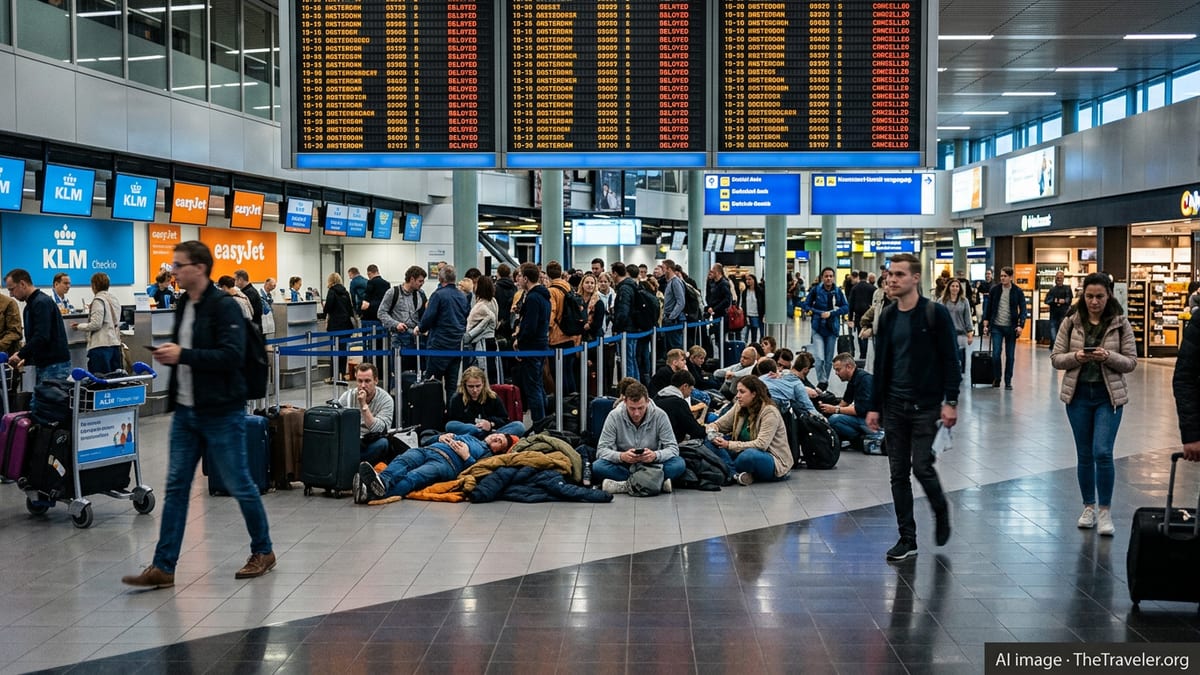
Thousands of travellers across Europe are facing long queues, missed connections and overnight airport stays as a fresh wave of disruption leads to more than 2,200 delays and nearly 1,000 flight cancellations affecting major carriers including Lufthansa, KLM and Wizz Air at hubs from Frankfurt to Barcelona.
Get the latest news straight to your inbox!
Data Shows Widespread Disruption Across Multiple Countries
Operational data compiled from flight tracking platforms and industry reports for Saturday 11 April indicates that airports in the United Kingdom, Spain, the Netherlands and several other European states collectively logged 2,203 delayed departures and 990 cancellations in a single 24 hour period. The scale of the disruption places the latest incident among the most severe Europe wide operational snarl ups so far in 2026.
Coverage from aviation focused outlets describes a concentration of disruption around major hubs including Frankfurt, Barcelona, Amsterdam and London, where dense schedules amplify the knock on effect of each cancelled or heavily delayed flight. Once early morning rotations are pushed off schedule, aircraft and crew quickly fall out of position, leaving later services vulnerable to last minute changes and further delays.
Reports indicate that Lufthansa, KLM and Wizz Air are among the airlines most exposed, due both to their extensive intra European networks and to the central role of their hubs. Travellers flying point to point on busy leisure routes as well as those connecting to long haul services have faced missed onward sectors, with many forced to queue for rebooking or arrange overnight accommodation at short notice.
Publicly available figures cited by specialist travel publications suggest that, while the majority of Europe’s scheduled flights are still operating, the share affected by disruption at the hardest hit hubs is high enough to leave terminal departure boards heavily dominated by delay and cancellation notices through much of the day.
Frankfurt, Barcelona and Amsterdam Emerge as Flashpoints
Frankfurt Airport, Lufthansa’s primary hub and one of Europe’s busiest intercontinental gateways, has once again found itself at the heart of the disruption. Recent strike action among Lufthansa cabin crew in Germany led to the cancellation of hundreds of flights and forced tens of thousands of passengers to abandon or rework travel plans, and the residual effects of these schedule changes are still being felt.
According to published coverage from European news and travel outlets, more than 500 Lufthansa and Lufthansa CityLine services were cancelled in Germany on Friday 10 April alone, with Frankfurt bearing a substantial share. Aircraft and crews displaced by these strikes have reduced operational flexibility for the weekend, making it harder for the airline to recover when new weather, congestion or staffing issues arise.
In Spain, Barcelona El Prat has been highlighted by travel industry reporting as one of the country’s most affected airports in early April, with elevated levels of delays linked to a mix of ground handling issues, high seasonal demand and wider European knock on effects. Passengers connecting through Barcelona on low cost and hybrid carriers such as Vueling and Wizz Air have reported extended waiting times at gates and crowded customer service points as schedules slip behind.
Amsterdam Schiphol, KLM’s home base, continues to operate at high utilisation, and any disturbance elsewhere in Europe quickly cascades through its tightly banked waves of departures and arrivals. While Dutch authorities have spent recent years trying to ease bottlenecks at the airport, springtime weather systems and air traffic restrictions across neighbouring airspace have again exposed the vulnerability of a hub dependent on short turnaround times and well coordinated ground operations.
Weather Systems, Strikes and Operational Strain Combine
Analysis from travel industry observers points to a combination of factors behind the current wave of disruption. A series of Atlantic storm systems moving across western and northern Europe in late March and early April has brought strong winds and heavy rain to the UK, Germany, France and Spain, periodically slowing arrivals and departures and pushing flight times beyond planned schedules.
At the same time, labour disputes at airlines and airport service providers have continued to flare. In Germany, repeated industrial action by flight attendants at Lufthansa and its affiliates has already triggered several days of mass cancellations in 2026, and the recovery from each event can take multiple days as aircraft and crew are repositioned, maintenance windows are rescheduled and backlogged passengers are re accommodated.
Operational strain is further compounded by high spring travel demand, particularly around school holidays and long weekends. Airlines have been operating close to capacity on many intra European routes, leaving little slack to absorb late running aircraft or unexpected technical issues. When a rotation is cancelled to keep another segment on time, passengers on the dropped flight often face lengthy waits for the next available seat, especially on popular leisure routes to Spain and southern Europe.
Industry data cited in recent travel analysis suggests that on some days in early April, European carriers collectively cancelled several hundred flights while delaying thousands more, underscoring how quickly a mix of weather, staffing disputes and congested airspace can push the system beyond its limits.
Passengers Confront Long Queues and Limited Rebooking Options
The immediate impact for travellers has been felt in crowded terminals, extended queues at airline service desks and long holds on customer support lines. Passengers at Frankfurt, Barcelona, Amsterdam and London report spending hours waiting to secure new itineraries, hotel vouchers or meal support as airlines work through backlogged rebooking requests.
Travel magazines and passenger advocacy groups note that, when disruption reaches this scale, aircraft and crews are often fully allocated for many hours or even days ahead. This means that passengers who are cancelled late in the day may find that the next available seat to their destination is not until the following afternoon or later, particularly if they are travelling in larger groups or on niche city pairings.
For long haul travellers whose European feeder flights have been delayed or cancelled, missed connections can be especially costly. A late departure from a regional city to Frankfurt or Amsterdam can easily cause a missed transatlantic or Asia bound departure, and with many long haul services operating only once daily, this may result in an unplanned overnight stay and further disruption to work or holiday plans.
Some passengers have opted to purchase new tickets on competing carriers operating from nearby airports in order to maintain key commitments, treating airline refunds or future travel credits as a secondary consideration. Others have turned to rail or long distance coach services on shorter intra European routes when same day flights are no longer realistic.
Know Your Rights Under EU261 and Practical Next Steps
Consumer organisations are reminding travellers affected by the current disruption that flights departing from European Union, EEA and certain associated airports are generally covered by Regulation EC 261, the bloc’s air passenger rights framework. Under these rules, airlines must provide care and assistance during long delays and cancellations, including meals, refreshments and, where necessary, hotel accommodation and transfers.
Eligibility for financial compensation depends on several conditions, including the length of the delay at arrival, the distance of the flight and whether the underlying cause is considered within the airline’s control. Industrial action by an airline’s own staff and certain operational issues can, in some cases, open the door to compensation, while severe weather and air traffic control restrictions are more likely to be treated as extraordinary circumstances where cash payments are not owed.
Travel experts recommend that affected passengers keep boarding passes, booking confirmations and any written notices of delay or cancellation, as these documents can be important when submitting claims to airlines or, if necessary, to national enforcement bodies and alternative dispute resolution schemes. Maintaining a record of additional expenses such as hotels or ground transport can also support reimbursement requests where airlines have pre authorised such costs.
Practical advice from travel publications for those still due to fly in the coming days includes monitoring flight status frequently via airline apps, considering earlier departures where possible to protect onward connections and allowing extra time at airports that have recently reported severe congestion. With Europe’s spring travel season now in full swing, operational data suggests that punctuality may remain fragile in the short term, even after the worst of the current disruption clears.