

More news on this day
Thousands of air travelers across Europe faced hours of uncertainty as a new wave of disruption saw at least 76 flights cancelled and more than 1,300 delayed, stranding passengers at major hubs in the United Kingdom, Spain, Denmark, Turkey, the Netherlands and beyond.
Get the latest news straight to your inbox!
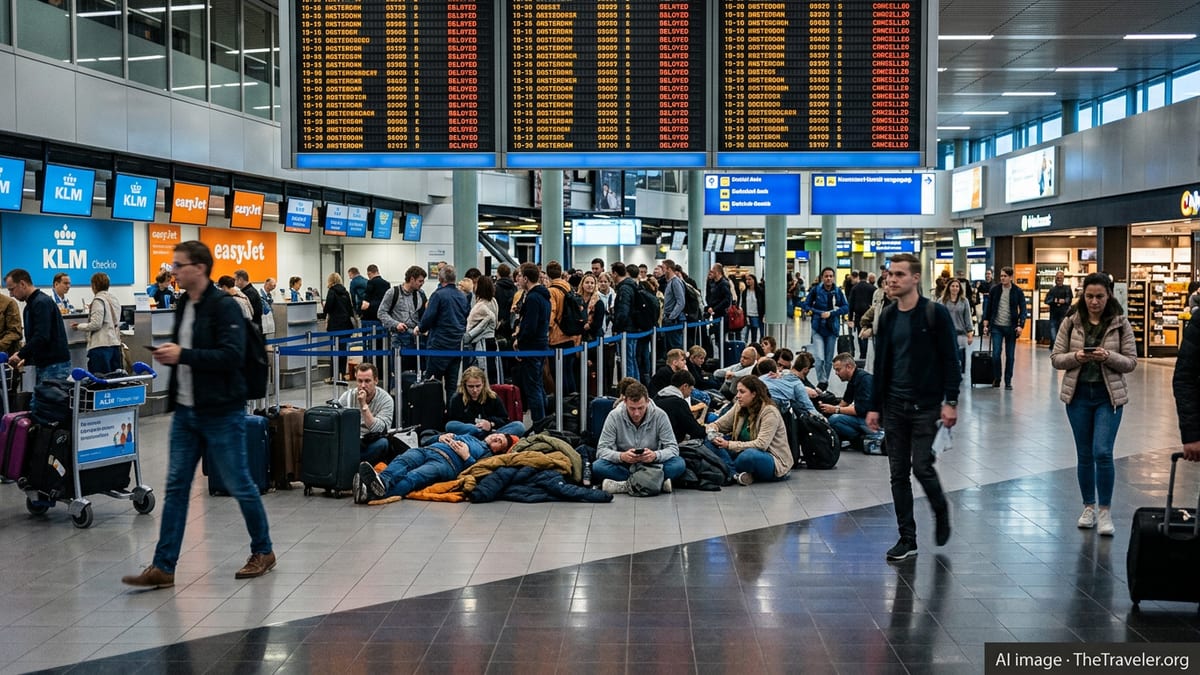
Widespread Disruption Across Multiple Countries
Operational data from flight-tracking and passenger-rights services indicates that the latest disruption has hit a broad swath of Europe’s aviation network, affecting both domestic and international services. Airports in London, Amsterdam, Oslo, Istanbul, Copenhagen and Spanish coastal and island destinations reported clusters of cancellations and long backlogs of delayed departures and arrivals.
The pattern mirrors other recent bad days for European aviation, when hundreds of flights were delayed in a single trading day, causing missed connections, missed holidays and missed business appointments for thousands of passengers. Aggregated daily snapshots for the region have repeatedly shown triple-digit cancellation figures paired with more than a thousand delays, underscoring how even relatively modest disruption at one hub can quickly reverberate across the continent.
In the United Kingdom, reports point to congestion and tight scheduling at London’s main airports contributing to knock-on delays throughout the day as ground operations and air traffic flow struggled to recover once early services fell behind schedule. Similar scenes were reported in Spain, Denmark and Turkey, where busy leisure and transfer traffic magnified the impact of each late or cancelled rotation.
In the Netherlands, the highly interconnected nature of Amsterdam Schiphol’s transfer operation once again amplified the strain. Publicly available information on recent travel alerts for airlines based at Schiphol highlights recurring schedule adjustments and reduced resilience in the face of weather, staffing or technical issues, which can quickly spill over into large numbers of delayed or cancelled flights.
Major Carriers Hit: KLM, British Airways, Lufthansa and SAS
The disruption has not been confined to low cost or regional operators. Data compiled by passenger-rights platforms and airport performance reports shows that flagship carriers including KLM, British Airways, Lufthansa and SAS have all experienced significant numbers of delayed and cancelled services on recent high impact days.
On comparable disruption days earlier this year, summaries for Europe showed KLM and British Airways among airlines with dozens of impacted flights across London and Amsterdam, while Lufthansa and SAS registered multiple cancellations and reactionary delays at their own hubs and outstations. These previous events provide a benchmark for understanding the scale of the latest figures, with 76 cancellations and more than 1,300 delays falling within the range of what has recently been observed on the continent’s worst operational days.
For KLM and its partners, the concentration of connecting traffic at Schiphol means that a delayed inbound aircraft from Oslo, London or southern Europe can cascade into missed onward services for passengers bound for North America, Asia or other European capitals. Similarly, British Airways faces compounding pressure at Heathrow and Gatwick, where slot constraints and busy approach paths leave limited room to recover once rotations slip.
Scandinavian operator SAS, which relies heavily on transfer flows through Copenhagen and Oslo, has also been exposed when adverse weather or airspace congestion reduces usable capacity. Earlier performance statistics from northern hubs highlight how reactionary delays often account for a large share of total disruption, reflecting the domino effect once early flights run late.
Knock-on Effects in London, Oslo, Amsterdam and Other Hubs
By midafternoon on the latest day of disruption, social media posts and local media coverage from London, Oslo and Amsterdam pointed to long queues at check in, full departure lounges and departure boards dominated by amber and red status lines. Travelers reported missed connections from short haul feeders to long haul departures, particularly for flights leaving from London and Amsterdam in the late afternoon and evening banks.
At London’s main airports, earlier sharp reductions in punctuality have demonstrated how sensitive the system is when weather or network issues converge with high seasonal demand. When arriving aircraft land late, the same aircraft and crew are then unable to depart on time for subsequent sectors, creating an expanding backlog. This pattern was visible in recent disruption days where British Airways and other carriers collectively recorded hundreds of delay incidents in a single day.
In Oslo and Copenhagen, the pressure was compounded by a mix of regional flights and longer European sectors operated by SAS and partner airlines. As delays accumulated, passengers transiting through these hubs to reach destinations in Spain, Turkey and the United Kingdom were among those stranded, some facing overnight stays when missed onward flights departed without them.
Amsterdam Schiphol, one of Europe’s busiest transfer hubs, once again acted as a focal point for disruption. Historic incidents and recent capacity challenges at the airport have underscored how quickly its tightly timed wave structure can unravel when even a small portion of services encounter problems, forcing airlines to re-time or cancel flights in order to restore some level of stability.
Passengers Left Scrambling For Alternatives
For individual travelers, the effect of a day featuring 76 cancellations and 1,311 delays is felt in hours spent in lines, unexpected hotel bills and hurried rebookings. Reports from previous multi country disruption days show that hotel capacity near major airports such as Heathrow, Schiphol and Frankfurt can tighten rapidly once evening cancellations begin, pushing passengers into city centers or forcing them to wait overnight in terminal buildings.
Publicly available guidance from airlines and travel advisory sites emphasizes the importance of acting quickly when a flight is cancelled or heavily delayed. Airline apps and online rebooking tools are often updated faster than physical service desks, giving passengers a better chance to secure remaining seats. On recent bad days, travel media reports have highlighted that those who immediately rebook via digital channels are more likely to travel within 24 hours than those who wait in terminal queues.
However, even rapid action offers no guarantee when large numbers of flights are affected at once. With more than a thousand services running late, spare capacity on alternate flights can vanish in minutes, particularly on popular leisure routes between northern Europe and Mediterranean destinations. This dynamic is especially pronounced in peak holiday periods, when load factors are already high.
Families and groups often face a tougher challenge, as rebooking systems may only have scattered individual seats remaining. In earlier incidents with similar levels of disruption, passengers have reported being split across multiple flights and dates, with some members of a party travelling days later than originally planned.
What the Disruption Reveals About Europe’s Aviation Fragility
The latest wave of cancellations and delays offers another illustration of how fragile Europe’s aviation network can be when faced with a combination of weather, congestion, staffing gaps or technical constraints. While the headline figure of 76 cancelled flights might appear modest compared with total daily movements, pairing that with more than 1,300 delays paints a picture of a system operating with limited buffer and resilience.
Analysis of comparable disruption days by independent passenger-rights organizations shows that reactionary delays, which occur when earlier problems ripple through the schedule, account for a large share of the total impact at major hubs. Once rotations are out of sync, airlines must choose between operating very late flights, consolidating passengers onto fewer services or cancelling sectors outright in order to reset aircraft and crew positions.
This latest incident also underscores how interlinked European hubs have become. A late departure from London or Oslo can easily translate into a missed connection in Amsterdam or Istanbul, which in turn may strand passengers bound for destinations in Spain, the Balkans or the eastern Mediterranean. With major players such as KLM, British Airways, Lufthansa and SAS all running complex wave systems, a fault in one part of the network soon becomes everyone’s problem.
For travelers, the continuing pattern of large scale disruption underlines the value of building redundancy into trip planning. Travel advisories increasingly recommend avoiding very tight connections, especially when routing through key hubs, and suggest monitoring flight status closely in the 24 hours before departure so that early signs of trouble can be addressed before options disappear.