

More news on this day
Thousands of air passengers across Europe have been left in limbo after a fresh wave of disruptions led to 76 flight cancellations and 1,311 delays, snarling operations for major carriers including KLM, British Airways, Lufthansa and SAS at key hubs in the United Kingdom, Spain, Denmark, Turkey, the Netherlands and beyond.
Get the latest news straight to your inbox!
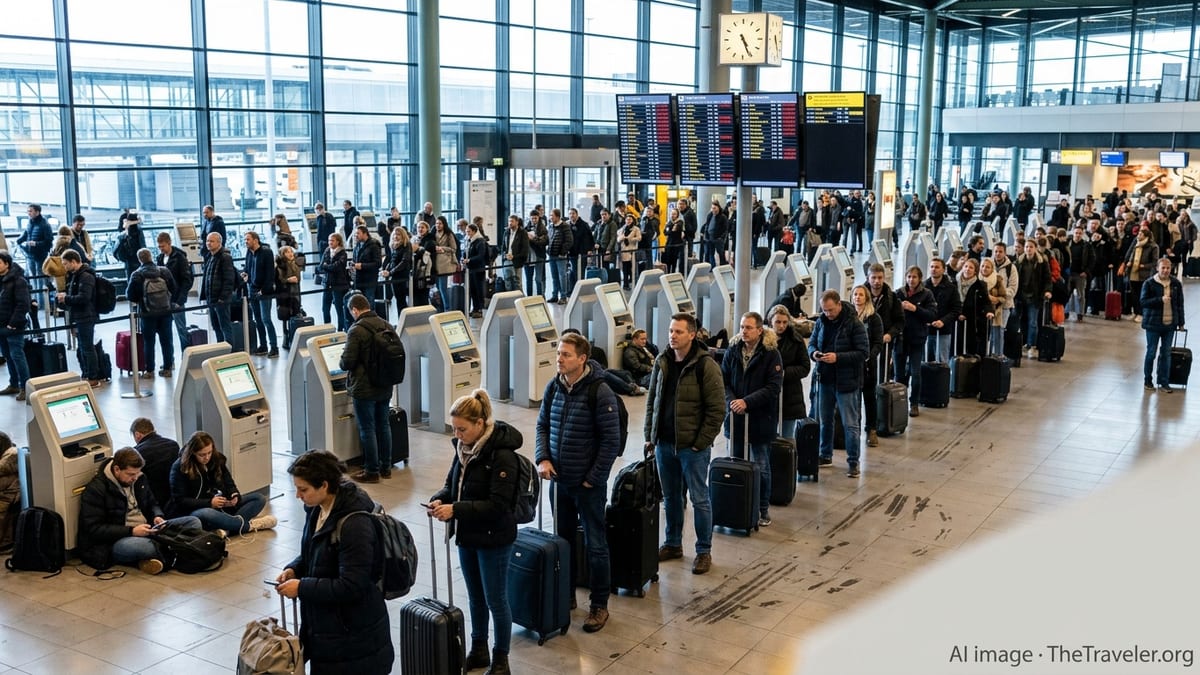
Network Snarls Hit London, Amsterdam and Oslo
Operational data and disruption trackers for European air travel indicate that the latest day of irregular operations has been marked by concentrated problems at large transfer hubs, with London, Amsterdam and Oslo among the worst affected. Flights into and out of these airports are heavily interconnected, so each late arrival quickly turns into a late departure, rippling across the wider network.
At London’s main airports, delays have accumulated across short haul and long haul services, with British Airways and other carriers forced to trim frequencies, retime departures and juggle aircraft rotations. The knock on effect has seen passengers miss onward connections to Scandinavia, southern Europe and transatlantic destinations, increasing pressure on already tight seat availability.
Amsterdam Schiphol, a major connecting base for KLM and partner airlines, has also felt the strain as inbound aircraft from the United Kingdom and Scandinavia arrived behind schedule. Publicly available disruption summaries show high volumes of delayed movements, particularly on routes linking Amsterdam with London, Oslo and other northern European cities, leaving transfer passengers facing long queues at rebooking desks and customer service counters.
Oslo’s role as a regional gateway to northern Europe has added another layer to the disruption picture. Delayed departures from Norway have contributed to missed onward flights in Amsterdam, London and other hubs, underscoring how even relatively modest local issues can cascade into widespread disruption when aircraft and crews are scheduled to operate multiple sectors per day.
Major Carriers Struggle To Protect Schedules
The figures of 76 cancellations and 1,311 delays across the European network highlight the difficulty airlines face in maintaining reliable schedules when several countries are affected at once. Published disruption overviews show that KLM, British Airways, Lufthansa and SAS have all reported elevated numbers of delayed operations, alongside other European and Middle Eastern carriers.
For network airlines, the greatest vulnerability lies in their reliance on banks of connecting flights that converge on hub airports. If one “bank” of flights arrives late, aircraft and crews are out of position for subsequent departures, which can quickly turn isolated disruptions into a systemic issue. Industry analyses note that this is particularly visible at airports such as Amsterdam and London Heathrow, where a high proportion of passengers are connecting rather than originating or terminating.
In Germany, Lufthansa has been managing knock on effects from disrupted services linking its hubs with London, Scandinavia and southern Europe. Delays on feeder flights have complicated connections onto long haul departures, with some passengers being rebooked onto later transatlantic or Middle Eastern services when minimum connection times could not be met.
Scandinavian carrier SAS, which operates dense schedules between Denmark, Norway, Sweden and major European hubs including London and Amsterdam, has also been exposed. When rotation plans are interrupted, aircraft that should be operating evening departures can still be completing earlier sectors, reducing operational flexibility and leading to late evening arrivals and overnight stranding of some travelers.
Knock On Disruptions Spread Across Spain, Denmark and Turkey
While the most visible queues have formed at flagship hubs, secondary airports across Spain, Denmark and Turkey have also experienced significant operational headaches. Schedules that rely on aircraft arriving from London, Amsterdam or northern Europe have been particularly vulnerable, according to daily records compiled by flight status and compensation platforms.
In Spain, delays on inbound services from northern Europe have pushed back departures to holiday destinations and regional cities, affecting both leisure travelers and business passengers. Some airports have reported clusters of delayed departures in evening waves, as earlier disruptions reduced the time available for turnarounds, refueling and crew changes.
Airports in Denmark have experienced similar patterns. Flights from Copenhagen and regional Danish gateways to hubs such as London and Amsterdam have in many cases departed late after arriving aircraft were held up elsewhere in Europe. This has had tangible consequences for passengers trying to make same day round trips or tight onward connections, particularly on weekdays when schedules are most compressed.
Turkey’s role as a bridge between Europe, Asia and the Middle East has meant that disruption there has both regional and long haul implications. When flights from Istanbul and other Turkish airports depart late or are cancelled, the impact can extend far beyond Europe, affecting itineraries that include stopovers in London, Amsterdam or other European cities as part of a longer journey.
Passengers Face Long Queues, Rebookings and Overnight Stays
For affected travelers, the raw statistics of cancellations and delays have translated into hours spent in terminal buildings, uncertain rebooking prospects and, for some, unexpected overnight stays far from home. Reports from travel forums and passenger rights organizations describe queues stretching across departure halls as customers seek new itineraries, meal vouchers or hotel accommodation.
Many airlines now encourage passengers to use mobile apps and online tools to manage disruptions, offering rebooking options and digital boarding passes without the need to join physical lines. Travel industry guidance notes that, during large scale disruption, digital channels can sometimes secure alternative flights more quickly than traditional service desks, which can become overwhelmed when hundreds of people are affected at once.
However, digital tools do not always solve the fundamental issue of limited capacity. When 76 flights are cancelled on a given day and more than 1,300 are delayed, spare seats on remaining services are quickly exhausted. This is particularly true on popular city pairs such as London to Amsterdam or London to Scandinavian capitals, where load factors are already high and additional passengers from cancelled flights can only be accommodated over several subsequent departures.
As a result, some travelers have found themselves offered reroutings via alternative hubs, or rebooked onto flights one or two days later. Passenger accounts from recent disruption events suggest that flexible travelers who accept indirect routes through less congested airports sometimes reach their destinations sooner than those waiting for the next nonstop option from the original hub.
What Travelers Can Do During Widespread Disruptions
With Europe’s air traffic network once again showing how quickly it can seize up, travel experts are highlighting practical steps that passengers can take to lessen the impact of large disruption days. Publicly available advice from consumer groups and travel media consistently emphasizes preparation, flexibility and documentation.
Travelers are encouraged to monitor flight status closely in the 24 hours before departure, particularly when connecting through large hubs such as London, Amsterdam or Istanbul. Early awareness of schedule changes can provide more time to evaluate rerouting options, adjust ground transport or secure overnight accommodation near the airport if a long delay appears likely.
European Union passenger rights rules, often referred to in connection with Regulation EC 261, can offer protection in the form of meals, accommodation and in some circumstances financial compensation when flights are significantly delayed or cancelled. Passenger support organizations advise keeping boarding passes, booking confirmations and any written communication from the airline, as these documents can assist with later claims through airline channels or third party services.
For now, the latest tally of 76 cancellations and 1,311 delays underscores the fragility of Europe’s interconnected air network. As peak travel periods approach, the experience of passengers stranded around London, Oslo, Amsterdam and other hubs serves as a reminder that even routine journeys across the continent can be vulnerable to sudden, widespread disruption.