

More news on this day
Thousands of airline passengers across Europe are facing severe disruption as airports in Spain, England, Italy, Norway, Denmark, Sweden and the Netherlands report 1,475 flight delays and 172 cancellations in a single day, snarling operations for carriers including ITA Airways, Vueling, KLM, Scandinavian Airlines, Ryanair and several smaller operators.
Get the latest news straight to your inbox!
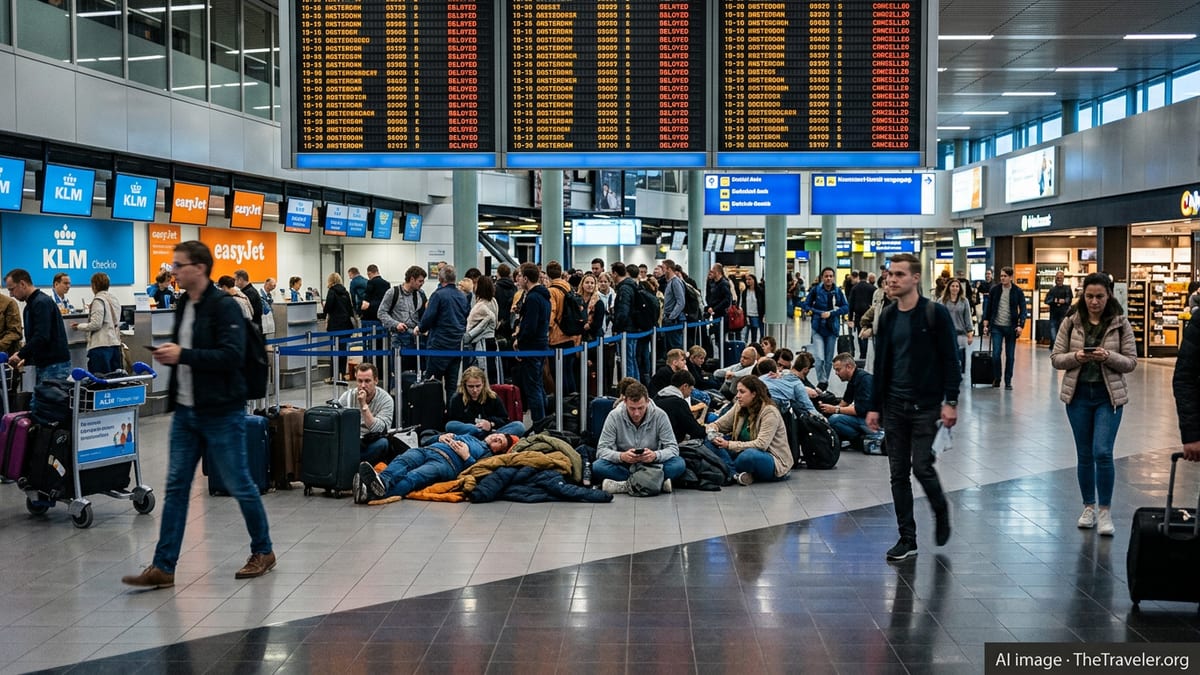
Major Hubs From Rome To London Face Rolling Disruptions
Published data from European aviation trackers and travel-industry coverage indicates that the latest wave of disruption is concentrated around some of the continent’s busiest hubs, including Rome Fiumicino, Madrid Barajas, London’s major airports, Amsterdam Schiphol, Oslo Gardermoen and Copenhagen. The cumulative impact of 1,475 delayed flights and 172 cancellations has produced widespread missed connections and overnight strandings.
Italian operations have been particularly affected, with ITA Airways and low cost rivals experiencing a mix of late departures and scrubbed services on domestic and intra-European routes. Reports from Rome and Milan describe departure boards dominated by delay notices as carriers work through knock-on schedule issues from earlier in the day.
In Spain, publicly available disruption tallies show Madrid and Barcelona among the worst hit, with Vueling featuring prominently in delay statistics alongside other European and long haul airlines. The concentration of affected flights at these transfer-heavy airports is compounding problems for travelers connecting onward to Latin America, North Africa and the rest of Europe.
In northern Europe, delays and cancellations are spread across Norway, Denmark and Sweden, where Scandinavian Airlines and partner carriers are contending with tight turnaround times and congestion throughout the regional network. Amsterdam, a key hub for KLM, is again acting as a pressure point, with late arrivals from southern Europe cascading into pushback and slot delays on departures.
Weather, Congested Skies And Staffing Pressures Converge
Travel industry reports link the current disruption to a familiar mix of causes across the continent. Adverse weather patterns over parts of Scandinavia and the North Sea region have reduced runway capacity at times, forcing air traffic managers to meter arrivals and departures. Even small schedule adjustments can quickly multiply into dozens of late flights when airports are already operating near capacity.
Operational data and recent analyses from aviation bodies highlight chronic congestion in European airspace, where traffic has largely recovered to or exceeded pre pandemic levels while air traffic control capacity has lagged. When restrictions are imposed on certain sectors of airspace, flights are rerouted or slowed, adding minutes to flight times and pushing aircraft off their scheduled stands.
Staffing pressures remain another underlying factor, with several European airports and airlines still rebuilding workforces. Ground handling shortages, limited gate availability and stretched maintenance teams can all extend turnaround times. According to aggregated disruption statistics, this creates a pattern where early morning delays ripple throughout the day, increasing the share of flights arriving late into the evening.
In some cases, reports indicate that residual effects from recent storms and earlier days of heavy disruption are still being felt, as aircraft and crews remain out of position. This is particularly evident on thinner regional routes linking secondary cities, where limited spare capacity makes it harder for airlines to substitute aircraft or crews at short notice.
Carriers From ITA To Ryanair Race To Reprotect Passengers
The disruption is affecting a broad cross section of airlines. Full service carriers such as ITA Airways, KLM and Scandinavian Airlines are dealing with complex rebooking challenges across multi leg itineraries, particularly for passengers who started their journeys outside Europe and are connecting through hubs such as Rome, Amsterdam and Copenhagen.
Low cost airlines including Vueling and Ryanair are visible in delay and cancellation tallies at airports in Spain, Italy, the United Kingdom and the Nordic region. Their dense point to point networks mean that a cancelled rotation in one country can immediately remove capacity from another, complicating efforts to re accommodate travelers on later departures.
Publicly available customer guidance from several airlines shows that carriers are offering a mix of same day rebooking, travel vouchers and, where required by regulation, ticket refunds. Some are encouraging customers to use mobile apps and websites to adjust itineraries rather than queueing at airport desks, in an effort to reduce congestion in already crowded terminals.
However, industry reports suggest that options are limited on popular leisure and business routes, with many remaining flights already heavily booked. This is leaving some passengers with overnight stays or multiday waits for the next available seats, particularly on intra European connections to smaller cities.
Stranded Travelers Face Long Queues And Limited Information
Scenes described in local media and travel coverage from airports across the affected countries show terminal halls crowded with passengers waiting for updates, rebooking and access to basic services. With flights departing late or being cancelled shortly before boarding, many travelers have been left scrambling to rearrange hotel stays and ground transportation.
The challenges are especially acute for families and travelers with tight onward connections, including those bound for long haul services to North America, Africa and Asia. When a short European leg is disrupted, passengers often lose their place on subsequent flights, triggering a chain of rebookings that can stretch across several airlines and alliance partners.
Information flow remains a common frustration. While airport displays and announcements provide headline status changes, detailed explanations about specific delays are often limited. Travel guidance outlets consistently advise passengers to check airline apps and flight tracking tools regularly, as gate assignments and departure times may continue to shift throughout the day.
Accommodation around major hubs is also under strain. Travel industry reports note rising demand for last minute hotel rooms near airports such as Madrid, Rome, London and Amsterdam, as stranded travelers seek somewhere to stay while they wait for new flights. This is driving some passengers to consider rail or coach alternatives for shorter cross border journeys.
Know Your Rights Under EU And UK Passenger Protections
Consumer advocates and travel advisories are once again drawing attention to passenger protections in Europe as disruption levels spike. Under EU Regulation 261/2004 and parallel UK rules, travelers departing from airports in the European Union, European Economic Area or the United Kingdom, or flying into those regions on qualifying carriers, may in some circumstances be entitled to compensation when flights are significantly delayed or cancelled.
These regulations typically distinguish between disruption caused by factors within an airline’s control, such as crew scheduling or maintenance planning, and those considered extraordinary, including severe weather or air traffic control restrictions. In many cases, even when compensation is not due, airlines remain responsible for care obligations, including meals, refreshments and, where necessary, hotel accommodation for overnight delays.
Travel experts recommend that passengers keep boarding passes, booking confirmations and any written notice of delay or cancellation, as these documents can be important when submitting claims after the journey. Publicly available guidance from airlines and compensation services also stresses the importance of recording the exact arrival time at the final destination, since entitlement often depends on the length of the delay.
As Europe’s aviation system continues to experience repeated bouts of disruption, industry analysts suggest that travelers build additional buffer time into itineraries, particularly when planning self connected journeys involving separate tickets. For now, the latest tally of 1,475 delays and 172 cancellations across seven European countries underscores how quickly routine operational strains can tip into continent wide travel chaos.