

More news on this day
Thousands of travellers across Europe and beyond are stranded after at least 781 flights were delayed and 180 cancelled on Monday, as airspace closures linked to the escalating Gulf conflict rippled through hubs in the United Kingdom, Spain, the Netherlands and Germany, grounding services by British Airways, Emirates, SAS, KLM and other major carriers to cities including Dubai, Munich, Edinburgh, Nice and Helsinki.
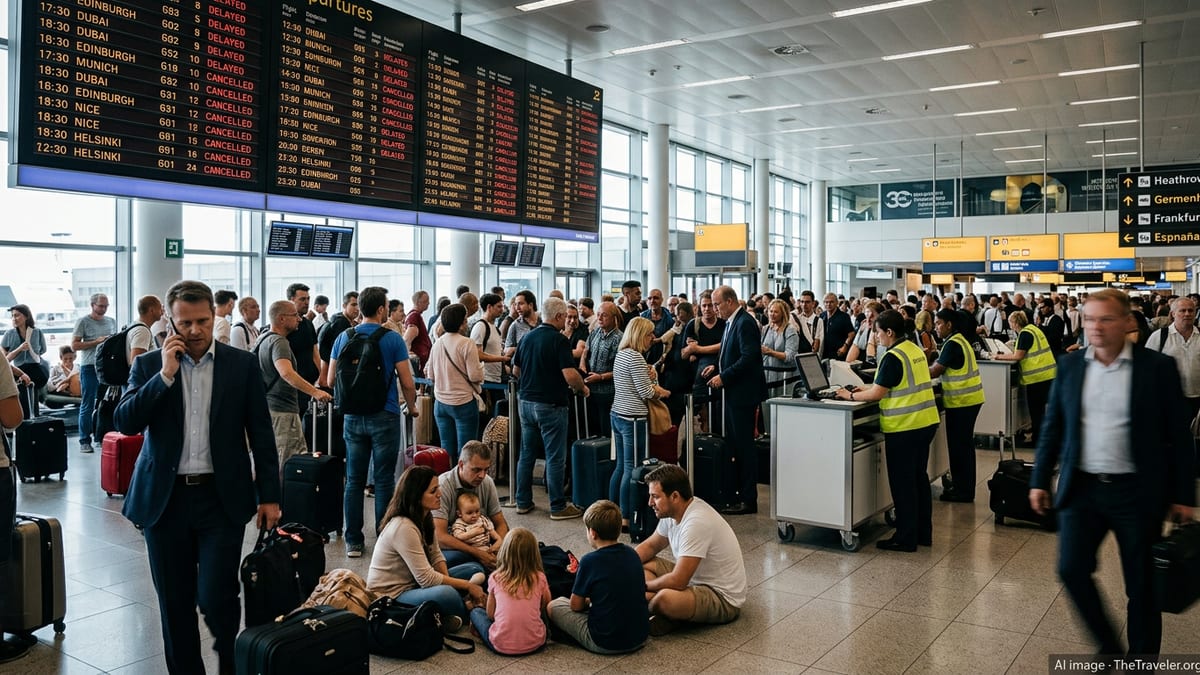
Airspace Closures in the Gulf Trigger Europe-Wide Disruption
The latest wave of disruption follows the shutdown or severe restriction of airspace across much of the Gulf region in the wake of US and Israeli strikes on Iran, a move that has effectively closed Dubai, Abu Dhabi and Doha to regular traffic for a third consecutive day. With key Gulf hubs acting as vital bridges between Europe, Asia, Africa and Australasia, the closures have rapidly cascaded into European flight schedules.
Data from flight-tracking and aviation analytics firms on Monday indicates that at least 781 flights touching European airports were delayed and 180 cancelled over the course of the day, on top of thousands of cancellations recorded over the weekend. Cancellations and diversions concentrated around services that would normally overfly the Gulf, forcing airlines to either suspend flights outright or adopt lengthier routings that reduce daily capacity.
Passengers reported being held on aircraft awaiting revised routes, rebooked onto indirect connections at short notice, or told to return home and await updates. Travel industry analysts say the disruption is the most extensive to hit Europe’s long-haul network since the pandemic, with no clear timeline for a full resumption of normal operations.
Major Carriers Ground Services to Dubai and Beyond
Among the hardest hit are airlines that rely on Gulf routes for transfer traffic. Emirates has cancelled or rerouted a large share of its Europe services as Dubai International Airport remains effectively closed to routine passenger operations, severing one of the world’s busiest long-haul transit nodes. Passengers bound for Asia, Australia and East Africa via Dubai from London, Amsterdam, Madrid and other European cities have found themselves unexpectedly grounded.
European and UK flag carriers are also scrambling. British Airways has suspended flights to several Middle East destinations, including Dubai and Bahrain, while warning that knock-on disruption will continue for days across its Heathrow network. KLM has halted flights to Dubai and other Gulf points into early March while avoiding affected airspace on remaining services, resulting in sizable delays and schedule thinning on some long-haul routes.
Scandinavian carrier SAS and Germany’s Lufthansa Group have trimmed schedules or cancelled rotations where safe and efficient routings are not yet confirmed, tightening capacity on key corridors from northern Europe and Germany to Asia. Budget and hybrid airlines dependent on overflying the Gulf to reach India and Southeast Asia are meanwhile cancelling departures from European bases, further shrinking options for stranded travellers seeking alternative connections.
Hubs in the UK, Spain, Netherlands and Germany Under Strain
Major European gateways are feeling the strain as delayed and diverted flights pile up. In the United Kingdom, London Heathrow and Gatwick have seen banks of long-haul departures pushed back or scrubbed at short notice, affecting passengers originating in or connecting via Edinburgh, Manchester and other regional airports. Airport operators have urged travellers not to arrive excessively early and to check flight status repeatedly before leaving home.
Across the Channel, Amsterdam Schiphol and Madrid Barajas are contending with congested stands, reshuffled departure boards and aircraft parked out of rotation while airlines await updated security guidance. KLM’s suspension of certain Gulf routes has left some mid-journey passengers stuck in the Netherlands, while Iberia and partner carriers have been forced to reroute or consolidate flights serving Asia and East Africa.
In Germany, Frankfurt and Munich have recorded mounting delays and selective cancellations as airlines attempt to rethread schedules around closed airspace. Freezing rain in parts of Germany earlier this month had already exposed vulnerabilities in winter operations; today’s geopolitical shock is now compounding existing crew and fleet imbalances, with knock-on effects likely to persist even after key Gulf hubs begin to reopen.
Tourists Left in Limbo from Nice to Helsinki
The impact is being felt far beyond Europe’s primary hubs. On Monday, tourists in popular leisure destinations such as Nice and other airports along the French and Spanish Mediterranean coasts reported cancellations of flights that would normally feed into Gulf connections. Package holidaymakers expecting seamless itineraries to Indian Ocean islands or Asian city breaks via Dubai or Doha are instead facing unexpected hotel nights and complex rebooking processes.
In northern Europe, travellers departing Helsinki, Copenhagen and Stockholm have encountered cancelled or heavily delayed services as SAS, Finnair and partner carriers rework long-haul diagrams. Some passengers connecting through these Nordic hubs to reach destinations in the Middle East, South Asia and Australia have been advised to postpone trips or accept indirect routings that add many hours to their journeys.
Airlines are prioritising the repatriation of passengers already abroad, particularly those stranded in the UAE and neighbouring states where local authorities have tightened entry and transit controls. However, with widebody aircraft out of position and crews scattered across continents, industry experts warn that capacity to rescue stranded travellers will remain stretched in the short term.
What Stranded Travellers Can Expect in the Coming Days
For those caught up in the disruption, the immediate advice from consumer advocates and regulators is to stay in close contact with airlines and tour operators, and to avoid heading to airports without a confirmed rebooking. Carriers operating from the United Kingdom and European Union remain bound by passenger-rights rules that require them to offer meals, refreshments and accommodation in cases of extended delays or overnight cancellations, although compensation may not be payable because the trigger is considered an extraordinary security event.
Rebooking options are evolving by the hour as airlines secure alternative routings that skirt closed airspace. Travellers may find themselves rerouted via northern or southern corridors that significantly lengthen flying times, or rebooked onto partner airlines operating on still-viable paths. Some carriers are waiving change fees and fare differences for affected itineraries, allowing passengers to postpone journeys into late March in the hope of more stable operations.
Industry forecasts suggest that even if Gulf airspace begins to reopen in the coming days, it could take weeks for global schedules to fully stabilise. Aircraft and crews will need to be repositioned, maintenance checks caught up and backlogs of displaced passengers cleared. Until then, anyone planning travel that would typically transit Dubai, Abu Dhabi, Doha or nearby airspace should expect heightened uncertainty and build extra flexibility into their plans.