

More news on this day
Thousands of passengers across Europe faced cancellations, rolling delays and overnight airport stays as flight disruption intensified at major hubs including Istanbul, London, Cologne, Prague and Munich, affecting carriers such as Pegasus, easyJet, Turkish Airlines and Ryanair.
Get the latest news straight to your inbox!
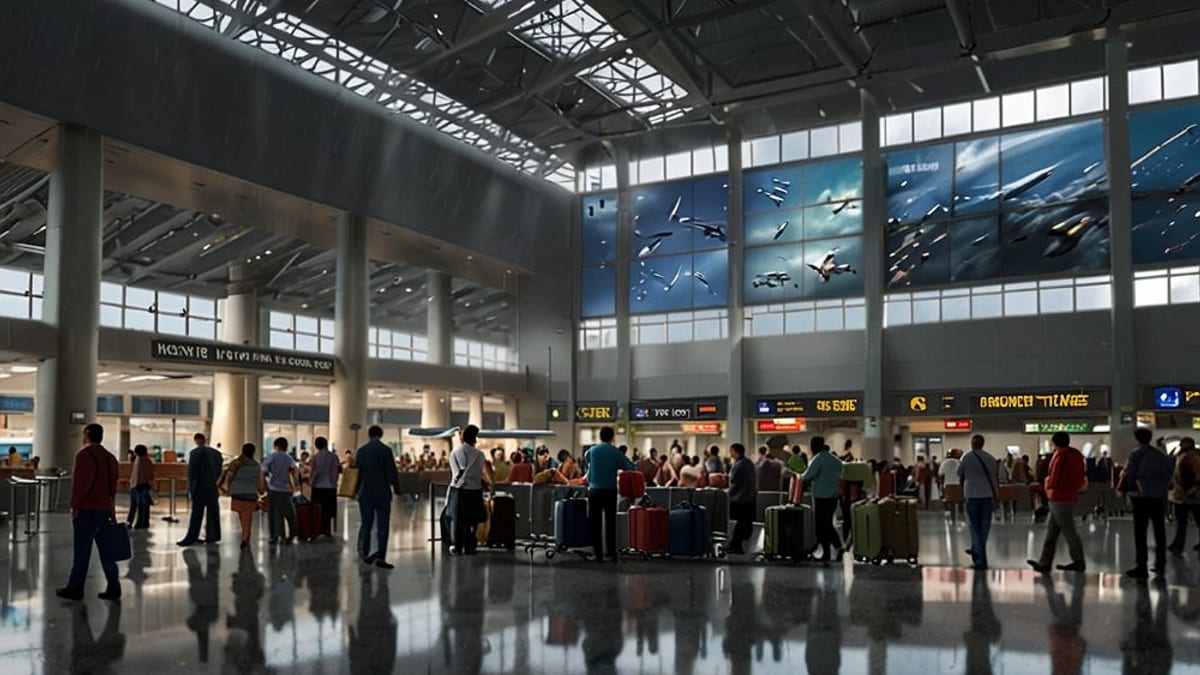
Image by travelandtourworld.com
Wave of Cancellations and Delays Hits Major European Hubs
Publicly available flight-tracking data and media coverage indicate that more than 360 flights were cancelled and upwards of 3,000 services delayed across Europe within a 24-hour period, with disruption concentrated at Istanbul, London, Cologne, Prague and Munich. The figures point to one of the most extensive single-day breakdowns in regional air travel seen so far this year, stranding travelers in terminals and forcing last‑minute itinerary changes.
Low cost and network carriers were heavily represented in the disruption statistics. Reports highlight widespread schedule problems for Pegasus and Turkish Airlines at Istanbul, easyJet and Ryanair at London and regional German airports, and additional knock‑on delays for a range of European and Middle Eastern airlines that rely on these hubs for connections.
At Istanbul’s main airport, one of Europe’s busiest, cancellations mounted through the day as arrival delays cascaded into missed departure slots and crew scheduling complications. London’s airports, including Gatwick and Heathrow, saw banks of orange and red on departure boards as early‑morning hold‑ups spilled into the afternoon and evening peak.
In Central Europe, passengers at Cologne, Prague and Munich reported long queues at check in and rebooking desks. Some flights operated with multi‑hour delays, while other services were scrubbed entirely as aircraft and crews failed to arrive from earlier disrupted rotations.
Weather, Airspace Constraints and Congested Skies Drive Disruption
A combination of adverse weather, constrained airspace and existing congestion issues appears to have underpinned the chain reaction that brought schedules undone. Recent European storms have already stretched airport capacity, particularly at northern and central hubs, and fresh bouts of strong winds and low visibility were enough to push systems back into crisis mode.
Industry data shows that Istanbul and London rank among Europe’s most delay‑prone airports during periods of unstable weather, with air traffic control restrictions and runway flow limitations quickly generating long queues for takeoff and landing. When those measures coincide with peak travel days, delays can rapidly reach into the thousands of flights.
Airspace rerouting linked to geopolitical tensions has also reduced routing flexibility for many European and international airlines. With certain corridors effectively closed or heavily restricted, traffic has been funneled through narrower pathways, increasing airborne holding times and stretching crew duty limits. Once crews time out, aircraft are unable to depart until new personnel can be positioned, feeding further into cancellation tallies.
Operational analysts note that the system remains highly sensitive to shocks. When one or two major hubs encounter capacity constraints, the ripple effects quickly propagate across the network, especially for carriers with dense point‑to‑point schedules such as easyJet, Pegasus and Ryanair.
Passengers Face Overnight Stays, Missed Connections and Rebooking Frustration
For travelers, the statistics translated into missed connections, hurried searches for hotel rooms and long waits for scarce rebooking options. Social media posts and passenger accounts describe families sleeping on terminal floors, long lines snaking around customer service counters and confusion over which flights would eventually depart.
Many of the stranded travelers were connecting through Istanbul, London or Munich on their way between Europe, the Middle East and Asia. When long‑haul legs arrived many hours late or were cancelled outright, follow‑on European flights could not be held, leaving travelers with limited same‑day alternatives in already crowded schedules.
Budget airlines faced particular scrutiny as passengers reported difficulties reaching call centers and limited flexibility on alternative routings. Some travelers turned to rail or intercity buses to complete journeys between Germany, the Czech Republic and neighboring states when flights appeared unlikely to operate on time.
For those with time‑sensitive plans, such as business meetings or holidays beginning on fixed dates, the disruption led to outright trip cancellations. Travel insurance requirements, refund conditions and voucher options varied widely between airlines, adding another layer of stress for affected passengers.
Airlines and Airports Struggle to Restore Normal Operations
Published operational updates suggest airlines moved to consolidate lightly booked services, reposition aircraft and call in reserve crews to reduce the backlog. However, the sheer scale of the delays meant that full recovery to normal timetables was expected to take at least several days, with residual knock‑on delays likely to linger beyond that window.
At Istanbul, Pegasus and Turkish Airlines restructured their evening waves of departures to prioritize long‑haul and high‑demand regional routes, while trimming some shorter sectors that could be more easily accommodated by ground transport. In London, easyJet and other carriers appeared to focus on restoring core trunk routes, leaving some secondary city pairs with reduced frequencies.
Airports such as Cologne, Prague and Munich activated contingency plans designed for large‑scale disruption, opening additional customer service points and coordinating with ground transport providers. Public announcements encouraged passengers to verify flight status before departing for the airport and to allow extra time for security and check in, given the elevated passenger volumes around rebooked flights.
Even as weather conditions slowly improved, backlogs in aircraft positioning and crew availability limited how quickly schedules could return to normal. With many planes and staff out of place after a day of irregular operations, airlines faced a complex logistical puzzle stretching across multiple countries and time zones.
Know Your Rights: What Stranded Passengers Can Claim
The disruption once again highlighted the importance of passenger‑rights rules for travelers within and from Europe. Under the European Union’s air passenger rights framework, eligible passengers on affected flights may be entitled to assistance at the airport, including meals, refreshments and accommodation if overnight stays become necessary.
Compensation rules are more complex and depend on factors such as the length of delay, flight distance and whether the disruption was caused by circumstances considered outside the airline’s control. Severe weather and air traffic control restrictions can, in some cases, fall under exemptions, while technical or staffing issues are more likely to trigger compensation obligations.
Consumer advocates recommend that travelers keep all boarding passes, booking confirmations and receipts for extra expenses incurred during disruptions, and submit claims directly through the airline’s official channels where appropriate. If disputes arise, passengers can escalate cases to national enforcement bodies or designated alternative dispute‑resolution schemes in the relevant country.
With thousands of people caught up in the latest wave of cancellations and delays across Istanbul, London, Cologne, Prague and Munich, travel organizations are urging passengers to monitor airline apps, sign up for real‑time alerts and build more contingency time into itineraries during this period of heightened operational volatility.