

More news on this day
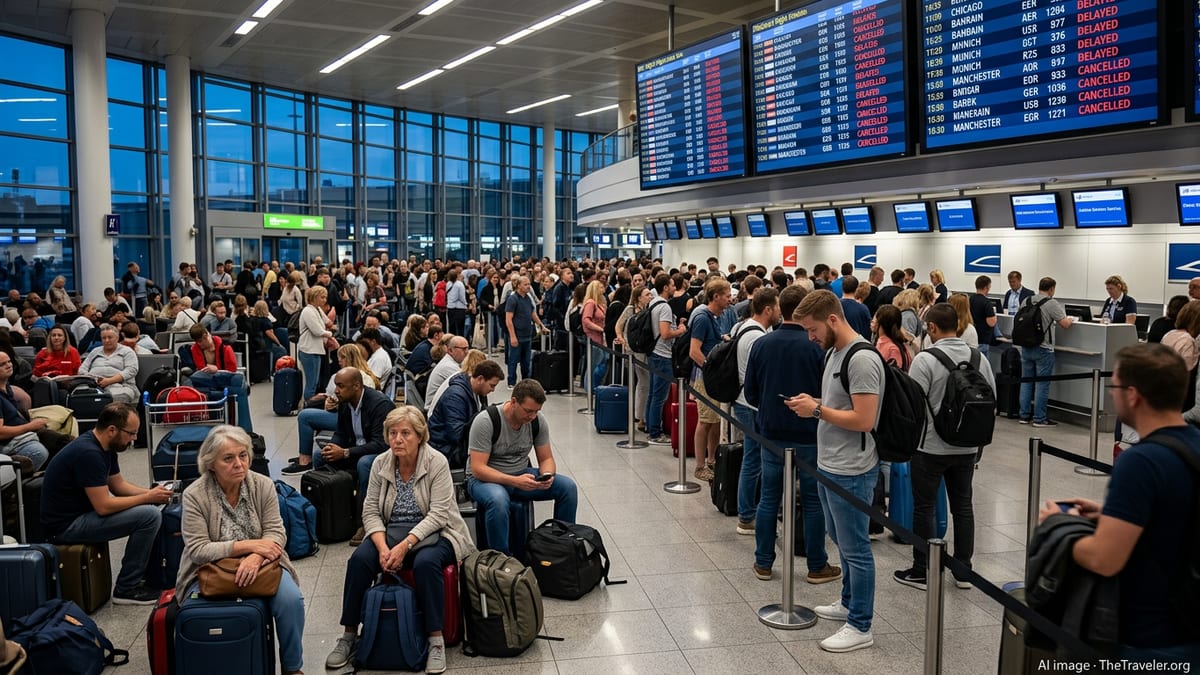
Thousands of air travelers were stranded across Europe and beyond on March 5 and 6 as authorities in the United Kingdom, Germany, the Netherlands, France, Spain and Italy logged 1,228 delayed and 182 cancelled flights, disrupting tightly packed schedules for British Airways, Delta Air Lines, Qatar Airways, Emirates, KLM and other major carriers.
Ripple Effects From Europe to the Gulf and North America
The latest disruption hit Europe at a moment when global aviation was already reeling from widespread airspace closures across the Middle East, compounding the impact on long-haul networks linking Europe with Asia, Africa and North America. Airlines that rely on hub connections through London, Amsterdam, Paris, Frankfurt, Munich, Madrid and Milan were forced to cancel or retime dozens of services as aircraft and crews became out of position.
Operational data from regional trackers and airport authorities show that the heaviest burdens fell on key European gateways, particularly those with dense long-haul schedules. Munich and Frankfurt in Germany, Amsterdam in the Netherlands, and London’s system of Heathrow, Gatwick, City and Manchester all reported clusters of delays stretching well beyond two hours on some departures, often followed by late-night cancellations when crews ran out of duty time.
Those knock-on delays radiated outward across airline networks. In the United States, flights to and from Chicago were affected as transatlantic rotations arrived late or failed to depart Europe, while in the Gulf, Bahrain became one of several airports where passengers on Qatar Airways and other carriers found themselves waiting for replacement services or lengthy diversions around closed air corridors.
At secondary European hubs including Edinburgh and smaller Spanish and Italian airports, even a limited number of cancellations had outsized effects. With spare capacity already tight in early March, passengers frequently discovered there were few same-day alternatives, leaving them to queue at rebooking desks or spend unplanned nights in airport hotels.
Major Airlines Forced to Ground and Reroute Services
Among the hardest-hit carriers were British Airways and KLM, whose short- and medium-haul networks criss-cross northern and western Europe. British Airways cancelled and delayed multiple services linking the United Kingdom with continental cities, while also grappling with disruptions to long-haul flights connecting London with Chicago, the Gulf and South Asia. KLM, operating from its Amsterdam hub, reported select cancellations alongside a high volume of late departures, particularly on routes feeding its intercontinental bank of flights.
Gulf carriers, including Emirates and Qatar Airways, were also drawn into the turmoil. Their European-bound aircraft have faced circuitous routings and extended flight times in recent days due to airspace restrictions further east, and the European wave of delays added a fresh layer of complexity. Emirates and Qatar Airways passengers transiting through European cities such as Munich, Manchester and Edinburgh encountered missed connections, rolling departure times and, in some cases, outright flight cancellations.
Delta Air Lines, which runs an extensive joint venture across the Atlantic with Air France and KLM, saw its schedule to and from Europe squeezed by the same network pressures. Delayed inbound aircraft from hubs like Amsterdam left outbound flights from Chicago and other US cities departing late or being consolidated, forcing the airline to issue broad travel waivers and encourage passengers to accept alternative routings.
Other carriers, from European low-cost airlines to full-service players such as Lufthansa, Air France and Iberia, also reported varying levels of disruption as they shuffled aircraft and crews, trying to preserve long-haul operations while trimming shorter sectors where possible. Industry analysts noted that the pattern mirrored earlier crises, with airlines prioritizing high-yield intercontinental routes and reallocating scarce resources accordingly.
Stranded Passengers Face Long Queues and Limited Options
For travelers, the statistics translated into a long and frustrating wait. At major hubs including London Heathrow, Amsterdam Schiphol, Paris Charles de Gaulle, Frankfurt and Munich, departure halls filled with passengers whose flights showed as “delayed” or “cancelled” on departure boards, sometimes with little immediate explanation. Queues for customer service and rebooking desks snaked through concourses as ground staff struggled to process hundreds of disrupted itineraries.
Passengers connecting onward to Chicago, Bahrain and other long-haul destinations were among the most vulnerable. When European feeder flights from cities such as Manchester, Edinburgh, Madrid or Milan ran significantly late, travelers risked missing once-daily transatlantic or Gulf departures. In many cases, airlines were forced to rebook affected customers onto services 24 hours later or reroute them through alternative hubs, lengthening travel times by half a day or more.
Accommodation and duty-of-care obligations also came under strain. With hotels near airports in London, Paris, Frankfurt and Munich filling up quickly, some passengers reported being offered vouchers for lodgings far from the terminal or being advised to make their own arrangements and claim reimbursement later. Others described spending the night on terminal seats while waiting for early-morning departures, a familiar scene during major disruptions in the European aviation system.
Despite the frustration, consumer advocates cautioned that the extraordinary mix of airspace closures and knock-on operational problems may limit passengers’ ability to claim cash compensation under European rules. While airlines remain obliged to provide basic assistance such as meals and accommodation, the legal classification of the crisis as an exceptional circumstance could shield carriers from some financial penalties.
Airlines and Airports Race to Restore Normal Operations
As of March 6, airlines and airport operators across Europe were concentrating on stabilizing schedules and repatriating stranded travelers. Operations teams have been working through overnight hours to reassign aircraft, reposition crews and piece together rotations that maintain critical long-haul links while gradually rebuilding short-haul frequency.
At Manchester and Edinburgh, operators said they were coordinating closely with Gulf carriers and alliance partners to make best use of limited transcontinental capacity, sometimes combining lightly booked services and encouraging passengers to accept connections via alternative hubs. In Germany and the Netherlands, airport control centers focused on smoothing arrival and departure flows to prevent fresh bottlenecks, even if that meant imposing short-term ground delays while slots were rebalanced.
Carriers including British Airways, KLM, Delta, Qatar Airways and Emirates have issued broad rebooking waivers, allowing passengers with tickets over the affected period to change travel dates without fees, subject to availability. Some airlines have also scheduled additional sectors or upgraded equipment on key routes once airspace and operational constraints ease, in a bid to clear backlogs of stranded customers in Chicago, Bahrain, Munich, Manchester and other affected cities.
Industry observers warn, however, that clearing the disruption will take several days. With aircraft and crews still scattered across multiple continents and certain air corridors in the Middle East remaining constrained, European and global networks are expected to feel the effects well into the coming week. Travelers with imminent plans are being urged to monitor their flight status closely, allow extra time at the airport and remain flexible about routings and departure times.