

More news on this day
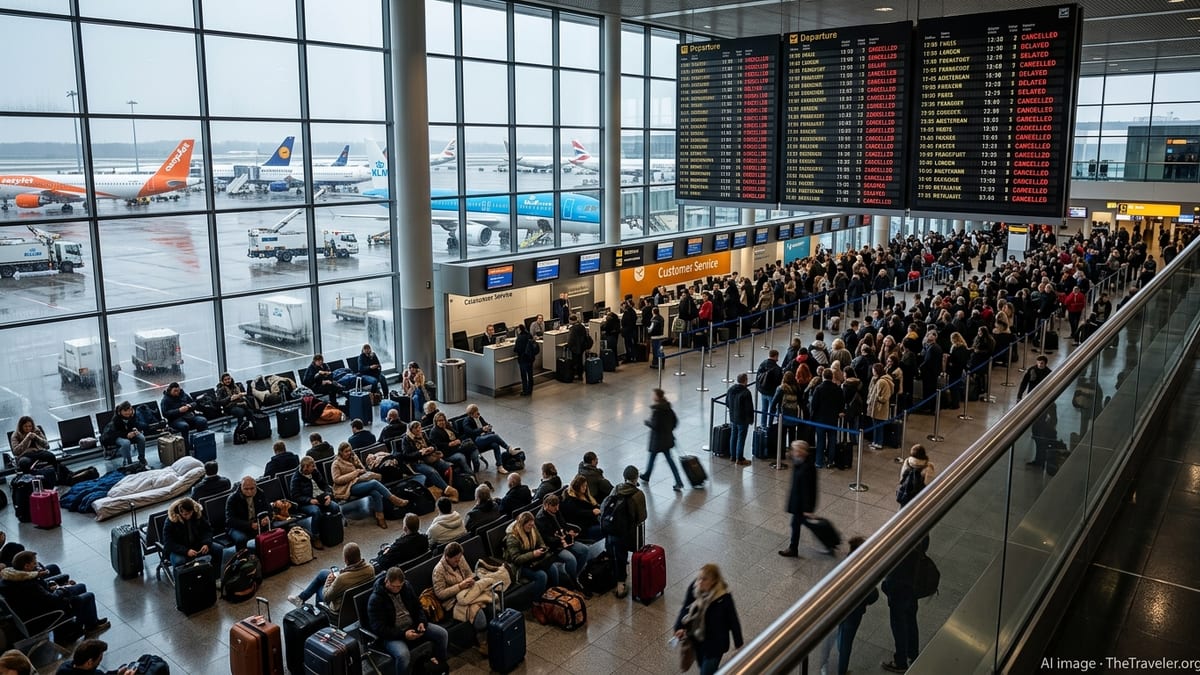
Thousands of travelers across Europe are facing unexpected overnight stays, missed connections and abandoned itineraries as severe weather and knock-on disruption trigger at least 86 flight cancellations and more than 600 delays at hubs in France, the United Kingdom, Germany, the Netherlands, Iceland and other countries, affecting operations at Paris, London, Frankfurt, Amsterdam, Reykjavik and several regional airports.
Get the latest news straight to your inbox!
Storm Systems and Winter Weather Batter European Air Travel
Recent winter storms sweeping across northwestern Europe have combined heavy snow, high winds and poor visibility, creating difficult operating conditions at some of the continent’s busiest airports. Publicly available meteorological data and aviation reports indicate that fast-moving low-pressure systems have brought hazardous crosswinds and freezing temperatures to parts of France, the United Kingdom, Germany, the Netherlands and Iceland, forcing airports and airlines to scale back already tight schedules.
Amsterdam Schiphol, Paris Charles de Gaulle, London Heathrow and Gatwick, Frankfurt and Keflavik near Reykjavik have all reported disruption as airlines adjusted takeoff and landing rates in response to gusting winds, runway de-icing backlogs and restricted ground handling. In several cases, safety rules limiting ramp work in strong winds or during lightning have halted baggage loading and refueling, slowing turnarounds and pushing delays into subsequent waves of flights.
According to published coverage of recent European storms, Schiphol alone has seen hundreds of cancellations and delays during intense weather episodes, with KLM and easyJet among the most heavily affected carriers. Similar patterns have been noted in Germany and the UK, where reduced runway capacity and air traffic flow restrictions have compounded the impact of snow and freezing rain on already congested winter timetables.
In Iceland, conditions around Keflavik have also been volatile. Blowing snow, low cloud and shifting winds have periodically disrupted transatlantic connections, with Iceland-based carriers and European airlines using the airport as a North Atlantic hub reporting schedule changes that ripple into mainland Europe.
Major Airlines Hit: easyJet, KLM, Lufthansa, British Airways and Others
Operational data and media reporting show that the latest round of disruption has affected a broad roster of European and international airlines. Low-cost operator easyJet, flag carriers such as KLM, Lufthansa and British Airways, and other European and long-haul airlines using the affected hubs have all reported cancellations or extended delays, either due to direct weather impacts or because aircraft and crew could not be positioned where needed.
At London’s airports, frequent use of single-runway operations during strong winds or low visibility has left carriers with little slack to recover from any disruption. British Airways, easyJet and other operators at Heathrow and Gatwick have been forced to trim schedules and consolidate flights, contributing to the tally of 86 cancellations and more than 600 delayed departures and arrivals reported across the region.
In Germany, publicly available information from airport operators and aviation trackers points to disrupted rotations for Lufthansa and partner airlines at Frankfurt and Munich, where snow and ice routinely require additional time for de-icing and runway treatment. When early-morning departures are delayed, aircraft and crews often arrive late into subsequent airports, extending the disruption into afternoon and evening waves across Europe.
For KLM and its partners at Amsterdam, the combination of snow, high winds and air traffic management constraints has created recurrent bottlenecks during this winter season. Dutch and international coverage has highlighted the particular strain on hub-and-spoke networks, where a missed or cancelled bank of flights can leave passengers without viable same-day connections and force airlines into complex rebooking efforts.
Passengers Stranded and Infrastructure Under Strain
As cancellations and long delays accumulate, thousands of travelers have been left isolated in airport terminals, hotels and outlying cities, sometimes far from their intended destination. Social media posts and traveler forums in recent weeks describe packed departure halls at Amsterdam, London, Frankfurt and Paris, long lines at service desks and hours-long waits for call centers, as airlines work through rebooking backlogs created by the disrupted schedules.
Reports from affected hubs indicate that hotel capacity near major airports has been under pressure, with some passengers directed to distant towns or asked to make their own arrangements and seek reimbursement later. Train networks in parts of Germany, France and the Netherlands have also experienced weather-related issues, reducing options for passengers trying to complete journeys by rail after missed or cancelled flights.
In Iceland, the combination of weather-sensitive operations and limited alternative transport has left some travelers facing extended stays until aircraft and crews can be repositioned and winds ease sufficiently for safe takeoffs and landings. Similar accounts have emerged from smaller regional airports feeding into Paris, London and Frankfurt, where cancellations of short-haul links have cut off onward connections and added to the number of stranded travelers.
Publicly available disruption analyses note that the pattern of cascading delays is particularly severe in winter, when tight turnaround times and high load factors leave minimal margin to recover from an initial wave of cancellations. Once aircraft fall out of position and crew duty-time limits are reached, airlines sometimes need several days to fully restore normal patterns.
Regulatory Protections and What Travelers Can Expect
Under European and UK air passenger rights rules, travelers on flights departing from the European Union and the United Kingdom, or on EU and UK carriers flying into the region, may be entitled to care, rerouting or financial compensation in certain circumstances. The core EU regulation, often referred to as EC261, and the parallel UK261 framework establish obligations for airlines when flights are cancelled or experience long delays, although specific entitlements vary depending on flight distance, delay length and the reason for disruption.
Publicly accessible guidance on these rules explains that airlines must generally offer a choice between a refund and rerouting at the earliest opportunity when a flight is cancelled. They are also expected to provide meals, refreshments and, where necessary, hotel accommodation and transport between the airport and lodging while passengers wait for a new itinerary. Monetary compensation, however, may not apply if an airline can demonstrate that extraordinary circumstances, such as severe weather or air traffic control restrictions, were the primary cause of the disruption.
Consumer advocates and national enforcement bodies regularly remind travelers to keep documentation, including boarding passes, delay notifications and receipts for essential expenses, in case they need to file a claim. Many airlines provide online forms for EC261 or UK261 claims, though published reports suggest that processing times can vary significantly, particularly after large-scale disruption affecting multiple countries and carriers at once.
Passengers on itineraries involving multiple airlines or non-European carriers may face a more complex process, especially when flights outside Europe are involved. Publicly available travel advice generally recommends that travelers first contact the airline operating the disrupted flight and then escalate to national enforcement authorities or alternative dispute resolution bodies if they believe their rights have not been fully respected.
Knock-on Effects for Tourism, Business and Spring Travel Plans
The latest wave of cancellations and delays arrives at a time when European tourism and business travel are ramping up toward the spring shoulder season. Travel industry briefings indicate that ongoing disruption at key hubs can have a broader economic impact, as missed city breaks, postponed meetings and rerouted itineraries filter through airlines, hotels, ground transport providers and local attractions.
For leisure travelers, particularly those on short trips, losing a day or more to disruption can effectively erase much of a planned holiday in cities such as Paris, London or Amsterdam. Visitor boards and tourism analysts have previously noted that repeated weather-related disruptions can influence traveler perceptions of reliability, even when safety-driven decisions by airports and airlines are the underlying cause.
Business travelers and conference organizers are also feeling the effects. Reports from European trade and events publications describe increased use of hybrid or virtual attendance options when participants are unable to reach venues due to flight cancellations. Some companies have adjusted internal travel policies to encourage earlier arrivals or alternative routings when winter storms or air traffic control constraints are forecast along key corridors.
With more unsettled weather likely in the coming weeks, aviation and tourism analysts suggest that travelers build additional buffer time into itineraries, monitor airline notifications closely and remain flexible about routing. While the 86 cancellations and 624 delays recorded across European hubs in this current disruption are modest compared with historic continent-wide shutdowns, the experience of thousands of stranded passengers underlines how quickly a series of localized weather events can isolate travelers and reverberate across the wider travel network.