

More news on this day
Europe’s spring travel season is being overshadowed by mounting disruption, with publicly available tracking data and recent reports indicating that daily flight delays have surged past 1,400 across the continent in early April 2026.
Get the latest news straight to your inbox!
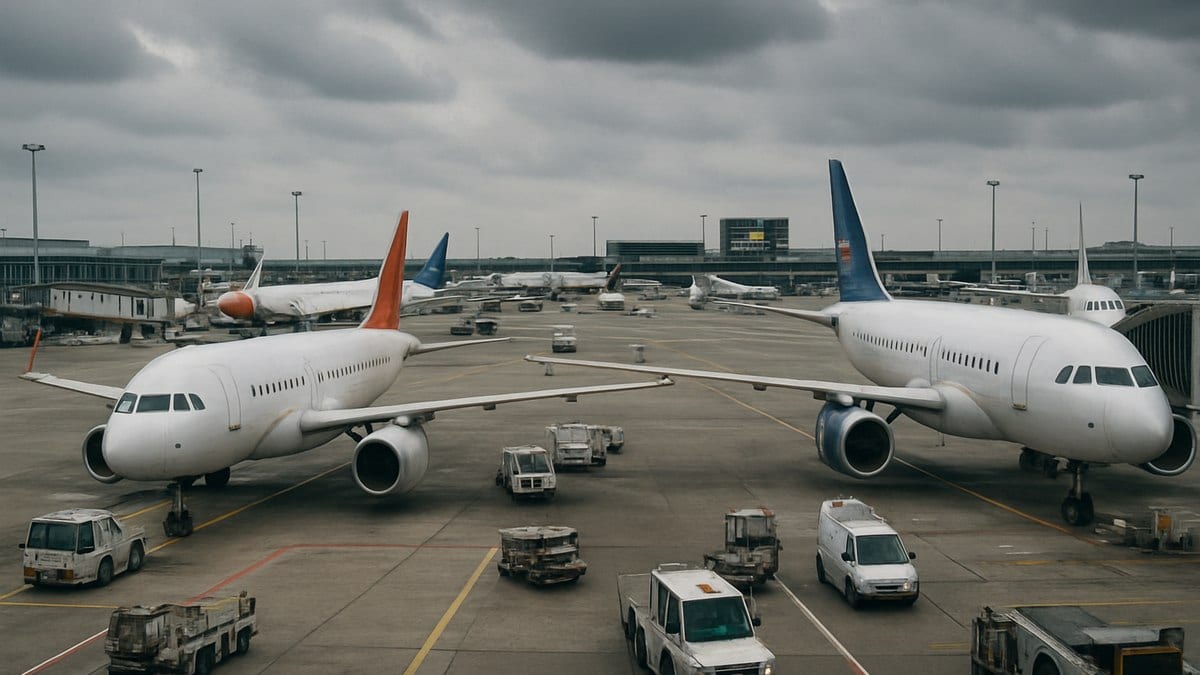
Early April Disruption Spreads Across Major Hubs
Passenger disruption has intensified across Europe since the start of April, as daily delay totals repeatedly push well beyond 1,400 flights. Reports from aviation tracking platforms and travel industry coverage show large clusters of late departures and arrivals concentrated at some of the region’s busiest hubs, including London, Paris, Amsterdam, Frankfurt, Madrid and Barcelona.
Recent coverage from European travel outlets described several high-impact days in the first week of April, with one snapshot citing more than 1,475 delayed flights and over 170 cancellations across Europe in a single day. Another report on 7 April pointed to around 1,700 delayed flights and over 150 cancellations, illustrating how quickly localized congestion can spill into a network wide problem as disruption at one hub propagates to others.
TheTraveler.org’s own review of live data referenced in published coverage suggests that on several days in early April, the combined total of delayed flights across continental Europe and the United Kingdom has consistently exceeded 1,400, and at times surpassed 2,000. These figures capture everything from modest schedule slips to multi hour delays, affecting both intra European and long haul operations.
The pattern comes on top of a generally busy traffic backdrop. Eurocontrol’s most recent European Aviation Overview indicates that overall flight numbers entering 2026 are running slightly ahead of 2025 levels, leaving less slack in the system when weather, strikes or technical issues arise.
Structural Strains: Weather, Staffing and Airspace Constraints
While individual days of severe disruption can be triggered by specific events, such as storms or local technical failures, the current spike in delays appears to be amplified by structural strains in the European network. Eurocontrol’s network operations reporting for late winter and early spring 2026 highlights a gradual rise in the share of flights experiencing significant delay, with several days in February already recording elevated levels of long delays of more than 30 minutes.
Capacity constraints in key airspace sectors and at major airports continue to play a central role. Previous Eurocontrol network reports for 2024 and 2025 identified air traffic control capacity, staffing imbalances and weather as the leading causes of en route delay minutes. Those pressures have not fully abated, and as traffic climbs back to or above pre pandemic levels on certain flows, the room to absorb additional shocks narrows.
Adverse weather has also contributed to April’s problems. Strong winds, thunderstorms and low visibility at several Western European hubs have periodically reduced arrival and departure rates, forcing air traffic managers to impose spacing measures and flow restrictions that ripple outward through the day. Although new procedures such as time based separation have helped airports like London Heathrow cope better with headwinds, published technical material still notes that periods of severe weather can significantly cut landing rates and generate extensive delays.
At the same time, the broader geopolitical context is reshaping European airspace usage. A recent Eurocontrol Aviation Trends paper described a substantial fall in direct traffic between Europe and the Middle East since late February 2026, alongside higher volumes on some alternative routings. Changes of this kind can increase complexity in certain sectors and add to the challenge of balancing demand and capacity during the busy spring period.
Knock On Effects for Airlines and Travellers
The impact of daily delay totals exceeding 1,400 flights is being felt unevenly across the airline industry, but low cost and network carriers alike are facing operational headaches. Travel and aviation news coverage from 1 April described more than 1,750 delayed flights in a single day tied to carriers including easyJet, KLM and Finnair, with disruptions concentrated at airports such as Paris Charles de Gaulle, London Gatwick, Milan Malpensa and Frankfurt.
On subsequent days, similar patterns have appeared in Germany, the United Kingdom, Denmark, Spain and France, where published reports have counted over 1,600 delayed flights in one day alone, alongside more than 150 cancellations. For airlines, these spikes translate into aircraft and crew out of position, rising fuel and staffing costs, and complex re routing decisions to keep as much of the schedule intact as possible.
For passengers, the practical consequences include missed connections, last minute gate changes and long queues at customer service desks. Accounts collected by consumer platforms in March and early April describe individual delays stretching to several hours after aircraft or crews were held up on previous sectors. With so many flights departing late, recovering a disrupted rotation within the same operational day becomes significantly more difficult.
There are also wider tourism implications. Travel industry analysis suggests that persistent disruption at the start of the European holiday season can prompt some travellers to choose alternative dates, routes or modes of transport. Regions heavily dependent on inbound air traffic, including Mediterranean resorts and certain Central European city break destinations, are watching closely to see whether April’s delays will taper off or persist into the crucial late spring and summer periods.
Passenger Rights and Practical Steps Amid the April Crisis
Under the European Union’s air passenger rights regulation, often referred to as EU261, travellers on eligible flights retain the right to care and, in many circumstances, compensation when they experience long delays or cancellations. Publicly available legal summaries explain that airlines must provide assistance such as meals, refreshments and hotel accommodation when delays extend significantly, and compensation may be due for long delays or cancellations within an airline’s control, subject to various conditions and exemptions.
However, the current pattern of disruption illustrates that rights on paper do not always translate into a smooth experience on the ground. High volumes of delayed flights can overwhelm airport facilities, stretch airline staff and slow down rebooking processes. Consumer advocates commonly advise passengers to document their disruption, keep boarding passes and receipts, and submit compensation or reimbursement claims through official airline channels once they reach their destination.
Travel experts also emphasize practical steps to reduce exposure to cascading delays during volatile periods. These include booking earlier departures where possible, allowing generous connection times, and favoring routes with multiple daily frequencies that offer more rebooking options if a flight is severely delayed. In the current April environment, where daily delayed flights across Europe are regularly surpassing 1,400, itineraries that rely on tight connections at heavily affected hubs carry heightened risk.
Rail alternatives on key intra European corridors, particularly in countries with extensive high speed networks such as France, Germany, Spain and Italy, can also provide a back up for some journeys when air disruption intensifies. While not feasible in all cases, especially for long haul trips, multimodal planning is becoming a more common feature of European spring travel as passengers adapt to a more delay prone aviation landscape.
Outlook for the Remainder of April 2026
Looking ahead through the rest of April, planning documents and seasonal outlooks from Eurocontrol indicate that the European network is preparing for steadily rising traffic as the summer schedule ramps up. Network managers are focusing on known hotspots where airspace and airport capacity are tight, and on measures to minimize knock on delays from early morning disruptions that can reverberate throughout the day.
Much will depend on the interplay between traffic growth, staffing levels and external shocks such as industrial action or severe weather. Recent history offers a reminder of how quickly conditions can deteriorate when these factors combine. An earlier Eurocontrol analysis of a French air traffic control strike in 2025, for example, recorded more than 3,700 delayed flights and over 1,400 cancellations on each of two strike days, along with a steep drop in on time arrival performance across the network.
For now, the first week of April 2026 has already set a challenging tone, with multiple days above the 1,400 daily delay mark and at least one day approaching or exceeding 2,000 delayed flights. If similar levels continue into the peak Easter and early summer travel periods, Europe’s aviation system will face sustained pressure, and travellers may need to build greater flexibility and contingency time into their plans.
Airports, airlines and network managers are expected to continue adjusting schedules, refining capacity plans and promoting real time communication tools to help passengers navigate the disruption. The scale of delays seen so far in April illustrates how sensitive the European air transport system remains to concurrent pressures, even as overall traffic and capacity metrics show a sector that has largely recovered in volume terms from the pandemic years.