

More news on this day
Air travel across Europe is facing another turbulent spell in April 2026, with publicly available tracking data and operational reports indicating more than 1,400 flight delays on some days at major hubs including London, Paris, Amsterdam and Frankfurt.
Get the latest news straight to your inbox!
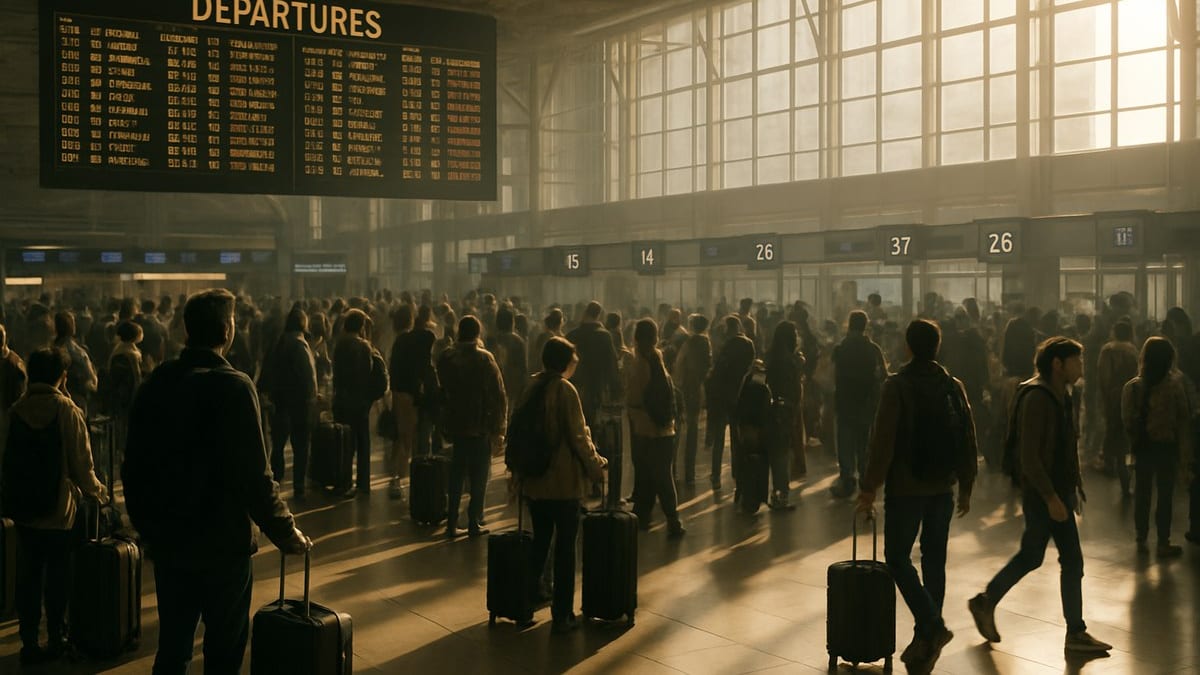
Storms, Wind and a Difficult Start to Spring Operations
Early spring weather has combined with already strained airport and air traffic control capacity to push delay levels sharply higher across the European network. The 2025 to 2026 windstorm season has delivered repeated blows to northern and western Europe, with heavy rain, high crosswinds and low visibility limiting runway use and forcing aircraft to divert or hold. In some cases, airports have had to reduce arrival rates for extended periods, creating rolling queues that ripple through the day’s schedule.
Recent storms affecting northwestern Europe have triggered large clusters of delays at hub airports that serve as key transfer points for the continent. When operations slow at one of these hubs, connecting passengers can miss onward flights, increasing the number of aircraft and crews that are out of position for later rotations. Even when weather improves, the backlog can take many hours to clear, leaving airlines with little flexibility to recover from further disruption.
Published network overviews from Eurocontrol for late winter and early spring 2026 show weather among the leading causes of air traffic flow management delay minutes, with airport weather in particular standing out at several high-traffic hubs. That pattern has continued into April, where individual days have seen well above average delay minutes and more than 1,400 flights arriving behind schedule across the wider European system.
In addition to headline-grabbing storms, more routine but persistent weather issues such as fog, low cloud and gusty crosswinds have kept pressure on operations. These conditions may not make global news, but they frequently reduce the number of aircraft that can safely land or take off per hour, especially at airports already operating close to capacity.
Major Hubs Under Strain From Volume and Capacity Limits
Large European hub airports including London Heathrow, Amsterdam Schiphol, Frankfurt and Paris Charles de Gaulle have been central to the current wave of disruption. These hubs handle dense banks of connecting traffic and operate at or near their designed capacity for much of the day, meaning even small disturbances can quickly translate into widespread delays.
Punctuality statistics published by airport and industry groups for recent years already show that a substantial share of flights in Europe arrive or depart late under normal conditions. With traffic volumes rebuilding and in some cases exceeding pre-pandemic levels, there is limited spare capacity in airport infrastructure, ground handling and airspace sectors to absorb additional stress from weather or staffing constraints. As a result, sequences of modest disruptions can produce the same kind of network shock that previously required a major external event.
Operational summaries for early 2026 indicate that the heaviest delay burdens are falling on a familiar set of airports and air traffic control sectors that have historically struggled with congestion. For passengers, this concentrates risk in a few critical nodes of the travel network. Travelers who connect through these hubs on multi-leg itineraries are more likely to experience missed connections, extended layovers or last-minute rebookings when conditions deteriorate.
Secondary airports are also feeling the impact as airlines reroute or reschedule flights to work around constrained hubs. This can temporarily flood smaller facilities with more traffic than usual, adding to ground handling and baggage processing pressures and extending the time it takes for passengers to clear terminals even when flights operate close to schedule.
Strikes, Staffing Gaps and Structural ATC Challenges
Industrial action and staffing shortfalls in parts of the aviation sector are compounding the weather-related volatility. In recent weeks, strike activity affecting airport workers and airline crews in countries such as France and Italy has either disrupted operations directly or prompted airlines to adjust schedules in anticipation of reduced staffing windows. Advisory notices point to additional localized actions planned through April, raising the risk of further concentrated days of cancellations and delays.
Beyond individual strikes, persistent air traffic control staffing and capacity constraints continue to weigh on European punctuality. Analysis released by the International Air Transport Association in late 2025 highlighted that en route air traffic control delays in Europe have more than doubled over the past decade, underscoring structural issues that predate the current season. Eurocontrol performance reports for 2024 and 2025 describe en route and airport capacity limitations, together with reactionary delays from earlier disruptions, as key drivers of missed on-time performance targets.
When air traffic control centers are forced to manage growing volumes with limited staffing, they often reduce the number of aircraft permitted in sectors or on busy routes at any given time. This can require airlines to depart later than scheduled, take longer routings, or circle in holding patterns near destination airports. Each of these actions effectively removes aircraft and crews from the network for longer than planned, pushing congestion into following flights and subsequent days.
At the same time, airports and ground handling providers are competing for trained staff in tight labor markets. Turnaround processes from refueling to baggage loading can take longer when teams are stretched, particularly during peaks in the early morning and late afternoon. The result for travelers is a higher probability that an initially minor delay will grow as the day progresses.
Knock-on Effects for Passengers and Airlines
The immediate effect of this pattern of disruption is visible in long queues at check-in, security and boarding gates, as well as crowded terminal areas during extended waits. Reports from passenger rights organizations and travel advisories describe travelers facing multi-hour delays, missed connections and overnight stays near airports when evening services are heavily affected. For those on short breaks or tight business schedules, even a single missed connection can significantly reduce time at the destination.
Airlines, for their part, are dealing with higher operational costs from increased fuel burn on longer routings, crew overtime, aircraft repositioning flights and passenger care obligations. When disruption reaches the level of more than 1,400 delayed flights per day across Europe, a large number of aircraft and crews become misplaced relative to the planned schedule. Rest requirements for pilots and cabin crew then limit how quickly normal operations can be restored even after the underlying cause, such as a storm or short strike, has passed.
Some carriers are attempting to build in additional buffers to their schedules for the spring period, including slightly longer block times and more generous connection windows at key hubs. While this can reduce the rate of missed connections, it also means that scheduled journey times lengthen, eroding some of the convenience advantages of air travel compared with rail on certain intra-European routes.
For airports, the ongoing disruptions raise questions about how to manage passenger flows and customer experience when traditional peak and off-peak patterns are increasingly blurred by rolling delays. Terminal congestion, limited seating and pressure on food, retail and hotel capacity around airport zones can all intensify on days when thunderstorms, high winds or staffing issues appear with little advance warning.
What Travelers Can Expect Through the Rest of April
Forecasts for the remainder of April 2026 suggest that volatility is likely to persist, even if not every day reaches the same level of disruption. The continuation of the windstorm season in northern Europe, potential convective storms further south and flagged pockets of industrial action all point toward an unsettled operating environment for airlines and airports.
Travel risk advisories are already encouraging passengers to monitor their bookings closely, arrive at the airport earlier than usual and allow greater margin for connections, particularly when itineraries rely on one or more of Europe’s largest hubs. Flexible ticket options, travel insurance that covers delays and cancellations, and backup plans for critical journeys are being highlighted as practical ways to reduce stress when schedules shift at short notice.
There is also growing attention on how passenger rights regimes such as the European Union’s Regulation EC 261 apply during this kind of multi-causal disruption. While weather and certain categories of industrial action can limit compensation entitlements, travelers still retain rights to re-routing, care and information when flights are significantly delayed or cancelled. Consumer groups are encouraging passengers to keep documentation of delays and any additional expenses in order to pursue claims where appropriate.
With summer schedules approaching and demand for leisure travel rising, the pattern seen in early April is likely to inform how airlines, airports and regulators prepare for the peak season. Whether structural steps can be taken quickly enough to relieve pressure on air traffic control capacity and airport operations remains uncertain, leaving travelers to navigate a European air travel landscape where significant daily disruption has become more common.