

More news on this day
Europe’s air travel system is entering April under growing strain, with publicly available data showing more than 1,400 flights a day delayed across the continent as weather disruptions, staffing gaps and looming strike action combine into a fresh aviation crisis.
Get the latest news straight to your inbox!
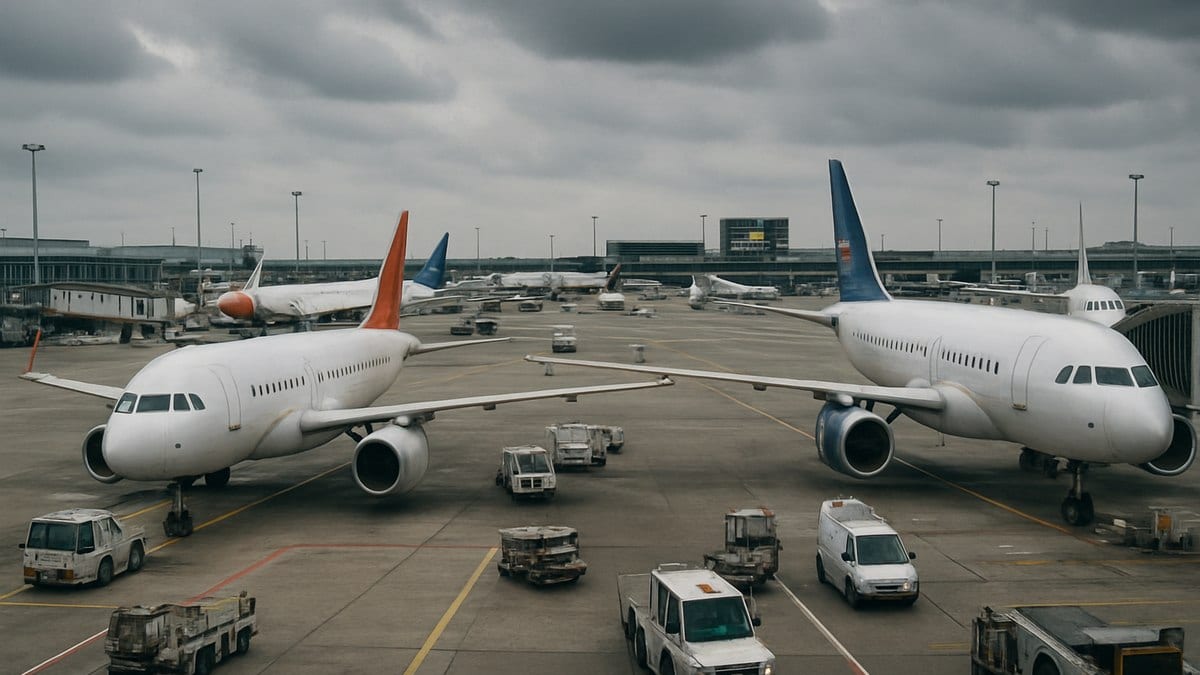
Fresh Wave of Disruptions Sweeps Key European Hubs
Recent network data compiled from flight-tracking and industry reports indicates that, on some early April days, more than 1,400 flights have been delayed across major European markets including the United Kingdom, France, Germany, Italy, the Netherlands, Portugal and Ireland. One daily snapshot on 8 April highlighted at least 1,445 delayed flights and around 20 cancellations across these countries, affecting both flagship and low-cost carriers at airports such as London Heathrow, Paris Charles de Gaulle, Frankfurt, Amsterdam Schiphol, Rome Fiumicino and Lisbon.
The pattern builds on repeated days of heavy disruption in late March and early April, when storm systems, knock-on delays from North American hubs and ongoing operational bottlenecks pushed Europe’s already stretched air traffic management system close to capacity. Travel-industry coverage describes thousands of passengers stranded or facing multi-hour waits as aircraft, crews and baggage struggled to keep pace with schedules.
While cancellations remain comparatively limited on many affected days, the scale of delays is proving highly disruptive. Longer turnaround times, missed connections and constrained gate capacity mean that even small timetable changes in the morning can grow into large backlogs by late afternoon and evening, particularly at slot-controlled airports where there is little spare room to recover lost time.
Analysts note that these early April figures come at a time when total traffic is still only slightly above 2024 levels and remains below pre-pandemic peaks in some markets, underlining how sensitive the system has become to pressure from weather, staffing or airspace restrictions.
Weather Systems and Global Network Shocks Feed Europe’s Backlog
Behind Europe’s April surge in delays lies a chain of disruptive events in other regions. Severe storms and operational bottlenecks reported at major North American hubs in recent days, including airports in Atlanta, New York and Miami, have produced hundreds of delays and cancellations, with missed departures cascading into late-arriving aircraft and crews on transatlantic routes. Travel-industry summaries point to passengers arriving hours behind schedule into London, Paris and Amsterdam, compressing connection windows and pushing baggage systems to their limits.
At the same time, Europe has faced its own weather volatility. Earlier in the year, winter storms and strong wind events over northern and western Europe sharply reduced runway capacity at airports such as Dublin, Frankfurt and London, forcing air traffic controllers to increase separation between aircraft and limit arrivals per hour. Similar patterns, on a smaller scale, have reappeared during recent Atlantic storm systems, with poor visibility and crosswinds prompting delays that ripple across regional networks.
Outside the immediate transatlantic corridor, wider geopolitical and airspace tensions are also reshaping long-haul routings between Europe, the Middle East and Asia. Restrictions and diversions around conflict zones have added track miles and complexity to many flights, leaving schedules with less slack to absorb unplanned queues at busy waypoints. When those flights arrive late into European hubs, the recovery options are limited, especially during peak morning and evening banks.
The combination of weather-sensitive infrastructure, long-haul diversions and congested terminal operations means that even moderate external shocks can now trigger a visible spike in European delay statistics, and April’s traffic is exposing those vulnerabilities once again.
Staffing Constraints and Strike Threats Add to Structural Pressure
Beyond daily weather and traffic swings, structural issues inside Europe’s aviation system are amplifying the April crisis. Industry analyses from European and global aviation bodies have repeatedly highlighted chronic staffing challenges in air navigation service providers, airport ground operations and some airline crew groups. Delays attributed to air traffic management have more than doubled over the past decade, even as overall traffic grew at a much slower pace, signalling that the system has not fully adapted to rising demand.
Air traffic control units across Europe are operating with lean rosters in several key sectors, which makes it harder to add extra capacity when thunderstorms, reroutes or military airspace activations compress available routes. When sectors are understaffed or equipment maintenance reduces capacity, regulators often impose flow restrictions that limit the number of flights per hour, effectively building queues both in the air and on the ground.
April is also bringing a renewed wave of industrial action risk. Notices of aviation-related strikes in Italy scheduled for 10 April, particularly in Rome, Milan and Naples, are expected to generate further delays across Europe’s tightly interconnected airspace system, even during a relatively short four-hour action window in the afternoon. Travel advisories anticipate that carriers will pre-emptively trim schedules and introduce rebooking waivers, but residual disruption may continue well beyond the formal strike period.
Recent experience with industrial action in other European states suggests that even limited strikes can generate hundreds of thousands of minutes of air traffic flow management delay, as flights are rerouted around closed sectors and neighbouring control centres absorb unexpected traffic loads. With April demand rising into the spring and early summer season, the timing of these actions is likely to keep daily delay averages at elevated levels.
Passenger Impact: Missed Connections, Longer Queues and Rising Costs
The most visible effect of the current disruption is on passengers, many of whom are facing missed connections, last-minute rebookings and longer queues at check-in, security and border control. Reports from major hubs describe crowded departure halls and gate areas as travellers wait for delayed aircraft, along with longer baggage delivery times when tight connection windows strain handling systems.
Travel-assistance firms monitoring recent disruption days in Europe estimate that tens of thousands of passengers have been affected on each of the worst-impacted dates this month. Even when flights ultimately depart, late arrivals at final destinations can significantly affect business plans, onward train connections and hotel bookings, pushing additional costs onto travellers and travel providers alike.
For travellers starting or ending journeys in the European Union or the United Kingdom, passenger rights rules continue to play a central role in managing the fallout. Under European regulation on air passenger rights, consumers may be entitled to care, assistance and, in some cases, financial compensation when long delays or cancellations fall within the carrier’s control. However, relief is more limited when the primary triggers are severe weather, airspace closures or mandatory safety restrictions.
As April’s delays mount, consumer advocates emphasise the importance of closely monitoring flight status, keeping receipts for extra expenses, and reviewing the specific conditions of each disruption day. Because the causes often blend operational issues and adverse conditions, eligibility for compensation can vary significantly from one flight to another, even within the same airport or airline.
Outlook for the Remainder of April 2026
Looking ahead through the rest of April, aviation analysts expect Europe’s delay figures to remain elevated, though not necessarily at crisis levels every day. Network briefings from regional air traffic organisations suggest that traffic volumes are tracking slightly above last year, while average air traffic flow management delays per flight have already climbed sharply compared with recent weeks.
The short-term outlook will hinge on several variables: the severity of upcoming weather systems over the North Atlantic and continental Europe, the scope and duration of announced industrial actions, and the resilience of ground and air traffic control staffing during busy holiday and event periods. Any combination of storms, strikes and technical outages could quickly push delays back above the 1,400-per-day mark seen on some of April’s most disrupted dates.
On a longer horizon, industry bodies continue to call for accelerated investments in airspace modernisation, controller recruitment, digitalisation of airport processes and better coordination between civil and military airspace users. Without these changes, observers warn that cyclical spikes in disruption may become a regular feature of the European travel calendar, particularly during the summer peak.
For now, travellers planning trips within or through Europe in April are being urged by travel advisors and industry commentators to build additional time into itineraries, favour longer connection windows where possible and stay alert to schedule changes. With delay statistics already surging past 1,400 flights a day on some dates, the region’s aviation network appears set for a challenging spring.