

More news on this day
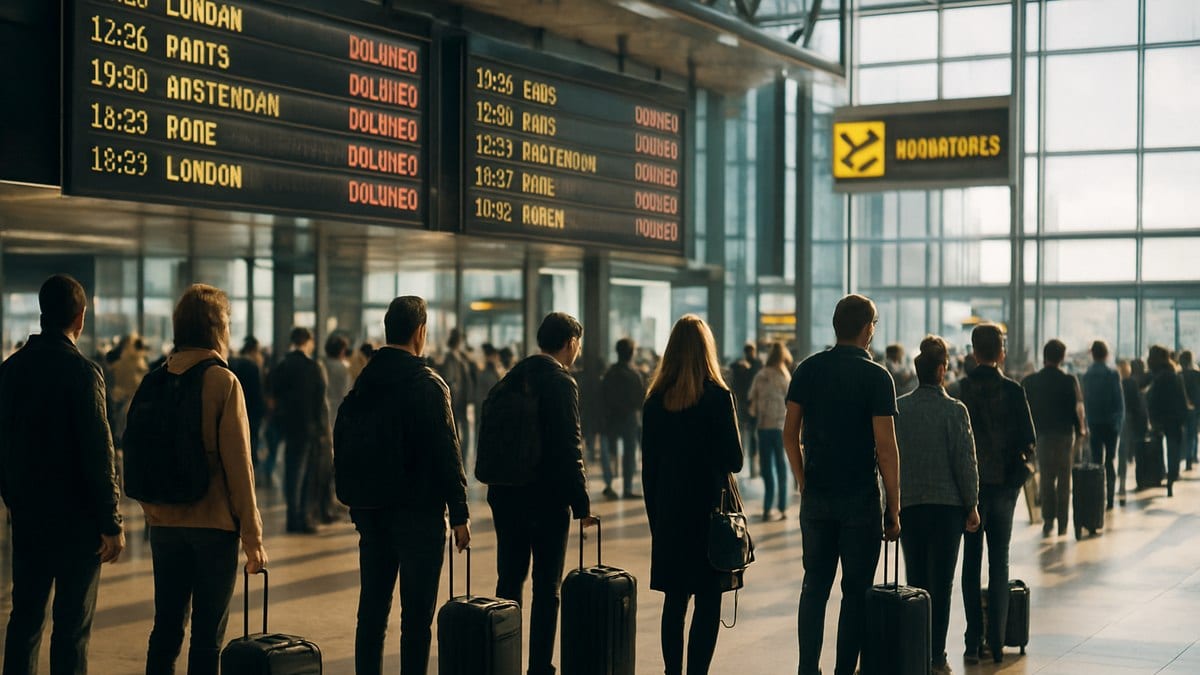
Air travel across Europe has entered April 2026 under intense strain, with more than 1,000 flights delayed or canceled in a fresh wave of disruption hitting major hubs from Amsterdam to Athens.
Get the latest news straight to your inbox!
Storm Systems And Severe Weather Drive Fresh Turbulence
Early April has brought a new round of powerful storm systems that have swept across northern and western Europe, disrupting aviation schedules at some of the continent’s busiest airports. Meteorological reports link a series of Atlantic weather fronts, including named storms such as Storm Dave and other wind events, to widespread operational difficulties that peaked around 7 April 2026.
Publicly available disruption tallies for 7 April indicate at least 238 flight cancellations and 1,469 delays across airports including Keflavik, Stockholm Arlanda, Dublin, several London-area airports and Frankfurt. These figures alone push the number of affected flights well beyond the 1,000 mark, illustrating how a single day of intense weather can reverberate across Europe’s interconnected air network.
Earlier in the month, severe weather associated with the 2025–26 European windstorm season had already tested resilience at a number of hubs. High winds and heavy rain led to runway closures, tighter air traffic flow restrictions and reduced airport capacity, particularly at coastal and northern airports. These constraints created bottlenecks that forced airlines to thin schedules, extend turnaround times and re-sequence departures.
Industry data for recent spring seasons suggest that such weather-related turbulence is no longer an outlier. Seasonal storms are interacting with already stretched air traffic control and airport systems, turning what might once have been localized delays into region-wide disruptions that affect both intra-European routes and long-haul connections.
Major Hubs From Amsterdam To Athens Feel The Pressure
Traffic statistics and disruption reports show that some of Europe’s most important transit hubs have been at the center of April’s turmoil. Amsterdam Schiphol, London’s airports, Frankfurt and Athens have all appeared repeatedly in delay and cancellation summaries, underscoring their role as chokepoints in the wider network.
Data for early April indicate that Schiphol has recorded well over 100 delayed flights on peak disruption days, with knock-on effects for services operated by carriers such as KLM and a range of European and intercontinental partners. London’s main airports have seen dozens of cancellations and significant numbers of delayed departures and arrivals as storm conditions and flow restrictions have combined to squeeze runway capacity.
Southern and southeastern hubs have also been drawn into the disruption. Flight tracking and compensation platforms highlight Athens International Airport among those affected, with scores of delayed departures and arrivals on some days in April, even when the local weather has been calmer than in northern Europe. Reports indicate that delays originating at northern hubs have cascaded into late arrivals, missed curfew windows and retimed departures at Mediterranean airports as aircraft and crews arrive out of sequence.
The pattern extends into regional centers as well. Airports in Norway, including Oslo Gardermoen and Stavanger, and other Scandinavian gateways have logged clusters of cancellations attributed to a combination of high winds, reduced runway usability and follow-on congestion. Together, these hubs form a lattice in which disruption at any point rapidly travels along connecting routes, multiplying the impact for travelers.
Operational Strain, Airspace Constraints And Staffing Gaps
While storms and low visibility have been prominent triggers, operational reports make clear that weather is only part of the story. Airspace closures and rerouting linked to instability in neighboring regions have periodically funneled more traffic into already busy European corridors, forcing aircraft into longer routes that consume more time and reduce schedule flexibility.
Analysis from aviation data providers describes how air traffic flow management restrictions, often introduced to maintain safety margins when capacity is reduced, can quickly escalate into hundreds of delays. When combined with storms, runway work in progress or ground handling bottlenecks, these measures have contributed to a jump in average delay minutes per flight and pushed daily totals into four figures across the continent.
Staffing remains another pressure point. Briefings from international industry bodies in late 2025 and early 2026 have underscored that air traffic control delays in Europe have more than doubled over the past decade, with staffing and capacity issues accounting for the majority of en-route and airport-related delay minutes. Those systemic shortcomings mean that when weather or airspace issues occur, there is less slack in the system to absorb them.
Airport operators and airlines are also contending with ground staff shortages, particularly in baggage handling and security screening, which can slow boarding and turnaround times. The result is a fragile operating environment in which small disruptions propagate quickly, further inflating the count of delayed flights even on days without headline-making storms.
Knock-On Effects For Passengers And Airlines
For passengers, April’s disruption has translated into long queues, missed connections and last-minute itinerary changes across the European network. Travel media coverage describes travelers sleeping in terminals, facing lengthy waits at customer service desks and scrambling to rebook scarce seats on alternative flights as aircraft and crews fall out of their planned rotations.
Airlines have been forced to juggle aircraft swaps, consolidate lightly booked flights and prioritize certain long-haul departures in order to minimize crew out-of-hours issues and parking congestion at overcrowded stands. In some cases, carriers have opted to cancel selected services outright in order to protect the integrity of the rest of the schedule, particularly at slots-constrained airports where recovery windows are limited.
Hub carriers based in cities such as Amsterdam, Frankfurt, London and Paris face especially complex challenges when multiple waves of connecting banks are disrupted. A single storm front or air traffic control restriction can ripple across several departure waves, creating rolling delays that can take days to unwind. For leisure travelers heading to Mediterranean destinations and islands, that can mean shortened holidays or lost accommodation nights, while business travelers risk missing meetings and events.
The disruption has also financial implications. Airlines must absorb higher fuel costs from longer routings, additional crew and accommodation expenses when crews and passengers are stranded, and potential lost revenue when late flights cause missed onward connections. At the same time, pressure is increasing from consumer advocates for clearer communication and more proactive rebooking and care.
Passenger Rights And What Travelers Can Do Now
With April’s flight irregularities topping 1,000 affected services across the region on several recent days, passenger rights have again come into sharp focus. Under the European Union’s air passenger protection framework, travelers whose flights are significantly delayed or canceled may, in some circumstances, be entitled to financial compensation, refunds or assistance such as meals and accommodation.
The rules are complex, and eligibility often depends on whether the cause of disruption is classified as extraordinary, such as severe weather or airspace closures, or as something within the airline’s control. Recent commentary from industry and consumer organizations indicates that passengers are increasingly turning to online tools and specialized firms to assess their rights after mass disruption events.
Travel experts and consumer groups consistently advise passengers to monitor their flight status closely, use airline apps where possible and keep boarding passes, booking confirmations and receipts for any additional expenses. When delays stretch into many hours, travelers are encouraged to seek written confirmation of the disruption cause and the options being offered, whether that is rebooking at the earliest opportunity, a refund, or rerouting via an alternative hub.
Looking ahead to the rest of April 2026, early-season tourism flows to southern Europe are expected to keep growing, while weather systems and airspace issues remain unpredictable. Publicly available traffic and delay projections indicate that punctuality may stay under pressure on busy travel days, particularly around weekends. Travelers planning trips in the coming weeks are being urged by travel advisories and industry commentary to allow extra connection time, build flexibility into itineraries and stay attentive to real-time updates from airlines and airports.