

More news on this day
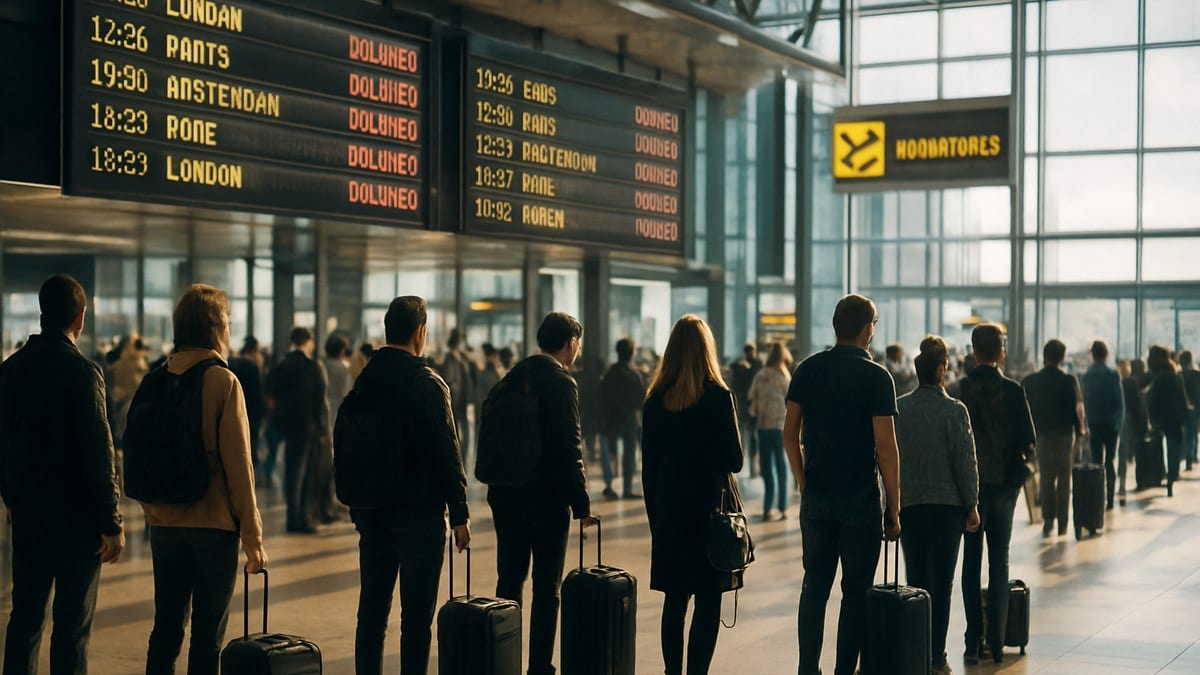
Europe’s air travel network has been hit by another wave of disruption in early April 2026, with publicly available tracking data and media coverage indicating more than 1,000 delayed flights across major hubs including London, Paris, Frankfurt, Amsterdam and key southern gateways.
Get the latest news straight to your inbox!
Delays Mount Across London, Paris, Frankfurt and Amsterdam
Reports from flight-tracking platforms and regional news outlets in the first week of April 2026 point to a concentrated surge in delays at Europe’s busiest transfer points, with disruption particularly acute at airports serving London, Paris, Frankfurt and Amsterdam. Eurocontrol’s rolling operational updates for spring 2026 describe a network already operating close to capacity, meaning even modest shocks can quickly translate into large numbers of late departures and arrivals.
Coverage from European travel media describes hundreds of delayed movements in a single day at major airports in France, Italy and Spain at the start of the month, with additional knock-on delays at northern hubs as aircraft and crews rotated through the system. One report on 1 April highlighted around 1,750 delayed flights and several dozen cancellations across a cluster of large airports in western and southern Europe, underscoring how swiftly local disruption can become a continental event.
More recent reporting from early April notes that network-wide delays have climbed further, with some tallies suggesting more than 1,400 delays and around 170 cancellations in a single 24-hour period. That pattern builds on TheTraveler.org’s own previous coverage of more than 2,500 delays recorded over several days at the start of the month, indicating that the 1,000-delay threshold has been repeatedly breached as the situation has evolved.
The cumulative effect for passengers has been extensive queuing and missed connections, particularly at sprawling transfer hubs where even slight schedule shifts can leave tight itineraries unworkable. Travel-advice services and passenger-rights organizations have reported a rise in rebooking requests and inquiries related to compensation and care obligations.
Layered Causes: Weather, Airspace Reroutes and Strained Capacity
The disruption has multiple underlying drivers rather than a single point of failure. Weather remains a major factor, with the 2025–26 European windstorm season bringing repeated episodes of high winds and poor visibility to key corridors. Meteorological analyses for late March and early April point to a series of deep Atlantic low-pressure systems tracking into northwestern Europe, forcing temporary runway closures, go-arounds and diversions at airports from Dublin to Amsterdam.
At the same time, operational briefings and insurance-industry reporting indicate that ongoing conflict and airspace restrictions in parts of the Middle East continue to distort long-haul flows into and out of Europe. Airlines operating between Europe and the Gulf or Asia have been rerouting around affected regions, lengthening flying times and tightening aircraft availability. The result is less slack in schedules and a greater likelihood that any local delay will cascade into subsequent rotations.
Structural strain in the air traffic management system is another recurring theme. Recent analysis from industry bodies shows that air traffic control delays in Europe have more than doubled over the past decade, with industrial action identified as a prominent contributor. Eurocontrol’s latest network planning documents for 2026 emphasize continued pressure on en-route capacity and the need for better coordination between national providers to absorb peak summer demand without repeating the severe delay days seen in recent years.
Cybersecurity has also entered the conversation. Coverage of recent cyber incidents affecting aviation software providers serving European airports underscores how quickly digital outages can immobilize check-in, boarding or baggage systems. While no single cyber event has been singled out as the cause of the early April spike, analysts note that the complexity of today’s aviation IT environment has created new channels through which disruption can spread.
Passengers Face Missed Connections, Long Queues and Uncertain Rights
For travelers caught in the middle, the practical impact of the April disruption has ranged from moderate inconvenience to overnight stranding. Reports from affected airports describe long queues at check-in and rebooking desks, crowded gate areas as departure times slipped, and growing pressure on airport hotel capacity around some of the worst-affected hubs.
Publicly available commentary from passenger-advocacy groups suggests that missed connections have been a particular problem at large transfer airports. Where minimum connection times are already tight, even a delay of 45 to 60 minutes can break itineraries, especially when inbound flights arrive at distant piers or terminals. Travelers arriving late into Europe from long-haul origins have in some cases faced rebooking onto services departing the following day.
The situation has again highlighted the importance of understanding passenger rights under European and UK rules. Insurance and consumer-information sites note that eligibility for compensation or care can depend on the cause of the delay, the carrier’s home jurisdiction and whether the disruption is judged to result from extraordinary circumstances such as severe weather or sudden airspace closures. Guidance continues to stress that, regardless of compensation, airlines are generally expected to keep travelers informed and provide basic assistance such as meals and accommodation in cases of long disruption.
Advisory notices circulated in recent days have urged passengers to arrive early at airports, to keep essential items and one night’s worth of clothing in hand luggage, and to monitor airline apps for gate changes or last-minute schedule adjustments. Travel planners also recommend allowing longer connection times where possible on itineraries involving major hubs that have recently recorded high numbers of delayed flights.
Airlines and Airports Adjust Schedules Ahead of Summer Peak
On the operational side, airlines and airports are attempting to stabilize the situation before the traditional late-spring and summer surge in traffic. Industry data for March and early April 2026 shows that demand for both commercial and business aviation in Europe is climbing toward, and in some segments exceeding, pre-pandemic levels, particularly at prominent business gateways such as Paris and the London area.
Network planning documents released in early April by Eurocontrol’s Network Manager outline efforts to fine-tune capacity declarations, manage known bottlenecks and coordinate responses to forecast weather and traffic peaks. The Rolling Seasonal Plan for 2026 references the need to mitigate reactionary delays, enhance staffing resilience and improve cross-border coordination so that localized disruptions do not trigger widespread schedule breakdowns.
Some airlines have already made tactical adjustments, trimming frequencies on marginal routes, retiming early-morning and late-evening rotations, or building longer ground times into their schedules at congested airports to provide a buffer against upstream delays. Low-cost carriers are focusing on aircraft utilization while also seeking to limit the exposure of their most delay-sensitive banks of flights to chronically congested airspace segments.
Airports, for their part, are working on incremental improvements rather than sweeping changes. Measures include adding staff at security and border-control checkpoints during forecast peaks, pre-positioning de-icing and ramp teams where late-season cold snaps are possible, and refining turnaround processes to keep departure punctuality as high as possible in spite of external pressures.
What Travelers Can Expect Through April 2026
Looking ahead through the remainder of April, the picture for passengers remains mixed. Forecasts from meteorological services and seasonal outlooks referenced in aviation planning documents suggest that the most severe winter-style storms are likely to ease, but unsettled conditions over the North Atlantic can still bring episodes of wind and rain capable of disrupting flight schedules in western and northern Europe.
At the same time, the underlying structural pressures identified by regulators and trade associations are unlikely to dissipate quickly. Air traffic control capacity constraints, the potential for renewed industrial action, heightened geopolitical tensions affecting airspace, and continued strong demand for both leisure and business travel all point to a network that will continue to operate close to its limits.
For travelers, that translates into an environment where days with more than 1,000 delayed flights across Europe may remain relatively common, particularly around busy weekends and holiday periods. Analysts note that this does not imply continuous chaos, but rather a higher baseline of operational risk compared with a decade ago, requiring more contingency planning on the part of both airlines and their customers.
Travel specialists recommend that passengers build additional flexibility into their plans where possible, opting for longer layovers at key hubs, avoiding the last flight of the day on critical sectors, and considering travel insurance products that explicitly cover delays and missed connections. With Europe’s aviation system under sustained pressure, informed choices and realistic expectations are likely to be as important as ever for anyone flying through the region this spring.