

More news on this day
Air travel across Europe is facing another day of serious disruption as 855 flights were delayed and 244 cancelled across the United Kingdom, Spain, Germany and several other countries, hitting passengers flying with Ryanair, British Airways, Finnair and other major carriers through busy hubs including London and Madrid.
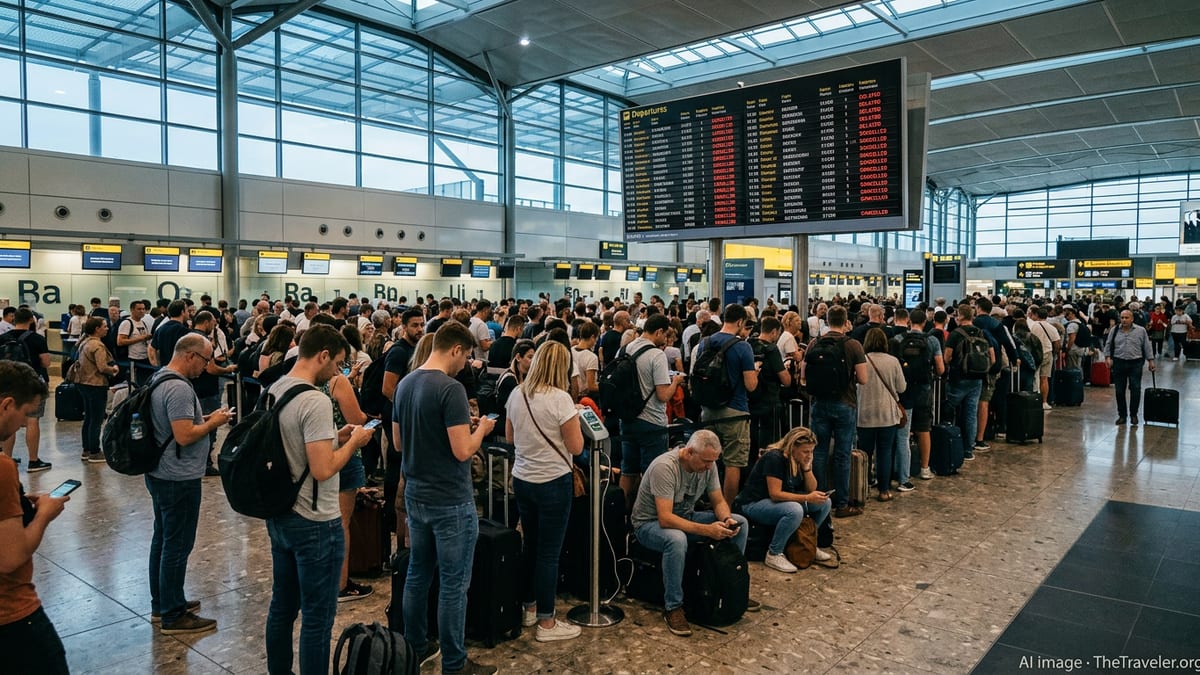
Ripple Effects From Middle East Crisis Hit European Skies
The latest wave of disruption is closely linked to continuing airspace closures and restrictions across parts of the Middle East following recent military strikes on Iran and retaliatory attacks in the region. With key Gulf hubs such as Dubai and Abu Dhabi still operating at sharply reduced capacity, European airlines have been forced to reroute services, extend flight times and reposition aircraft and crew.
Operational data from European disruption trackers over recent days shows several hundred flights being scrubbed outright and many more pushed back by hours, as carriers struggle to rebuild reliable schedules. The 855 delays and 244 cancellations reported across Europe on the most recent travel day reflect a broader pattern that began at the end of February and has since cascaded through early March timetables.
London, Frankfurt, Madrid and major German and Scandinavian hubs have all reported heavier than usual congestion as long-haul services from Asia, Africa and the Americas are re-timed to avoid closed airspace. Airlines that rely on tight aircraft rotations and high utilisation, including low cost and leisure-focused operators, have been particularly exposed to the knock-on effects.
While aviation authorities in Europe stress that safety has not been compromised, they acknowledge that rerouting around closed regions has significantly constrained available airspace, increasing pressure on air traffic control and leaving little room to absorb additional weather or technical disruption.
London, Madrid and German Hubs Face Crowded Terminals
In the United Kingdom, London Heathrow and London Gatwick have borne the brunt of schedule changes, with departure boards showing waves of delayed services to European and long-haul destinations. Queues have lengthened at rebooking desks as passengers whose flights were cancelled are moved onto later departures, often via unfamiliar connection points.
Madrid Barajas has seen a similar pattern, with outbound flights to northern Europe and transatlantic destinations pushed back to accommodate late-arriving aircraft and crew. In Germany, Frankfurt and Munich have both reported clusters of cancellations alongside extended rolling delays, particularly on routes that would normally overfly the Middle East or connect onto services bound for Asia.
Airport operators across the region have warned that disruption may persist even after Gulf airspace is gradually reopened, as aircraft and crews remain out of position and maintenance windows are squeezed by irregular operations. Some hubs have introduced temporary caps on departures in peak periods to prevent overcrowding in already stretched air corridors.
Passengers arriving at major terminals on Monday and Tuesday reported crowded concourses and long waits for information, although check in and security operations continued to run largely as normal. Industry observers say this mixed picture, with many flights departing on time while others are heavily disrupted, has added to confusion for travellers.
Ryanair, British Airways and Finnair Among Affected Carriers
Ryanair, British Airways and Finnair are among the airlines most visibly affected in the latest disruption tally, alongside other European and Gulf-based carriers with extensive networks linking Europe to the Middle East, Asia and Africa. While no single airline is responsible for the airspace closures that triggered the crisis, their differing operational models mean the impact on passengers can vary considerably.
British Airways has already cancelled multiple services to and from key Middle Eastern destinations and has put a flexible travel policy in place for customers due to fly between London and cities including Dubai, Doha, Abu Dhabi and Tel Aviv in the coming days. The carrier is offering rebooking options and, on certain dates, refunds for customers who no longer wish to travel.
Finnair, whose Helsinki hub handles a significant share of Europe Asia connections, has reported cancellations and extended delays on select long haul services as flights are rerouted away from closed airspace. That has had a knock on effect on shorter European feeder flights, leaving some passengers stranded mid journey and reliant on hotel vouchers or rebooked itineraries.
Ryanair, Europe’s largest low cost airline by passenger numbers, has also experienced delays and isolated cancellations on its network, particularly on routes feeding into congested hubs in the UK, Spain and Germany. Although the airline’s point to point model offers more flexibility on some intra European sectors, tight turnaround times and limited slack in the schedule mean knock on delays can still build through the day.
Passenger Rights and What Travellers Can Expect
For passengers caught up in the latest wave of disruption, the question of compensation and support is once again at the forefront. Under European consumer rules, airlines are required to provide care in the form of meals, refreshments and accommodation when long delays or cancellations leave travellers stranded, regardless of the cause.
However, financial compensation is generally not payable when disruption is caused by what regulators classify as extraordinary circumstances, such as airspace closures driven by conflict or broader security concerns. In those cases, airlines must still offer a choice between rebooking at the earliest opportunity, travel at a later date or a refund, but may not be obliged to pay additional cash compensation.
Consumer advocates are urging passengers to keep all documentation, including boarding passes and receipts for any out of pocket expenses, and to contact their airline directly rather than using third party claims firms that take a substantial cut of any payout. Travel insurers are also advising customers to check policy wording, as cover for disruption caused by conflict can vary widely between providers.
With schedules in flux, airports and carriers alike are recommending that travellers allow extra time for their journey, regularly check their flight status and avoid heading to the airport until their departure is confirmed as operating. Many airlines have updated their apps and notification systems to push real time information to customers whose flights are affected.
Outlook for the Coming Days
Industry analysts caution that even if tensions in the Middle East ease and airspace begins to reopen more fully, Europe’s flight network may take several days, and potentially longer, to return to its normal rhythm. Aircraft and crew will need to be repositioned, maintenance backlogs cleared and new rotations designed to reflect any long term routing changes.
For now, airlines are working on a day by day basis, trimming schedules where necessary and prioritising routes with the highest demand or strategic importance. This approach is helping to restore some connectivity while preserving safety margins, but it means that last minute cancellations and timetable changes remain likely across the region.
Passengers planning to travel through London, Madrid, major German hubs or other large European airports in the coming days are being advised to keep a close eye on developments, particularly if their itinerary involves connections to or from the Middle East or onward sectors to Asia and Africa. While many flights are still departing broadly on time, the uneven nature of the disruption means that flexibility and patience will be essential for anyone heading to the airport this week.