

More news on this day
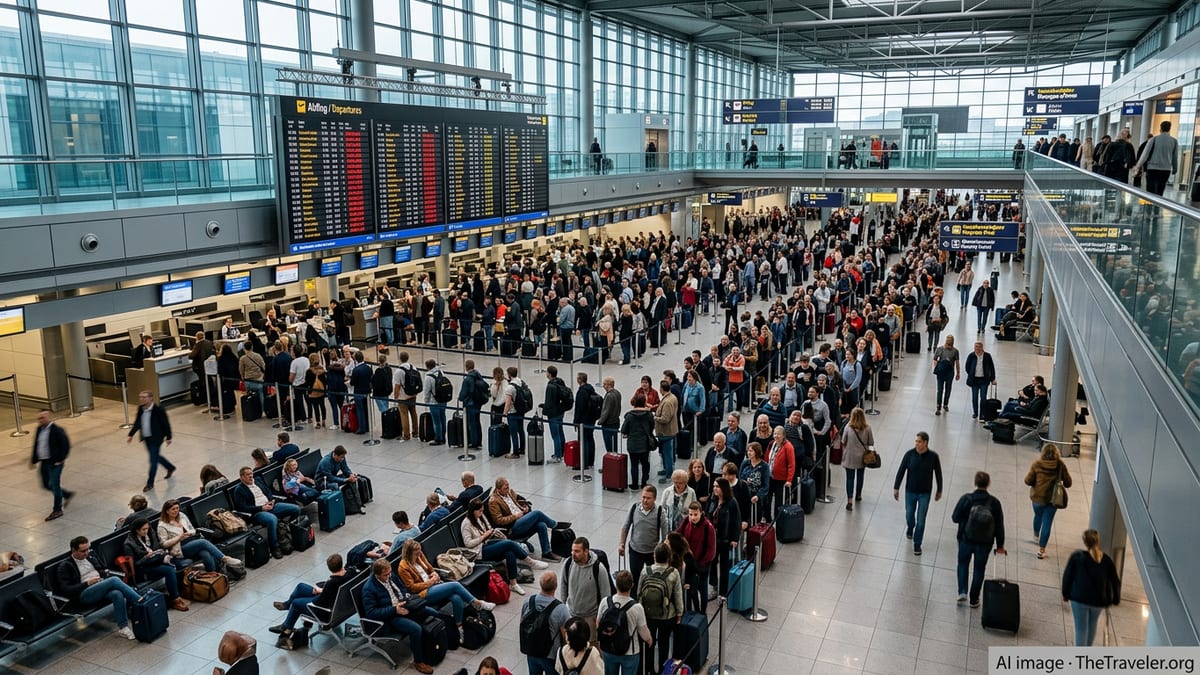
Thousands of passengers across Europe are facing long queues, missed connections and overnight stays as airports in the United Kingdom, Greece, Hungary, Germany and Turkey report a combined 416 flight cancellations and 1,025 delays affecting carriers including Pegasus, Emirates, easyJet, SAS and BA Euroflyer, with major disruption centered on London, Athens, Budapest, Hamburg and Istanbul.
Airspace Shockwaves Hit European Schedules
The latest wave of disruption is closely tied to escalating instability in the Middle East, where extensive airspace closures have forced airlines to reroute or suspend services on key long haul corridors linking Europe with Asia and Africa. As wide swathes of airspace remain off limits, European hubs that normally feed into those routes are struggling to absorb the knock on effects on crews, aircraft rotation and available slots.
Operational data compiled on March 3 indicates that 416 flights operated by or involving Pegasus, Emirates, easyJet, SAS and BA Euroflyer were cancelled, while 1,025 were delayed as airlines attempted to redesign flight plans around the restricted zones. That is on top of several hundred earlier cancellations across the continent in recent days, creating a growing backlog of displaced passengers and aircraft.
Carriers are prioritising safety and regulatory compliance, but the scale of airspace closures has left them with limited flexibility. Extended flight times, fuel constraints and crew duty hour limits have all contributed to the mounting disruption, amplifying pressure at already busy European terminals.
London, Athens and Budapest Struggle With Surging Queues
In the United Kingdom, London’s major airports have emerged as some of the hardest hit, with BA Euroflyer and easyJet particularly affected by disrupted rotations on services connecting to the Middle East and onward long haul destinations. Departure boards in London showed dense blocks of delayed services throughout Tuesday morning, with ground staff warning passengers of rolling knock backs as aircraft arrived out of position.
Athens has faced similar strain, with both local and foreign carriers forced to axe or significantly delay departures as schedules connecting Greece with the eastern Mediterranean and Gulf states were redrawn. Large crowds built up in the departures areas overnight as passengers waited for rebooking options, while some domestic connections were trimmed to free aircraft and crew for disrupted international routes.
Budapest, an increasingly important transfer point for central and eastern Europe, reported clusters of cancellations on short haul services operated in conjunction with disrupted long haul itineraries. With aircraft and crews tied up on extended routings, gaps appeared in the timetable through the morning and early afternoon, leaving passengers bound for northern Europe and the Balkans searching for alternative connections.
Hamburg and Istanbul Bear the Brunt for Germany and Turkey
In Germany, Hamburg was among the airports to experience the sharpest impact as regional services feeding into long haul networks were curtailed. Passengers reported extensive queues at service desks as cancellations mounted and rebooking options narrowed, particularly for those attempting to connect onward the same day. Airport officials said additional staff had been deployed to manage crowding and to provide water and basic refreshments for those facing extended waits.
Turkey’s aviation sector has been hit especially hard, with Pegasus and flights involving Emirates among those most affected at Istanbul’s major airports. Pegasus has already suspended a number of services to destinations in Iraq, Jordan, Lebanon and Iran, and the resulting aircraft and crew imbalances are now rippling back into European schedules. Istanbul, usually a key east west bridge, has instead become a pressure point where disrupted long haul routes collide with dense European short haul timetables.
Ground operations in Istanbul have been complicated by the need to accommodate diverted aircraft and to handle passengers whose journeys terminated unexpectedly in Turkey. Hotels near the airport reported high occupancy rates from stranded travellers, while airlines arranged buses and meal vouchers for those unable to secure immediate onward connections.
Knock On Effects for Pegasus, Emirates, easyJet, SAS and BA Euroflyer
The scale of cancellations and delays has cast a spotlight on how dependent European low cost and regional carriers are on stable long haul flows operated by larger network airlines. easyJet and BA Euroflyer, which operate dense intra European schedules that often align with global arrival and departure banks, have both seen their operations squeezed as those banks have been thinned or reshuffled.
Scandinavian carrier SAS has also been caught in the turbulence, particularly on services linking Nordic capitals with central European hubs now under strain. Delays on early inbound flights have cascaded through the day, forcing aircraft to depart late and compressing turnaround times, which in turn raises the risk of further knock backs if even minor technical or weather issues arise.
For Emirates and Pegasus, whose networks are deeply intertwined with Middle Eastern airspace, the disruption has been even more direct. With entire corridors closed and a significant number of flights to the region suspended outright, both airlines have been working through complex rescheduling exercises that affect not only intercontinental services but also the European feeder flights that supply them with passengers.
Travellers Face Uncertainty as Disruption Spreads Beyond Major Hubs
Although the most visible chaos has been at large gateways such as London, Athens, Budapest, Hamburg and Istanbul, smaller regional airports across Europe have also begun to feel the pinch. As airlines consolidate operations and prioritise trunk routes, some secondary services have been quietly dropped or merged, leaving travellers facing last minute itinerary changes and long ground transfers to alternative departure points.
Passenger rights advocates are urging travellers to familiarise themselves with compensation and care entitlements under European regulations, which in many cases require airlines to provide meals, accommodation and rebooking support during prolonged delays and cancellations. However, they also warn that processing claims may take time given the sheer volume of affected journeys.
With airspace restrictions in the Middle East expected to remain in place for days at least, airline planners and airport managers across Europe are bracing for further disruption and an extended period of fragile schedules. For passengers, that means building in extra time, staying in close contact with carriers and being prepared for travel plans to change at short notice as Europe’s aviation network adjusts to yet another major external shock.