

More news on this day
Air travel across Europe descended into fresh turmoil this week as more than 2,000 flights were delayed and at least 160 were cancelled, with France, Spain, Denmark and several neighboring countries reporting widespread disruption that snarled operations at key hubs including London and Paris.
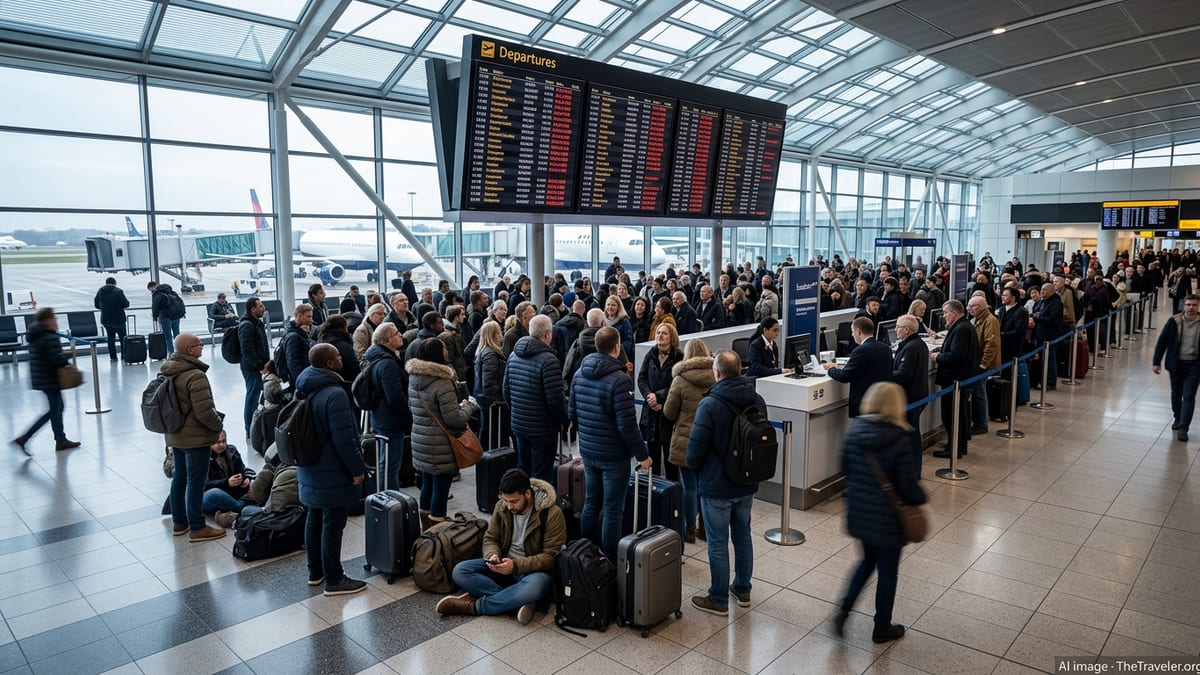
Major Carriers Log 2,061 Delays and 160 Cancellations
Operational data from multiple European monitoring platforms point to a new spike in disruption, with 2,061 flights delayed and at least 160 cancelled in a single 24-hour period across the continent. Low cost operators Ryanair and Wizz Air, along with Croatia Airlines and a mix of legacy and regional carriers, were among those reporting significant schedule upheaval.
The worst of the problems were concentrated in France, Spain and Denmark, but knock-on delays rippled through neighboring markets including the United Kingdom, Germany, the Netherlands and Italy. Busy cross-border routes linking London, Paris, Barcelona, Copenhagen, Zagreb and other key cities were particularly exposed, leaving passengers facing missed connections, overnight stays and last-minute rebookings.
In numerical terms, the latest wave of disruption follows several days of elevated delay and cancellation levels across Europe. Recent tallies have shown more than 1,000 combined cancellations and delays in a single day, with major hubs such as London Heathrow, Paris Charles de Gaulle, Frankfurt and Amsterdam Schiphol repeatedly featuring among the most affected airports.
For airlines, the rolling disruption has strained crew rosters and aircraft rotations, especially for point-to-point carriers operating tight turnaround schedules. For travelers, it has translated into long queues, packed departure halls and a scramble for alternative itineraries.
London, Paris and Other Hubs Buckle Under Strain
London and Paris once again emerged as focal points of the latest travel chaos, as congestion and operational limits at Europe’s busiest airports amplified delays originating elsewhere. London Heathrow and Gatwick recorded dozens of cancellations and well over a hundred delays in prior days, and the fresh round of schedule changes added further pressure to already stretched operations.
Paris Charles de Gaulle and Orly also reported clusters of late-running departures and arrivals, affecting both intra-European services and long haul connections. Disruption on routes linking France and Spain with the United Kingdom, Scandinavia and the wider Mediterranean fed into a complex pattern of missed connecting flights and aircraft arriving late for subsequent sectors.
The problems were not confined to the biggest capitals. Secondary gateways including Barcelona, Madrid, Copenhagen, Zagreb and regional airports in France and Spain all saw schedules slip as aircraft and crews arrived out of position. In Denmark, delays at Copenhagen cascaded across short haul services to London and other European business hubs, frustrating both corporate and leisure travelers.
Airport operators in several countries acknowledged longer than usual waiting times at check in, security and border control as disrupted passengers converged on help desks and rebooking counters. Terminal congestion was further exacerbated by weather related ground handling constraints and occasional air traffic flow restrictions in busy airspace sectors.
Weather, Staffing and Network Knots Behind the Disruption
A mix of adverse weather, staffing shortages and network saturation has been blamed for the latest wave of delays and cancellations. Recent storm systems over parts of Western and Northern Europe have brought strong winds, heavy rain and low cloud, forcing airlines and air traffic control to slow operations, reduce runway capacity and impose spacing between aircraft.
At the same time, chronic shortages of ground handling staff at some airports, coupled with tight crew availability at several airlines, have left little buffer to absorb even minor schedule shocks. When operations falter at a single major hub, the impact can quickly propagate along flight chains across multiple countries, especially for carriers like Ryanair and Wizz Air that rely on high aircraft utilization.
Industry analysts note that the European network remains vulnerable to compounded disruptions. A combination of weather systems, local staffing issues and airspace bottlenecks can swiftly result in hundreds of delayed flights, even when each individual factor might appear manageable on its own. As in previous episodes of travel chaos, smaller flag carriers such as Croatia Airlines are exposed when partner connections are disrupted at larger alliance hubs.
While there have been no reports of large-scale safety incidents linked to the current problems, the operational complexity of rerouting aircraft and crews has forced many airlines to pare back schedules or consolidate lightly booked services, contributing to the 160-plus cancellations recorded in the latest figures.
Passenger Impact Across France, Spain, Denmark and Beyond
For travelers, the numbers translate into missed holidays, interrupted business trips and unexpected overnight stays in transit cities. In France and Spain, families heading to and from winter sun destinations reported being held on aircraft awaiting slots, or spending hours in crowded terminals as departure times were repeatedly pushed back.
In Denmark, passengers on short haul services to London and other European capitals described queues at airline service desks stretching across terminal halls as travelers sought hotel vouchers, meal coupons and rebooked flights. Similar scenes played out in London and Paris, where disruption radiating from other European airports added to already heavy local traffic.
The impact has been keenly felt by those with complex itineraries, including connecting flights to long haul destinations in North America, the Middle East and Asia. Missed connections at London and Paris forced many passengers onto next day departures, while others were rerouted through alternative hubs, extending journeys by many hours.
Travel agents and corporate travel managers reported a surge in urgent calls from stranded clients seeking alternative routings or clarity on their rights to compensation and care. Some airlines added extra staff at contact centers and digital channels, but many passengers still reported extended waits to speak to an agent.
What Stranded Travelers Should Do Now
Consumer advocates across Europe are urging passengers caught up in the disruption to act quickly but methodically. The first step, they say, is to monitor flight status through official airline and airport channels, rather than relying solely on third party apps or static confirmation emails issued at the time of booking.
Under European passenger rights rules, eligible travelers whose flights are significantly delayed or cancelled may be entitled to assistance such as meals and refreshments, hotel accommodation where an overnight stay is required, and, in some circumstances, financial compensation. The precise entitlements depend on factors including the length of the delay, the distance of the flight and the underlying cause of the disruption.
Passengers are advised to keep boarding passes, booking confirmations and any written communication from airlines, and to retain receipts for reasonable out of pocket expenses such as meals and local transport when airlines are unable to provide vouchers in real time. These documents can be crucial when filing claims once travel is complete.
With the European aviation network still operating under strain, experts recommend that travelers with imminent departures build in extra time to reach the airport, consider earlier flights where possible, and avoid tight self made connections across separate tickets. For those already on the move, flexibility and close attention to airline alerts will remain essential as carriers work to restore normal operations in the days ahead.