

More news on this day
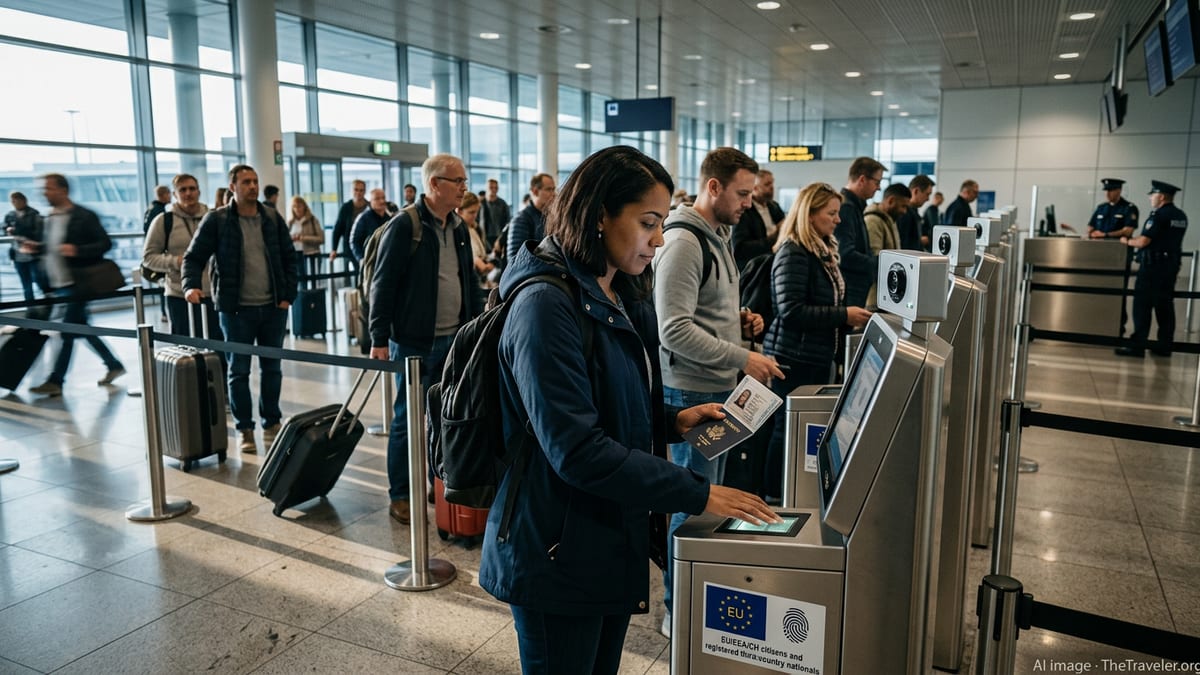
American travelers heading to Europe in 2026 will encounter a very different border experience as the European Union moves to fully enforce digital fingerprint and facial image checks at its external frontiers, replacing traditional passport stamps with a mandatory biometric registration system.
Get the latest news straight to your inbox!
What Is Changing at Europe’s Borders in 2026
The shift stems from the European Union’s new Entry/Exit System, a digital border control platform that began operations in October 2025 and is scheduled to be fully deployed at all external Schengen border crossing points by April 10, 2026. Once that date is reached, manual passport stamping for short-stay visitors will give way to automated checks of an electronic file created at first entry.
For Americans and other non-EU nationals traveling visa-free for tourism or business, this means that each time they enter or leave the Schengen area their passport data, a live facial image and fingerprints will be captured and stored in a secure EU database. The system will also log the place and time of each border crossing, making it easier for authorities to detect overstays and identity fraud.
The new process is part of a broader “smart borders” package that EU institutions have argued is necessary to modernize aging border systems, respond to rising travel volumes and tighten security. Officials say that after an initial adjustment period, the technology should shorten wait times at many airports and land crossings by automating checks that previously required manual inspection.
How the Biometric Process Will Work for U.S. Travelers
Under the new rules, most U.S. visitors arriving in Europe for the first time after full implementation will undergo a one-time biometric enrollment at the first Schengen border they cross. At that checkpoint, border officers will scan the traveler’s passport, take a digital photograph and collect four fingerprints using an electronic scanner. This initial registration is expected to take several minutes per person, especially in the early months.
On subsequent trips, the process should be faster. Instead of re-enrolling, travelers will have their passport scanned and their live facial image checked against the biometric record already stored in the Entry/Exit System. Fingerprints can be used to confirm identity in cases where the facial match is inconclusive or where additional checks are required. The goal is for most returning visitors to clear the border in roughly the same time, or quicker, than with today’s manual stamping.
The rules apply to short-stay travelers who are currently exempt from visas, including Americans visiting for up to 90 days in any 180-day period. The system covers air, land and sea borders into the 29 European countries using the Entry/Exit System, which include almost all Schengen states as well as several closely associated countries. Ireland remains outside these arrangements, so U.S. travelers entering only Ireland will not be subject to the new EU biometric registration.
Timeline: From Gradual Rollout to Full Enforcement
The Entry/Exit System did not switch on everywhere at once. EU governments agreed to a progressive rollout starting on October 12, 2025, giving member states up to 180 days to install equipment, train staff and integrate national border posts into the shared database. During this transition, some airports and land crossings began collecting biometric data immediately, while others continued relying largely on passport stamps.
By early 2026, coverage expanded, with EU authorities and airport industry groups warning that the heaviest impact for travelers would come in the first months of the new year. Airports in France, Germany, Greece, Iceland, Italy, Portugal and Spain were among those cited as likely to see longer lines as they scaled up biometric enrollment for non-EU passengers.
That transition phase is now approaching its official end. By April 10, 2026, the system is due to be fully operational at all participating external border crossing points, meaning that fingerprint and photo scans will no longer be optional in practice. From that point, any U.S. traveler entering or exiting the Schengen area for a short stay should expect to be processed through the biometric system, even if they previously passed through a border that had not yet activated the technology.
Interaction With Upcoming ETIAS Travel Authorization
The biometric Entry/Exit System is only one part of Europe’s new border architecture. A separate program, the European Travel Information and Authorisation System, or ETIAS, is scheduled to launch in the final quarter of 2026. ETIAS will require visa-exempt travelers, including Americans, to obtain a low-cost pre-travel authorization online before heading to Europe.
While both systems affect U.S. visitors, they serve different functions. ETIAS is a risk-screening tool, similar in concept to the United States’ ESTA program, designed to vet travelers before they arrive. The Entry/Exit System, by contrast, records what actually happens at the border, documenting each entry and exit along with biometric identifiers.
For at least several months in 2026, Americans will likely face the full biometric Entry/Exit System at the border without yet needing an approved ETIAS authorization. Once ETIAS goes live, travelers will need to complete the online application in advance and still undergo the same fingerprint and photo checks upon arrival. EU officials argue that, taken together, the reforms will improve security while keeping short-term travel open to visitors from the United States and other partner countries.
What Americans Should Do Before Traveling in 2026
Travel and airline industry groups are urging U.S. visitors planning European trips in 2026 to build extra time into their itineraries, particularly when making tight connections within the Schengen area or arriving at peak holiday periods. Because biometric enrollment is more time-consuming the first time it occurs, those who have not visited since the Entry/Exit System became operational may experience longer waits at border control.
Experts also advise checking passport validity well ahead of departure. Schengen rules already require that passports be valid for at least three months beyond the intended date of departure, but many carriers and travel advisers recommend a six-month buffer to avoid complications at check-in or during automated checks.
Americans who are uneasy about providing fingerprints and a facial image have little scope for opting out if they wish to enter the Schengen zone. EU officials say the data will be stored securely, used primarily for border management and migration control, and retained for a limited period linked to the traveler’s legal stay. Rights organizations and privacy advocates, however, continue to call for close monitoring of how the system is used and how long biometric records are kept.
For now, the practical message for U.S. travelers is straightforward: beginning in 2026, Europe’s borders will rely on digital fingerprints and photos rather than inked passport stamps, and planning ahead for that extra layer of checks will be an essential part of any transatlantic trip.