

I have tried Europe in two very different ways. On one trip I joined a tightly structured, multi‑country Europe tour. On another, I built the itinerary myself, booked my own trains and hotels, and wandered largely on my own schedule.
Both trips covered some of the same cities, both happened recently enough to be shaped by today’s realities of crowds, heatwaves, and new booking rules, and both had moments I absolutely loved as well as times I quietly wished I had chosen the other option. This is my honest comparison of a guided Europe tour versus independent travel, based on what actually happened on the road rather than on a brochure.
How The Two Trips Worked In Practice
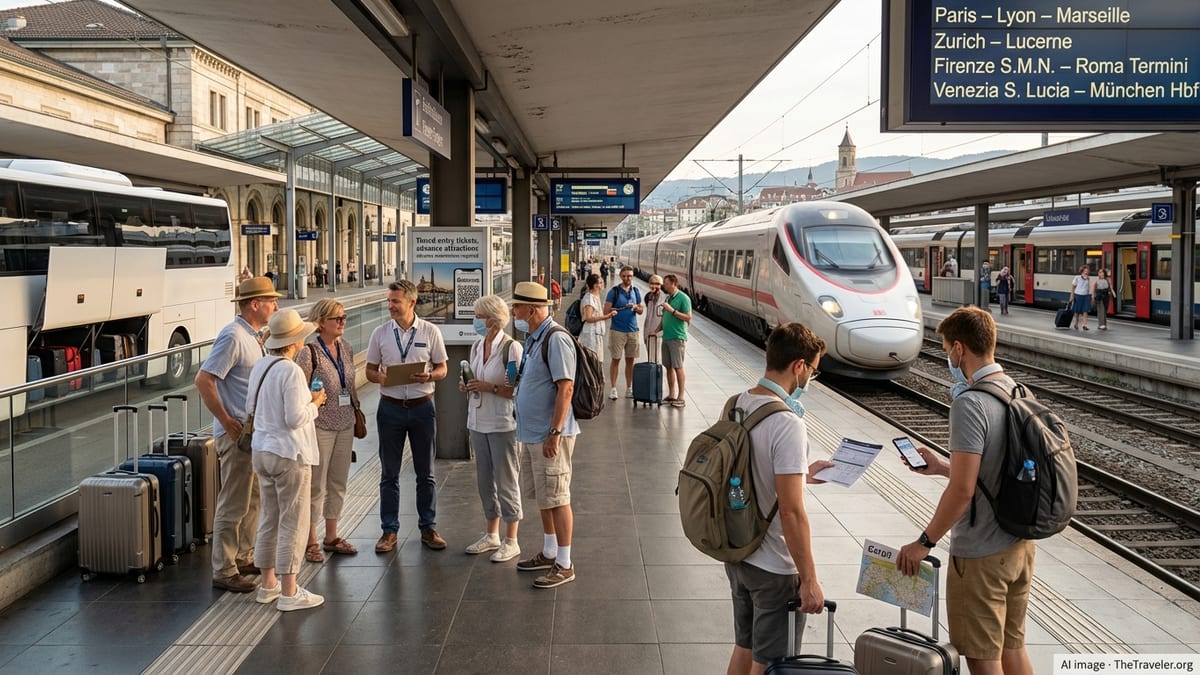
On the guided Europe tour, almost everything was bundled: transport between cities, a central hotel in each stop, a basic daily breakfast, and a selection of group activities and “optional” paid add‑ons. We traveled mostly by private coach, with a few high‑speed trains mixed in for longer hops. The itinerary looked impressive on paper: Paris, Lucerne, Florence, Rome, Venice, Munich in under two weeks. In reality, that meant constant unpacking and repacking, short stays, and strict schedule adherence. If the bus left at 8:00, it left at 8:00, and missing it was on me.
My independent Europe trip used trains almost exclusively, anchored around a Eurail Global Pass to keep costs predictable on multi‑country routes. I booked point‑to‑point seat reservations for the main high‑speed legs, then used flexible travel days to slot in side trips. Where the tour had me changing beds every night or two, on my own I deliberately slowed down: at least three nights per city, and occasionally a full week in one base so I could explore nearby towns without checking out of my room. The contrast in daily rhythm was immediate. The tour felt like a sprint; the independent trip felt more like a series of long walks.
A key difference in how each trip felt came down to control. On the tour, the guide controlled the pacing, the timing of museum entries, even when and where we stopped for bathrooms and coffee. On my own, I traded that control for responsibility. I had to plan connections, figure out metro systems, decode museum booking rules, and build in buffers for delays. When things went right, that felt empowering. When they did not, there was no one to fix it but me.
Cost, Value, And Where The Money Actually Went
When I first compared prices, the guided tour looked startlingly expensive. The headline rate for my two‑week multi‑country package in Europe sat well above what I had spent on an earlier, shorter independent trip. But once I itemized what the tour fee actually covered, it got more complicated. Hotels, breakfasts, a coach and driver, some guided city walks, a few big‑ticket entries like the Colosseum and a Seine cruise, plus the services of a tour director. On my independent trip, I had paid each of those line items separately and in some cities ended up in more basic accommodation to keep the budget under control.
Where the tour pricing annoyed me was the constant upselling of “optional” excursions. A gondola ride in Venice, a Swiss mountain excursion, a themed dinner in Rome: all at prices that were clearly padded compared with booking directly. I watched my tour bill creep up in increments of fifty and one hundred euros every day. By the time we finished, the total cost was significantly higher than the package price suggested. It covered a lot but left me feeling nickeled and dimed in a way that took the shine off the convenience.
On my independent trip, cost control depended entirely on my willingness to do the homework. I bought a Eurail Global Pass that let me travel on multiple days within a fixed window and activate it within eleven months of purchase, which helped me lock in rail flexibility without obsessing over point‑to‑point ticket prices. What I learned quickly is that the pass alone is not the full transport cost. On many popular high‑speed and night trains I still had to pay extra seat reservation fees, and those could add up, especially in France, Italy, and Spain. I also saved money on accommodation by mixing business‑style hotels near stations with smaller guesthouses in quieter neighborhoods.
In pure financial terms, independent travel came out cheaper for me on most similar routes, especially when I stayed three or more nights per stop and avoided ultra‑central tourist hotels. But I also spent more time chasing deals and correcting mistakes. I once mistimed a booking window on a summer high‑speed train and ended up with a late‑night departure that cut into my sleep and forced a taxi instead of the metro on arrival. On a tour, that episode would simply not have existed, because someone else would have booked the group block months ahead.
Convenience, Stress, And The Reality Of Daily Logistics
On the guided tour, the single best perk was how much mental load disappeared. Airport pickup, hotel check‑in, city orientation walks, and attraction entry times were all handled by the tour director. When Paris was overwhelmed by a mid‑summer tourism surge, with lines snaking around the block for major sites, the group used reserved entry slots arranged in advance. I still had to stand in line, but it was the right line, at the right time, and I did not waste a half day discovering that a museum required timed tickets purchased ahead.
The downside of that convenience was being locked into decisions that would not have been mine. Our group arrived in Rome during a heatwave and visited the Colosseum at midday. It was brutally hot, and while the timed group tickets saved us from the longest lines, I envied independent travelers I met who had booked the earliest slots of the day or shifted their visit to late afternoon after checking the forecast. On my self‑planned trip, I changed times repeatedly to avoid extreme heat and crowds, especially after seeing how often iconic sites now limit capacity or close parts of the day.
Independent travel gave me flexibility but added a constant layer of admin. Every city had its own quirks: some attractions required booking weeks ahead in peak season, others opened extra evening slots, others adjusted hours during heatwaves or major events. I found myself cross‑checking opening times of things like the Acropolis or major museums, because closures during the hottest hours of the day had become more common in recent summers. I avoided a couple of disappointments that way, but I also spent more late evenings on my phone than I would have liked.
In terms of stress, the tradeoff was clear. The guided tour concentrated the stress into a few fixed deadlines: getting to the starting city, being on time each morning, and keeping track of my bag when the coach moved. Independent travel spread stress more thinly but more persistently: watching for strikes or delays, managing reservations, calculating transit times to unfamiliar stations, and building backup plans if something went wrong. If you hate logistical puzzles, the group tour is kind to your nervous system. If you actually enjoy solving those puzzles, independent travel can become part of the fun.
Crowds, Seasonality, And How Timing Changed Both Trips
Both of my trips took place in peak or near‑peak season, and that shaped almost everything. On the guided tour in July, I experienced what happens when you move with the herd. Our coach tended to arrive at exactly the same time as half a dozen others. In places like Paris and Rome, where millions of visitors flock in June, July, and August, the result was a wall of people at every major viewpoint and an almost frantic pace to see as much as possible before we suffocated in the heat or the crowds. I remember queuing for a viewpoint in Florence, packed shoulder to shoulder with other groups, and realizing we were all following more or less the same timetable.
On my independent trip I shifted the calendar slightly to late May and September where I could, taking advantage of shoulder season conditions in many parts of Europe. That single decision changed the trip more than any particular attraction choice. Hotels were still busy but more affordable, and while famous sites were not empty, the density of visitors dropped from overwhelming to manageable. In some southern regions, especially in Greece and parts of Italy, I deliberately avoided high summer entirely after watching how intense heatwaves had forced authorities to periodically close major outdoor sites in recent years.
Another lesson was how climate and tourism patterns are drifting. What traditionally counted as low or shoulder season in Europe is not as predictable as it used to be. On the independent trip, I watched bookings spike in cooler northern and central cities in June as travelers looked to escape the worst of the Mediterranean heat and crowds. That meant my “clever” plan to find quiet corners in places like Amsterdam or Munich still ran into elevated demand and higher prices. On the group tour, this shifting pattern filtered through as last‑minute rerouting and timing changes, which the guide handled behind the scenes but which still affected the feel of each day.
If there is one clear advantage of independent travel here, it is the ability to reorient the entire trip around weather and crowd information. I moved a week from southern Spain to Switzerland after seeing forecasts and recent reports of scorching temperatures, and it paid off in comfort. On a fixed tour, that sort of major adjustment is simply not an option. You take the heat, the crowds, and any related closures as they come.
Depth Of Experience, Culture, And Human Connections
One thing the guided tour did surprisingly well was provide context. Our guide was genuinely knowledgeable and filled bus rides with bite‑sized explanations of history, politics, and everyday life. Walking tours in each city gave me a solid mental map quickly, and optional local guides at big sites like the Vatican and the Louvre helped make sense of places that can otherwise feel overwhelming. If you are short on time and want a curated overview, that structure is hard to beat.
But the same structure that delivers context also flattens spontaneity. On the tour, local interaction mostly meant quick exchanges with hotel staff, restaurant servers used to groups, and vendors near high‑traffic sights. Our “free time” chunks were often long enough for a coffee and a rushed wander, not for lingering in a neighborhood market or joining a last‑minute event. It was efficient sightseeing, not immersion. I left feeling that I had collected postcard moments rather than relationships with any one place.
Independent travel was messier but more human. Without the buffer of a group, I had to ask for directions, figure out local ticket machines, and negotiate minor hiccups on my own. That forced more interaction with residents, especially outside the most touristed zones. I stumbled into a neighborhood festival in a smaller Austrian town simply because I was staying a tram ride away from the center and followed the noise one evening. I also discovered that by booking apartments or small guesthouses in residential neighborhoods, I heard more about how locals actually felt about the influx of summer visitors.
Language and confidence levels matter here. Because I felt comfortable navigating unfamiliar cities and using local apps, the independence amplified the cultural experience. If I had been more anxious about these things, the same independence might have turned into isolation. The guided tour’s built‑in group and the guide’s role as translator and cultural mediator would then feel like a lifeline rather than a constraint.
Safety, Comfort, And How Each Option Handles Problems
On paper, both guided tours and independent travel in Europe are generally safe, and my experience reflects that. The main differences showed up not in actual danger but in how each approach handles the inevitable travel problems and small risks. On the guided tour, there was always a point person. When a fellow traveler lost a passport, the guide helped navigate the embassy process and rebooked onward segments. When a regional transport strike threatened one of our transfers, the tour company arranged a private bus and quietly absorbed the chaos.
That sort of backup is hard to replicate alone unless you work with a very hands‑on travel advisor. On my independent trip, I was the one refreshing rail updates, checking for strikes, and deciding whether to reroute or wait. I never felt unsafe walking around, but I did feel more vulnerable to systemic disruptions. I built in extra connection time and avoided last‑train‑of‑the‑day itineraries when traveling between countries in summer, when system strain and heat can make even small delays snowball.
Comfort was also distributed differently. The guided tour provided a level of baseline comfort: a private coach with air‑conditioning, luggage storage under the bus, and hotels chosen to meet a minimum standard of facilities. During a particularly hot week, having the coach as a refuge between sights made a real difference. On the other hand, the coach sometimes dropped us far from the most interesting neighborhoods and drove us directly to tourist‑centric restaurants that did not impress me. I traded some authenticity for temperature‑controlled predictability.
On my own, comfort was more of a sliding scale that I could adjust day by day. I could splurge on a hotel with strong air‑conditioning and blackout shades in cities prone to heatwaves, then economize in cooler destinations. Train comfort depended largely on whether I secured seat reservations in decent cars and traveled at less crowded times. I had a few unpleasantly full train rides that reminded me how popular European rail has become in peak season, but I also had some gloriously quiet off‑peak journeys with countryside views that made the logistics feel more than worth it.
Real Decision Moments And What I Would Do Differently
The first major decision moment came before either trip even started: should I lock in a multi‑city guided tour or assemble a flexible rail‑based route myself. The tour appealed because I had limited time to plan and was nervous about the complexity of stringing together six or seven countries in one itinerary. In hindsight, I would still say the tour was the right choice for that particular moment, but for different reasons than I expected. The real benefit was not just convenience; it was getting a structured first sampling of many cities in one go so I could later return to my favorites independently and dig deeper.
The second big decision was accommodation strategy on the independent trip. On the tour, I did not choose hotels, and a couple of centrally located but tired properties made me realize how much a room can affect your impression of a city. For the independent journey, I decided to sacrifice some convenience of being in the absolute center in exchange for quieter nights and better value. I stayed near transport hubs in some places, then in leafier neighborhoods a few stops from the main sights in others. That choice gave me more space and local flavor but did add a small daily commute. Next time, I would be even more careful about checking air‑conditioning, window soundproofing, and heat mitigation in cities prone to summer extremes.
A third decision revolved around booking famous attractions. On the tour, those decisions were basically made for me: certain museums and monuments were bundled; others were offered as add‑ons at fixed times. I sometimes felt rushed, but I rarely worried about missing out. Independently, I had to choose which “must‑sees” were worth advance commitments. Some sites sell out far in advance in peak season, so I learned to lock in time‑sensitive entries early, then leave secondary sights for spontaneous days. If I could redo that part, I would reserve even earlier for weekends and key holiday periods and build more early‑morning slots into the schedule to beat the worst of both heat and crowds.
The last decision moment was about pace. The tour’s pace left me tired but undeniably exhilarated, with a highlight reel of moments from several countries. My independent trip started at a similar speed until I realized I was recreating the same rush with none of the support. Halfway through, I deliberately cut one country, extended a stay in a place I really liked, and accepted that I would see less overall. That pivot improved the rest of the journey. Next time, I would design the whole independent itinerary from the start with fewer bases and longer stays, especially given how crowded and hot popular European cities can be at certain times of year.
The Takeaway
After living through both styles of travel, I do not think there is a single “better” choice between a guided Europe tour and independent travel. There is only a better fit for who you are, how much time and energy you can invest in planning, and what you need from this particular trip. For my first multi‑country sweep, the guided tour was genuinely useful. It gave me a low‑friction way to cover a lot of ground, stay relatively safe and comfortable, and learn just enough about each place to decide where I wanted to return. I did, however, come home tired, a bit over‑scheduled, and occasionally annoyed at the upsells and herd dynamics.
Independent travel, built around flexible rail passes, targeted reservations, and longer stays, gave me more of what I now look for: room to follow my curiosity, the ability to tune my days to the weather, and deeper interactions with local neighborhoods. It also demanded more from me. I had to stay on top of changing opening hours, rail disruptions, and booking rules for high‑demand attractions. When things went wrong, there was no guide to fix them. I learned to accept that a certain amount of muddle is part of the deal.
If you dislike logistical puzzles, are short on planning time, or feel nervous about navigating foreign systems, a guided Europe tour can still be absolutely worth it. The value lies less in getting a bargain and more in outsourcing stress and tapping into a curated overview. If you have the bandwidth to plan, are comfortable troubleshooting on the fly, and care more about depth than breadth, independent travel will likely feel richer and, with some homework, better value for money.
For my own future trips, I see a hybrid as the sweet spot. I would consider a short, focused tour in particularly complex regions or during very busy events, then build independent segments around it where I can slow down, improvise, and follow my own rhythm. Europe is now busy enough, hot enough, and regulated enough that both approaches require more thought than they once did. But that also means that choosing the style that truly fits you will pay off more than ever once you are actually on the ground.
FAQ
Q1. Is a guided Europe tour really worth the higher upfront cost?
In my experience, the higher upfront cost can make sense if you value having logistics handled, especially for a first multi‑country trip or if you are traveling in peak season when trains, hotels, and attractions book out early. The price includes more than it first appears, but it often hides upsells for optional excursions that add up quickly. If you enjoy planning and are willing to manage bookings yourself, you can usually see similar places independently for less, particularly by traveling outside the absolute peak weeks and staying longer in each stop.
Q2. How far in advance should I book trains and major attractions if I travel independently?
For high‑speed trains on busy routes in peak months, I now try to secure seat reservations at least a few weeks ahead, more if I know I must travel on a specific day and time. For major attractions with timed entry and strict daily quotas, I book as soon as I fix my dates, especially for weekends and holidays. Less famous or smaller sites can often be left until closer to the day, but the big names in popular cities are no longer something I leave to chance.
Q3. Did you feel rushed on the guided tour compared with independent travel?
Yes, the guided tour felt rushed. We often had only a day or two in each city and a fixed sequence of sights, which meant little room for detours or simply sitting in a café and watching life go by. Independent travel let me slow down by design, adding extra nights and sacrificing the total country count. The tradeoff is that I saw fewer places in one go, but I experienced the ones I chose in more depth and without being constantly aware of the group schedule.
Q4. Which option felt safer, especially during busy summer travel?
Both felt safe, but in different ways. The guided tour felt safer in terms of having someone to turn to when problems cropped up, whether that was a lost document, a transit strike, or confusion at a site entrance. Independent travel required more self‑reliance, particularly when navigating packed stations or late‑night arrivals. I managed by building in longer connection times, choosing well‑lit areas and reputable accommodations, and avoiding last departures of the day where possible.
Q5. How did crowds and heat affect each style of travel?
On the tour, I had to accept crowds and heat as given; the itinerary could not flex around a heatwave or a surge in visitor numbers. We sometimes visited outdoor sites at uncomfortable times because that was when our slot was booked. Independently, I could shift plans to cooler hours, move my trip slightly earlier or later in the season, or even reroute to cooler regions. That flexibility made a big difference to comfort, especially as European summers have become hotter and busier in many popular destinations.
Q6. Did the Eurail Global Pass really save you money when traveling independently?
For a multi‑country itinerary with several medium and long‑distance train journeys, the Eurail Global Pass did help keep costs under control, especially when I bought it during a promotion and used enough travel days. However, I had to factor in reservation fees on certain trains, which are easy to underestimate at first. If you are only doing one or two cross‑border hops, individual tickets might be cheaper. For more extensive rail travel, a pass can be a good tool so long as you plan your travel days carefully.
Q7. What type of traveler is better suited to a guided Europe tour?
Guided tours suit travelers who want to see a lot in a short time without handling logistics, and those who appreciate having a built‑in group and a guide for context and support. They are especially good for first‑timers, people who feel uneasy about language barriers or complex ticketing systems, and anyone with limited planning time who still wants a broad introduction to Europe. If that sounds like you, and you accept the tradeoffs in flexibility and spontaneity, a guided tour can be a solid choice.
Q8. What type of traveler is better suited to independent Europe travel?
Independent travel is best for people who value flexibility, do not mind (or even enjoy) research and planning, and prefer to shape their days on the ground as conditions change. If you want longer stays, quieter neighborhoods, and the option to adjust for weather, crowds, or new discoveries, planning your own route will likely feel more rewarding. It is also a good fit if you are budget‑conscious and willing to trade time and effort for savings and a more tailored experience.
Q9. Would you ever combine a guided tour and independent travel in one trip?
Yes, in fact that is how I would design future Europe trips. I would consider a shorter, focused tour in a region where logistics are trickier or where I especially want guided context, then add independent days or weeks before or after in places where I simply want to wander, eat, and soak up the atmosphere at my own pace. This hybrid approach balances the strengths of both options and reduces the risk of burning out on either intense group schedules or nonstop self‑planning.
Q10. If you had to choose only one style for your next Europe trip, which would you pick?
For me, at this stage, I would choose independent travel. I now know which cities I want more time in and feel comfortable handling bookings and on‑the‑ground decisions. I also value the ability to change plans in response to crowds, heat, or simple mood. That said, if I were traveling with relatives who needed extra support, had very limited planning bandwidth, or wanted to cover a lot of countries quickly, I would not hesitate to book a guided tour again, but I would go into it with clearer expectations about pace, upsells, and the importance of picking the right season.