

More news on this day
Across Europe, three heavyweight destinations are reshaping what global travel looks like in 2026. France, Italy and Spain are tightening visitor rules, accelerating green investments and promoting more distinctive regional experiences in a bid to manage record crowds while keeping tourism at the heart of their economies.
Get the latest news straight to your inbox!
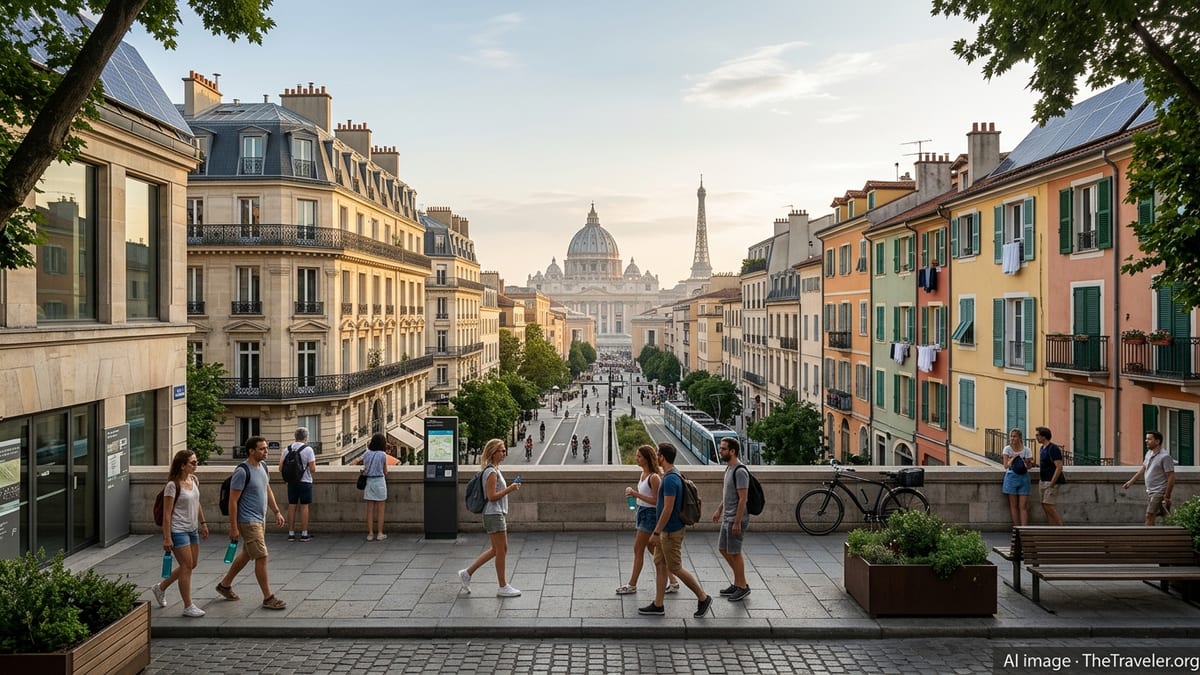
Record Arrivals Drive a New Phase in European Tourism
Europe entered 2026 with international travel demand at or above pre-pandemic peaks, putting sustained pressure on its most visited destinations. Publicly available data from industry bodies shows global international arrivals continuing to climb, while individual countries report record visitor numbers, higher spending and more strain on housing, transport and heritage sites. France, Italy and Spain, which routinely rank among the world’s top destinations, are emerging as test cases for how mature tourism economies respond.
Spain offers one of the clearest snapshots of this new phase. According to recent figures from its national statistics agency, the country welcomed roughly 97 million foreign visitors in 2025, setting a new record and underscoring the central role tourism plays in its economy. France, which typically leads Europe on tourism receipts, and Italy, which continues to attract rising numbers of long-haul and intra-European visitors, are experiencing similar pressure points. The question in 2026 is less about how to attract tourists and more about how to shape their impact.
The three countries are converging on a similar policy mix. They are experimenting with targeted fees and booking systems in crowded hotspots, updating city-level tourism taxes, tightening rules on short-term rentals and channelling more public and private money into lower-impact transport and energy upgrades. At the same time, they are working to shift demand away from a narrow set of iconic sites and into lesser-known regions and off-peak seasons.
Smart Rules and Visitor Caps Redefine Access
Nowhere is the move toward what officials describe as “smart rules” more visible than in Italy’s heritage cities. Venice has continued refining its day-tripper access contribution, applying a fee on selected days for visitors entering the historic centre during peak hours. Information made available by local authorities and travel industry analyses indicates that the system is now backed by QR code checks, variable pricing depending on how far in advance visitors book, and a growing list of chargeable days that stretches across spring and early summer.
Other Italian destinations are adopting narrower but symbolically important measures. In Rome, a new ticketed access system around the Trevi Fountain began operating in early 2026, with a dedicated entry charge intended both to help manage crowd flows and to fund maintenance of surrounding heritage sites. These steps add to existing restrictions on tour group sizes, dress codes in certain coastal towns and fines for behaviour considered disrespectful in historic centres.
France is also moving toward more proactive control of visitor flows at its busiest attractions and city cores. Local authorities in Paris and several major regional cities continue to adjust crowd-management rules around peak events, from capacity controls at riverside zones to stricter licensing and zoning for tourist buses. Major landmarks are expanding the use of timed ticketing and online reservations, which operators present as tools to smooth demand across the day and reduce pressure on neighbourhood residents.
Spain’s approach combines tax tools and regulatory changes. Barcelona has steadily increased its municipal tourism surcharge and signalled plans to phase out many short-term holiday rentals over the coming years as part of a broader strategy to ease housing pressures. Regional governments in popular coastal and island destinations are adding or updating their own overnight visitor levies and, in some cases, introducing targeted rules on cruise calls, alcohol sales and large tour groups in specific resort zones.
Green Policies Move from Pledges to Practice
Alongside crowd control, environmental sustainability has moved closer to the centre of tourism policy in all three countries. National climate frameworks now routinely reference tourism, while regional and city authorities are using funding from recovery plans and European Union initiatives to decarbonise tourism infrastructure. The practical impact of these moves is increasingly visible in transport networks, accommodation standards and coastal management.
In Spain, island regions that rely heavily on visitors are becoming early adopters of greener tourism models. Official planning documents for the Balearic Islands and Canary Islands highlight efforts to limit new large-scale hotel construction, tighten rules on energy and water use in existing properties, expand protected natural areas and promote off-season and nature-focused travel. Some municipalities have declared smoke-free beach zones, while others are experimenting with traffic restrictions and reshaped public transport to reduce car dependence in peak months.
France is advancing its own green agenda through transportation and building regulations. High-speed rail links and night-train revival efforts are positioned as lower-carbon alternatives to short-haul flights for both domestic and neighbouring European visitors. Large cities and mountain regions are tightening pollution rules for vehicles accessing sensitive areas and supporting upgrades to energy systems in hotels and rental housing. These shifts are increasingly framed not only as climate measures but also as a way to keep destinations attractive as traveller awareness of environmental impacts grows.
Italy, which has faced criticism over crowding at coastal and heritage sites, is using a mix of financial incentives and penalties to push operators toward more sustainable practices. Tourist taxes and access fees in cities like Venice are partly justified as a way to fund maintenance and adaptation projects, from flood defences to waste systems. Beach towns on the Amalfi and Ligurian coasts have expanded ticketed access and reservation systems for stretches of shoreline, often paired with caps on visitor numbers aimed at protecting fragile coastal ecosystems.
Shifting to High-Value, Low-Impact Experiences
France, Italy and Spain are not only tightening controls; they are also trying to reshape what visitors do once they arrive. Policy documents and destination marketing campaigns increasingly highlight “quality” or “value-added” tourism, signalling a preference for visitors who stay longer, spend more and explore beyond heavily saturated districts. This focus is reflected in the kinds of experiences being promoted and invested in as 2026 unfolds.
In France, regions from Brittany to Occitanie are receiving renewed attention as alternatives to Paris and the Riviera’s peak-summer crowds. Wine routes, cycling networks and cultural itineraries through smaller cities and rural areas are being packaged as slower, lower-impact options that still deliver strong economic benefits. Investment is also flowing into refurbishing historic town centres, reusing old industrial sites as creative hubs and developing river and canal tourism that spreads traffic more evenly.
Italy is spotlighting lesser-known art towns, inland villages and agritourism stays to counterbalance the pull of Venice, Florence and the Amalfi Coast. Publicly available promotional strategies emphasise food and wine trails, outdoor activities in national parks and extended itineraries that link multiple regions by train. Some areas offer incentives or promotional partnerships for stays outside the traditional peak months, seeking to redistribute demand across the calendar as well as geography.
Spain, which has long promoted its beach resorts, is leaning further into cultural, gastronomic and nature-based travel. Regional authorities in the north of the country point to cooler-climate coastal routes and hiking areas as alternatives to the busiest Mediterranean spots, while cities like Valencia, Bilbao and Málaga position themselves as short-break destinations built around museums, architecture and food. On the islands, campaigns encourage visitors to explore inland landscapes, local markets and smaller villages rather than concentrating solely in resort zones.
Balancing Local Pushback with Tourism’s Economic Weight
The rapid rebound in visitor numbers has also sparked visible tensions in parts of France, Italy and Spain. Demonstrations, resident petitions and local business debates about the role of tourism have become more common, particularly in neighbourhoods where short-term rentals and seasonal work dominate. In response, authorities are presenting new rules and green policies as a means of preserving long-term liveability as well as the industry’s economic contribution.
Spain has seen some of the most prominent recent protests, especially in Barcelona, the Balearic Islands and the Canary Islands, where campaigners link overtourism to rising housing costs, congestion and environmental degradation. According to published coverage and academic analyses, these pressures are helping to drive stricter licensing regimes for holiday rentals, moratoriums on some new tourist developments and calls for clearer caps on visitor numbers in sensitive areas. Similar concerns can be heard in parts of Italy’s heritage cities and France’s most popular coastal and alpine destinations.
Despite the friction, tourism remains central to national and regional economic strategies. Policymakers in all three countries are careful to stress that new restrictions and fees are not intended to deter visitors entirely, but to steer behaviour. The emerging model in 2026 pairs relatively free movement across the broader territory with more managed access to specific hotspots, higher environmental standards for operators and targeted efforts to encourage slower, more dispersed styles of travel.
For travellers, the result is a Europe that feels both familiar and subtly different. Paris, Rome and Barcelona remain firmly on global wish lists, yet visiting them now often involves timed tickets, digital passes and higher local charges. At the same time, the growing emphasis on regional diversity and lower-impact experiences is opening up new options for those willing to look beyond the most crowded postcards. How visitors respond over the next few seasons will help determine whether France, Italy and Spain can turn today’s experiments into a more sustainable blueprint for global tourism.