

More news on this day
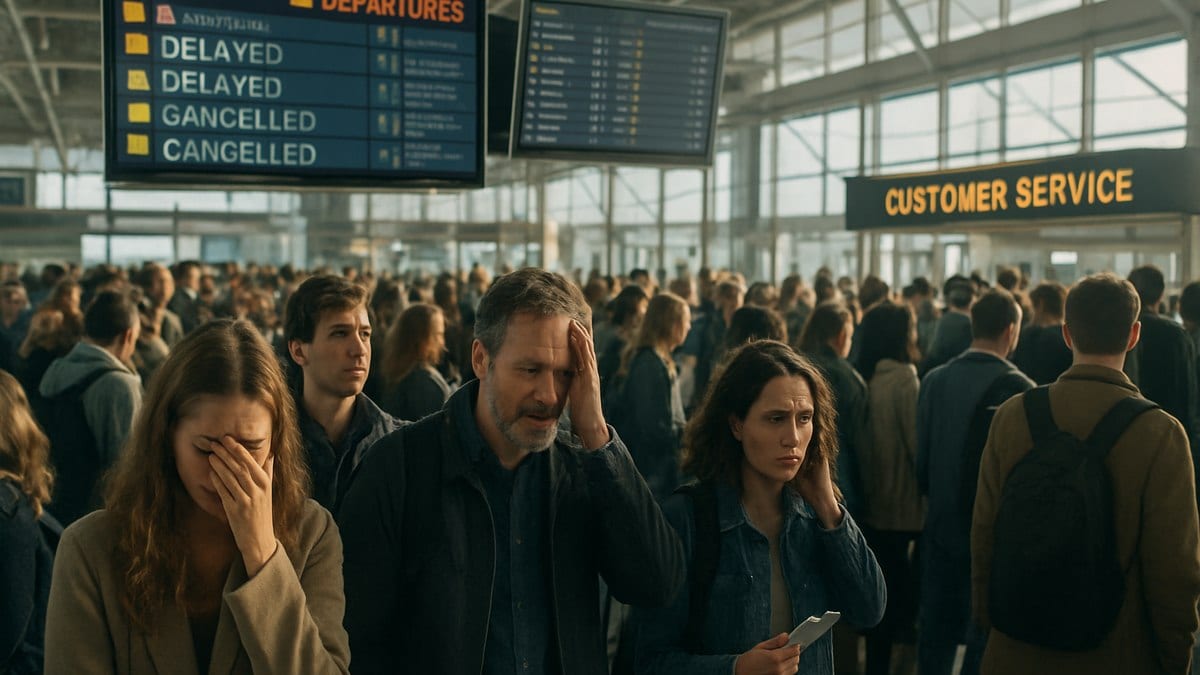
Hundreds of air travelers have been stranded across Europe in early April 2026 as a wave of strikes, baggage breakdowns and knock-on delays from wider geopolitical and weather disruptions combine to snarl operations at major hubs during the busy Easter and spring holiday period.
Get the latest news straight to your inbox!
Easter peak collides with mounting flight disruptions
Airports across the United Kingdom, Spain, France, Austria and Turkey have reported significant operational strain as the Easter travel rush coincides with staff walkouts and overloaded schedules. Recent coverage indicates that on April 5, British Airways and Pegasus Airlines alone registered dozens of cancellations and more than one hundred delays across routes touching Vienna, London and Istanbul, leaving passengers queueing for rebookings and hotel vouchers as aircraft and crews fell out of position.
While the absolute number of cancelled flights remains a fraction of total schedules, the clustering of disruptions at key hubs is amplifying the impact. When services are concentrated on a small number of banked departures, even a modest percentage of cancellations can strand hundreds of passengers at once, especially when there are few open seats on alternative flights during holiday periods.
Capacity pressures built up through March are feeding into April. Travel industry reporting on European operations in late March highlighted more than fifty cancellations and well over a thousand delays in a single day across hubs such as London Heathrow, Paris Charles de Gaulle, Frankfurt and Istanbul, underscoring how fragile recovery timetables have become after any large disturbance.
For many travelers, the result in early April is a cascade of missed connections, unexpected overnight stays and stretched airport services, as terminal staff attempt to manage rebooking lines, meal vouchers and basic welfare for those unable to leave the airport due to visa or schedule constraints.
Strikes and staffing disputes ripple through French and Italian skies
Industrial action is emerging as one of the clearest triggers of April’s disruption. In France, low-cost carrier cabin crews and ground staff have called a strike for April 6, targeting one of the busiest return travel days of the Easter period. Advance warnings suggest that flights serving French airports, including key links used for onward connections across continental Europe, face heightened risk of last-minute delays and cancellations.
Further south, Italy is bracing for additional turbulence. Aviation and air traffic control unions have announced a coordinated stoppage for April 10 that is expected to affect airports including Rome Fiumicino and Milan, according to travel trade publications. Analysts note that when controllers reduce capacity over Italy, the effects often spread across the wider European network as airlines are forced to reroute traffic and reduce frequencies, tightening already limited spare capacity.
These April walkouts follow a series of strikes in March involving carriers such as easyJet and ITA Airways, which contributed to rolling cancellations and staffing shortages. The cumulative effect is an industry operating with little recovery margin just as demand peaks, meaning even short actions can trigger multi-day knock-on delays for aircraft, crews and passengers.
Travel risk advisories for the coming week are already urging passengers with itineraries touching French or Italian airspace to monitor schedules closely, allow additional layover time and prepare for rapid changes as airlines adjust operations around industrial calendars.
Baggage breakdowns in Spain strand luggage and slow connections
In Spain, the most visible symptom of the current disruption has been stranded luggage rather than grounded aircraft. Reporting from national and expatriate media in early April describes thousands of suitcases piling up at major Spanish airports after strike action and staffing shortages disrupted baggage handling systems during the Easter getaway.
Flights have mostly continued to operate, but baggage belts and sorting areas have struggled to keep pace. Passengers arriving in resort gateways and hub airports are increasingly finding that their bags have not made the journey with them, triggering long lines at lost-luggage desks and forcing some to start holidays without essential items.
These baggage issues have secondary effects on the broader European network. When luggage is left behind to protect on-time departures, it often requires later transport on already full flights, taking up scarce hold space and limiting capacity for new checked bags. At the same time, missed luggage connections complicate transfer operations at hubs, slowing boarding and adding to turnaround times.
Consumer advocates point out that under European passenger rights rules, travelers whose luggage is delayed or lost may be entitled to reimbursement for basic replacement items, yet many are unfamiliar with the claims process. The surge in cases this April is expected to test how quickly airlines can process and pay out compensation while simultaneously trying to clear baggage backlogs.
Geopolitical tensions and weather disruptions tighten the squeeze
The immediate causes of Europe’s current travel chaos are rooted in local labor and airport issues, but external shocks are compounding the strain. Airspace closures and route detours linked to ongoing conflict in the Middle East have reshaped key Europe–Asia corridors since late February, according to aviation briefings and risk advisories. Long-haul flights that previously took more direct paths now often follow elongated northern or southern routes, adding flight time, fuel burn and complexity to daily schedules.
These detours can leave aircraft and crews out of position when storms or technical problems arise in Europe. In recent weeks, severe weather and high winds associated with late-season Atlantic systems have already forced capacity reductions at airports in the United Kingdom and northern Europe during certain periods. When combined with rerouted long-haul services, even short weather disruptions can lead to aircraft arriving late, missing tight turnaround windows and pushing subsequent departures behind schedule.
Travel analysis from flight-tracking and consultancy firms shows that March brought several days where central European hubs, including Zurich and Geneva, saw hundreds of delays in a single day due to reroutings and en‑route restrictions. Those bottlenecks are still working their way through airline rotations as April begins, with some carriers extending rebooking windows and relaxing change fees to manage displaced passengers.
Industry observers caution that Europe’s liberalized, high-utilization airline model often leaves little slack in aircraft use or crew rosters. In such an environment, each new disruption, whether political, meteorological or operational, adds another layer of complexity that is now being felt directly by travelers trying to cross the continent.
What stranded passengers are facing on the ground
For stranded travelers, the experience is playing out in long lines at transfer desks, crowded terminal seating areas and uncertain waits for updates. Social media images and traveler accounts from early April show departure boards at hubs such as Heathrow, Vienna and Istanbul dominated by notices of delays and schedule changes, while airport hotels around key hubs have reported high occupancy as disrupted passengers seek overnight accommodation.
Many of those caught in the April disruptions are transfer passengers whose itineraries rely on short connection windows through European hubs. When an inbound flight arrives late because of earlier airspace or weather restrictions, a missed connection can leave passengers facing delays of 12 hours or more, particularly where airlines have little spare capacity to rebook onto later services.
Publicly available guidance from consumer groups emphasizes that passengers on flights departing from European airports, or traveling on EU or UK carriers, may be covered by compensation and care obligations in the event of cancellations or long delays, depending on the underlying cause. That can include meals, refreshments, hotel stays and in some cases fixed-sum cash compensation, although eligibility is limited when disruptions stem from extraordinary circumstances such as severe weather or certain security-related restrictions.
As Europe’s holiday season gathers pace, travel analysts warn that without a period of sustained stability in staffing, weather and airspace arrangements, the pattern seen in early April 2026 could recur throughout the spring, leaving travelers wise to build extra time into itineraries, travel with essentials in hand luggage and monitor airline communications closely in the days before departure.