

More news on this day
Hundreds of travellers across Europe faced mounting disruption this week as 2,497 flights were delayed and 152 were cancelled in a fresh wave of operational turmoil affecting key hubs in the United Kingdom, Denmark, the Netherlands, France and other countries.
Get the latest news straight to your inbox!
Major Hubs From London to Paris Bear the Brunt
Publicly available flight tracking data and industry summaries show that some of Europe’s busiest airports, including London Heathrow, London Gatwick and Paris Charles de Gaulle, have experienced extensive knock-on disruption as delays and cancellations rippled through the network. London’s main airports reported hundreds of delayed departures and arrivals in a single day, compounding earlier backlogs and leaving many passengers facing missed connections and unplanned overnight stays.
Paris Charles de Gaulle and other French airports have also been affected, with significant schedule changes for both short and medium haul routes. Disruptions at continental hubs such as Frankfurt and Amsterdam have fed into the wider picture, as aircraft and crews arrived late or out of position for subsequent legs, narrowing the margin for recovery across the schedule.
Reports from European travel outlets indicate that disruption has not been limited to one corridor or weather system, but has instead combined local operational pressures, staffing constraints and continued sensitivity to adverse conditions at key airports. The result is a patchwork of delays that translate into widespread inconvenience for passengers even where local skies are clear.
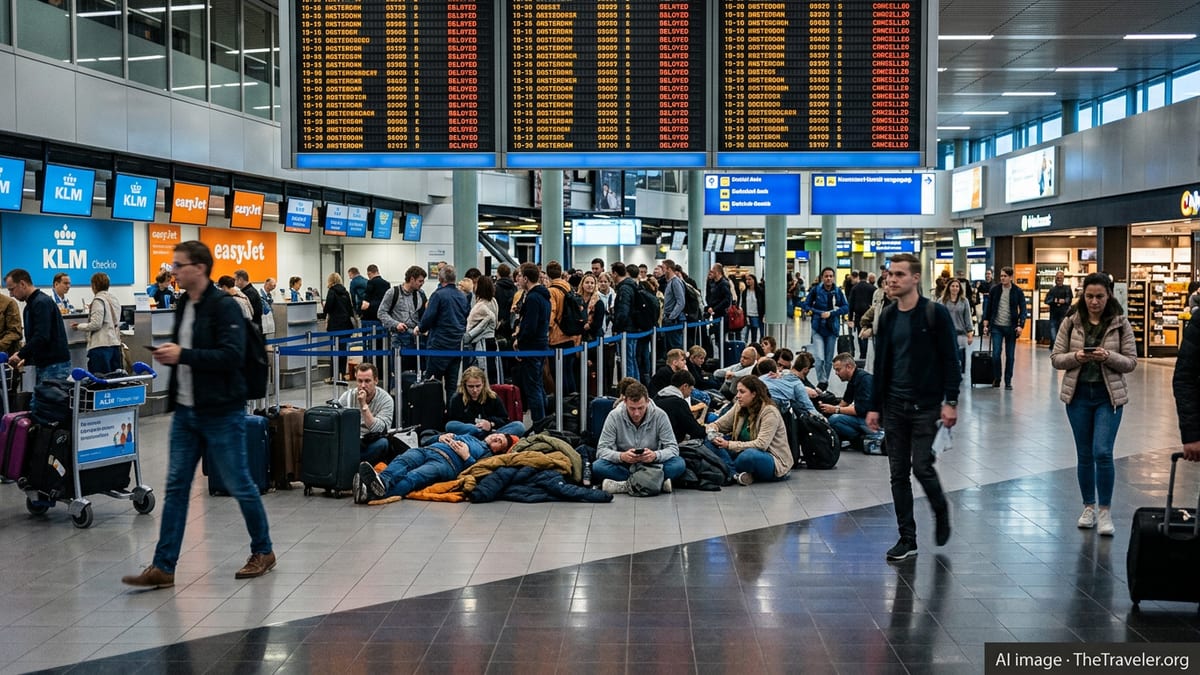
Airport terminals in several countries, including the UK, Denmark, the Netherlands and France, have seen crowded departure halls and long queues at customer service desks as travellers attempt to rebook, seek hotel vouchers or arrange alternative routes.
Airlines From easyJet to KLM and Lufthansa Affected
The latest disruption has hit a broad mix of full service and low cost carriers. According to recent operational tallies, KLM has faced more than 150 delayed flights alongside cancellations concentrated around its Amsterdam Schiphol hub, reflecting the tight utilisation of aircraft and crews on European rotations.
Budget carrier easyJet has also been heavily affected, particularly on routes linking London and regional UK airports with major European cities such as Amsterdam, Paris and Milan. Travel industry coverage highlights dozens of delayed departures for the airline in a single day, with additional cancellations forcing passengers to wait for later services or rerouted itineraries.
Lufthansa and other network carriers including Swiss and British Airways have reported smaller but still significant clusters of cancellations and delays across Germany, the UK and Scandinavia. With long haul services often dependent on timely feeder flights from regional airports, even modest disruption to short haul operations can translate into missed onward connections and extended layovers for travellers heading to North America, the Middle East or Asia.
Industry analysts note that when multiple carriers are affected at once, available spare capacity quickly disappears. Seats on alternative same day flights can sell out in minutes, especially on trunk routes between London, Paris, Amsterdam and major business centres in northern Europe.
Denmark, Netherlands and UK See Systemic Knock-On Effects
Recent data collated by travel advisory services point to particularly high levels of disruption in Denmark, the Netherlands and the United Kingdom. Denmark’s main airports, including Copenhagen, have seen a mix of local cancellations and late inbound aircraft from other hubs, resulting in rolling delays through the day as schedules struggle to recover.
In the Netherlands, congestion at Amsterdam Schiphol has again placed pressure on ground handling and runway capacity. Published disruption summaries describe Schiphol logging some of the highest daily totals of delayed flights in Europe, impacting both KLM and a wide range of partner and visiting airlines.
The UK has experienced similar strain, with London Heathrow and Gatwick joined by Manchester, Birmingham and other regional airports reporting hundreds of combined delays and a smaller but still notable number of cancellations. Publicly available figures from recent days show that carriers such as easyJet, Ryanair and Jet2 have all contributed to the elevated delay count, while long haul operators including Virgin Atlantic and American Airlines have had to adjust departure times or aircraft assignments.
Because many European itineraries involve at least one connection, these overlapping national disruptions can strand travellers far from their point of origin. Passengers flying between secondary cities often rely on a smooth transfer at hubs like London, Paris or Amsterdam; when that transfer fails, rebooking options can be limited, especially during peak travel periods.
Passenger Experiences: Missed Connections and Overnight Stays
Media coverage across Europe describes terminals filled with travellers waiting for updated departure information, often amid limited seating and long lines at airline service counters. Many passengers have reported missed connections in London, Paris, Frankfurt and Amsterdam after inbound flights arrived hours behind schedule, leaving insufficient time to clear transfer procedures and reach onward gates.
Where cancellations have occurred late in the day, travellers have been left to seek last minute hotel rooms near airports already stretched by high occupancy, particularly around London and other major cities. Some airlines have provided vouchers or arranged overnight accommodation, while others have focused on rebooking passengers on the earliest available services the next morning.
Families travelling with children and elderly passengers appear to be especially affected, according to reports from consumer travel platforms, with long waits adding stress to journeys already planned tightly around school holidays or medical appointments. Travellers on low cost tickets have sometimes faced additional costs for meals, transfers and new bookings when original flights were significantly delayed or cancelled.
Social media posts and travel forums suggest that communication quality varies widely across airlines and airports, with some carriers issuing frequent app notifications and others relying heavily on crowded gate announcements and departure boards that update slowly during peak disruption.
What Travellers Can Do Under European Passenger Rules
Under European passenger protection rules, including Regulation EC 261/2004, travellers on flights departing from the EU or operated by EU carriers may be entitled to assistance, rebooking or compensation when services are significantly delayed or cancelled, depending on the circumstances. Legal guidance summarising these rules notes that rights differ based on flight distance, length of delay and the reasons behind the disruption.
In practical terms, consumer advocates recommend that passengers first confirm the status of their flight directly through airline websites or mobile apps before heading to the airport, as same day schedule changes remain common while airlines work to restore normal operations. Keeping boarding passes and any written confirmation of delay or cancellation can help when submitting reimbursement or compensation claims later.
Travel experts also emphasise the importance of allowing extra time for connections when flying through busy European hubs during periods of instability. Opting for longer layovers, especially when travelling on separate tickets, may reduce the risk of missed onward flights if earlier legs are delayed.
For those already stranded, publicly available advice from airlines and passenger rights organisations suggests speaking with ground staff as early as possible, exploring alternative routings via less affected airports and considering rail links on shorter regional journeys. While the immediate focus is on clearing the current backlog of 2,497 delayed and 152 cancelled flights, industry observers warn that residual knock-on effects may linger for several days as aircraft and crew rotations are gradually restored.