

More news on this day
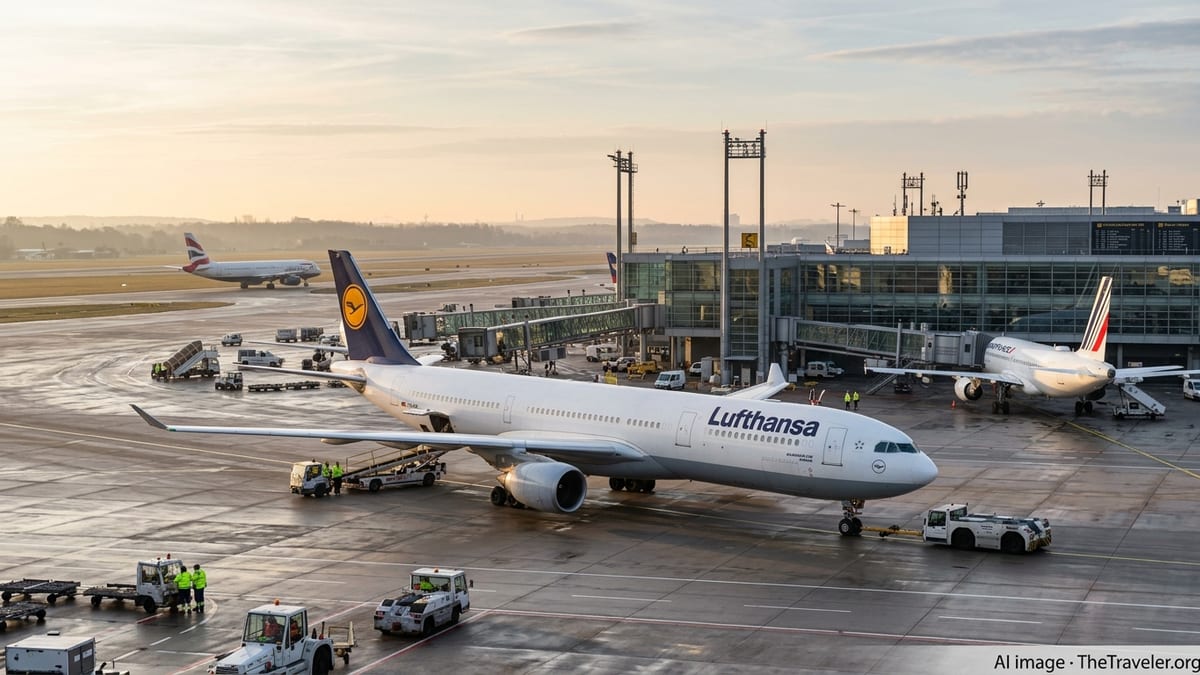
Lufthansa is joining a growing roster of European airlines, including Air France, British Airways, Virgin Atlantic and Austrian Airlines, that are ramping up direct long-haul services to Asia and Africa as conflict and sweeping airspace closures across the Middle East disrupt traditional hub-and-spoke connections.
Get the latest news straight to your inbox!
Middle East Conflict Redraws Global Flight Maps
Escalating tensions involving Iran, Israel and allied states since late February 2026 have triggered extensive airspace restrictions across much of the Gulf and Levant, disrupting some of the world’s most heavily used east–west aviation corridors. Publicly available information shows that authorities in Iran, Iraq, Israel, Jordan, Lebanon and several Gulf states have all imposed partial or full closures, forcing airlines to abandon direct overflights and reroute around the region.
Major Middle Eastern hub airlines, which long dominated Europe–Asia and Europe–Africa transfer traffic, have seen operations sharply curtailed as a result. Recent industry analyses indicate that services via Dubai, Doha and Abu Dhabi in particular have been reduced or temporarily suspended on a number of long-haul city pairs, leaving passengers with fewer connection options and longer journey times on remaining flights.
For European carriers, these closures come on top of an existing prohibition on using Russian airspace, compounding the challenge of plotting viable long-haul routings to North and Southeast Asia. Detours that arc north via the Caucasus or south via Egypt and the Arabian Sea are adding two to five hours to some itineraries, increasing fuel burn and tightening aircraft availability.
Against this backdrop, airlines such as Lufthansa, Air France, British Airways, Virgin Atlantic and Austrian Airlines are turning more decisively toward nonstop links that bypass traditional Middle East hubs altogether, betting that travelers will accept slightly longer direct flights in exchange for avoiding uncertainty around transiting conflict-adjacent airports.
Lufthansa Leads a Direct-Flight Push to Asia
Lufthansa Group has emerged as one of the clearest examples of this strategic shift. According to recent network updates and financial disclosures, the group is expanding long-haul capacity in the Asia–Pacific region even as it keeps a range of Middle East routes paused or heavily reduced for security reasons. The company’s latest annual report highlights planned capacity growth in Asia and the broader EMEA region, supported by new and restored intercontinental services.
Industry coverage indicates that Lufthansa has been prioritizing core Asian gateways such as Singapore, Bangkok and key cities in Japan and South Korea, with additional frequencies scheduled during the northern summer season. Rerouted paths that skirt closed Middle Eastern airspace and Russian territory make these journeys longer than pre-conflict equivalents, but the carrier is positioning them as a more predictable alternative to itineraries that rely on Gulf connections.
Operationally, this pivot requires careful balancing of aircraft and crew. Longer stage lengths reduce daily utilization of long-haul jets, constraining how many extra rotations can be added without stretching fleets too thin. Lufthansa is therefore concentrating added capacity on routes with the strongest demand from corporate travelers and high-yield leisure segments, seeking to defend market share on Europe–Asia corridors that might otherwise leak to Asian competitors.
Lufthansa’s partner airlines within the group, including Swiss and Austrian, are moving in parallel. Publicly available notices show that these carriers have extended suspensions on certain Middle East overnight services while maintaining or increasing long-haul services that bypass the conflict zone, a pattern that reinforces the overall pivot toward direct transcontinental flying.
Air France, British Airways and Virgin Atlantic Rebalance Networks
The strategic recalibration is not limited to the Lufthansa Group. Air France-KLM has been adjusting its schedule mix between China, Southeast Asia and Africa as competitive pressure from Asian airlines and ongoing airspace constraints reshape demand patterns. Prior to the current Middle East escalation, the group had already trimmed some China frequencies due to cost and competition, while reinforcing select routes where direct services from Paris and Amsterdam remain commercially attractive.
British Airways is likewise re-evaluating how it connects London with Asian destinations. Published reports following earlier spikes in regional tension described temporary suspensions of flights to Israel and other points in the eastern Mediterranean, while the carrier redeployed capacity to more resilient long-haul markets. With the latest conflict forcing further diversions, analysts note that incremental growth is concentrating on nonstop services to major Asian hubs such as Tokyo, Hong Kong and Singapore.
Virgin Atlantic, traditionally focused on North America, has been slower to rebuild its Asia footprint since the pandemic but is now treated in industry commentary as part of the broader European trend toward selective nonstops that bypass the Middle East. The airline’s alignment within the SkyTeam alliance, alongside Air France and others, creates scope for coordinated schedules that offer travelers more one-stop and nonstop options between Europe and Asian capitals without traversing Gulf hubs.
Across these brands, network planners are grappling with similar constraints: finite widebody fleets, higher fuel costs linked to longer routings and a need to avoid overexposure to volatile regions. The shared answer, at least in the short term, is a focus on large origin-and-destination markets where nonstop demand can support profitable operations despite increased flying time.
New European Gateways for Africa-bound Travelers
The same dynamics are accelerating changes on Europe–Africa corridors. Airlines that once relied on Middle Eastern hubs as convenient waypoints between Europe and East or Southern Africa are now emphasizing direct or one-stop connectivity through European gateways instead. This is particularly true for routes serving business and diaspora travel, which tend to be less elastic on price and more sensitive to disruption.
Lufthansa and Austrian Airlines have been gradually reinforcing links to North and West Africa, including destinations in countries such as Egypt, Morocco and Senegal, based on recent schedule data and regional aviation reports. Some of these services were initially built around leisure demand to coastal resorts, but they now form part of a broader strategy to provide alternatives to routings that previously relied on Gulf connections.
Air France, long a dominant player in francophone Africa, is also viewed by analysts as well positioned to benefit from the current upheaval. Its extensive African network from Paris can capture travelers from across Europe who might previously have flown via Doha or Dubai. British Airways and Virgin Atlantic, while more limited in their Africa footprints, still play important roles on trunk routes to South Africa and selected East African destinations, where direct links from London remain attractive as connecting options via the Middle East become less predictable.
For African tourism boards and business hubs, the reorientation of traffic flows presents both risks and opportunities. Some destinations that relied heavily on Gulf carriers for inbound traffic may see short-term declines in visitor numbers, while cities served directly from Europe could gain prominence as preferred gateways for travelers wary of transiting conflict-adjacent regions.
Longer Flights, Higher Costs and Shifting Passenger Choices
For travelers, the immediate impact of these changes is most visible in longer flight times, tighter seat availability and, in many cases, higher fares. Aviation analysts note that rerouting around both Russian and Middle Eastern airspace can add substantial distance to flights between Europe and Asia, raising fuel consumption and overflight fees. With jet fuel already a major component of airline operating costs, those increases are likely to filter through to ticket prices.
At the same time, the surge in demand for direct services that avoid conflict zones is absorbing capacity quickly on key routes. Reports from booking platforms and travel agents point to heavily booked nonstops between Europe and major Asian and African cities over the coming months, particularly during peak holiday periods. As Lufthansa, Air France, British Airways, Virgin Atlantic and Austrian Airlines adjust schedules, some passengers are finding fewer options for last-minute travel and less flexibility in their preferred departure times.
Despite these challenges, industry observers suggest that the move toward more direct flying could deliver benefits in reliability and passenger confidence. Even when journey times are slightly longer, avoiding complex connections through regions affected by sudden airspace closures reduces the risk of missed flights and unplanned stopovers. For travelers balancing cost, safety perceptions and convenience, direct routes from European hubs to Asia and Africa may increasingly be seen as the most dependable option.
How long this pattern persists will depend on the trajectory of the Middle East conflict and any further changes in global airspace access. For now, the trend is clear: Europe’s largest airlines are doubling down on their own hubs, building out direct links across Asia and Africa to keep long-haul travel moving while the traditional crossroads of global aviation remain constrained by war.