

More news on this day
European air travel is off to a robust start in 2026, with passenger traffic across the continent’s airports rising 4.6% in January compared with a year earlier, driven by sustained tourism demand to and from Turkey, the United Kingdom, Spain, France and Germany.
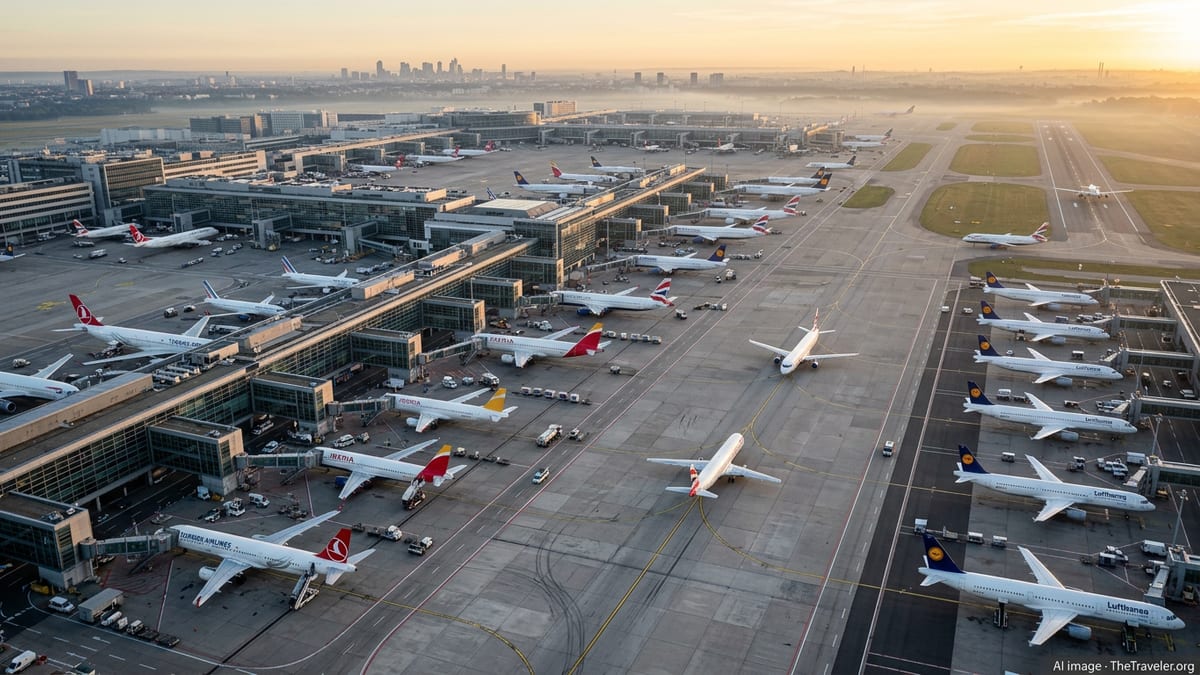
European Airport Network Posts Solid January Gains
Fresh data from Airports Council International Europe shows that passenger traffic across the European airport network increased by 4.6% in January 2026, extending the sector’s post-pandemic recovery despite economic headwinds and geopolitical uncertainty. The performance underscores the resilience of leisure travel and visiting friends and relatives, which continue to underpin demand across the continent.
The latest figures, which cover more than 450 airports and over 95% of European traffic, indicate that growth was broad-based but uneven, with non-EU markets once again outperforming the EU average. Turkey emerged as a standout, while major hubs in the United Kingdom, Spain, France and Germany also recorded solid growth as airlines added capacity on key intra-European and long-haul routes.
Industry analysts say the January uplift builds on a record 2025, when European airports welcomed additional tens of millions of passengers and finally consolidated volumes above pre-2019 levels. With airfares still elevated and supply constrained on certain routes, the 4.6% increase is being interpreted by airport operators as a sign that underlying demand remains strong entering the crucial spring and summer seasons.
Turkey Extends Its Lead as a Mediterranean Powerhouse
Turkey continued to cement its status as one of Europe’s fastest-growing aviation and tourism markets in January 2026. Driven by strong inbound flows from Europe and the Middle East and a competitive mix of full-service and low-cost carriers, Turkish airports outpaced the continental average, building on momentum established throughout 2025.
Istanbul’s main hub remained at the heart of this performance. The airport handled nearly 7 million passengers in January and was once again among Europe’s busiest, buoyed by a dense long-haul network and robust transfer traffic connecting Europe with Asia and Africa. Secondary coastal airports serving Antalya, Izmir and Bodrum also benefited from early-season bookings and an extended winter sun market.
Tour operators report that Turkey’s value proposition continues to attract price-sensitive European travelers facing cost-of-living pressures at home. Competitive package deals, diversified resort offerings and an expanding all-inclusive segment are helping to fill aircraft outside the peak summer weeks, sustaining load factors and supporting the broader 4.6% uptick in regional airport traffic.
United Kingdom and Spain Anchor Western European Demand
The United Kingdom, still one of Europe’s largest outbound markets, played a key role in January’s growth. London’s major airports reported year-on-year passenger gains, supported by resilient demand on transatlantic routes and steady flows to winter-sun destinations in Spain, Portugal and the eastern Mediterranean. Regional UK airports also saw stronger traffic, particularly on low-cost point-to-point services to city-break and ski destinations.
Spain, meanwhile, consolidated its position as Europe’s tourism workhorse. Official figures show the country welcomed a record number of international visitors in January 2026, with arrivals edging above last year’s high base and spending continuing to rise. The UK remained Spain’s leading source market, followed by France and Germany, feeding heavy traffic through airports in the Canary and Balearic Islands as well as Barcelona and Madrid.
Spanish officials have highlighted the combination of higher visitor spending and moderate volume growth as evidence that their strategy of prioritising quality over sheer numbers is beginning to pay off. For airports, that has translated into strong performance in winter months that were traditionally quieter, reinforcing the overall 4.6% regional increase and providing airlines with confidence to maintain or grow capacity into the shoulder seasons.
France and Germany See Traffic Rise Despite Operational Strains
France and Germany, home to several of Europe’s largest hubs, also contributed significantly to January’s traffic gains. Major French airports reported higher passenger volumes on both domestic and international routes, aided by renewed business travel and a sustained rebound in long-haul demand to North America and Asia. Tourism flows to Paris and the country’s alpine ski regions remained particularly strong, helped by favourable snow conditions and a busy events calendar.
In Germany, key hubs and regional airports posted year-on-year increases even as operators wrestled with bouts of severe winter weather and sporadic disruption. Airports such as Munich and Frankfurt entered 2026 following a year of rising passenger numbers and improving on-time performance, and January’s results indicate that demand has held up despite capacity constraints and occasional cancellations.
Industry observers note that both France and Germany continue to navigate a delicate balance between growth and operational resilience. Ongoing labour negotiations, infrastructure upgrades and environmental pressures are shaping decisions on slot allocation and capacity. Nonetheless, their combined performance in January underscores the enduring role of Europe’s traditional hubs in funnelling tourist traffic across the continent and beyond.
Outlook: Capacity, Costs and Climate Pressures Shape 2026
Looking ahead, airline and airport executives expect the positive trend seen in January to continue into the spring, albeit with some potential moderation. Global data from airline associations indicate that European demand remains on an upward trajectory, with capacity increases closely tracking passenger growth and average load factors rising. Low-cost carriers in southern and eastern Europe are particularly bullish, having announced new routes and added frequencies for the peak season.
At the same time, a series of structural challenges could temper the pace of expansion. Infrastructure bottlenecks at some of Europe’s largest hubs, regulatory uncertainty around environmental measures, and lingering supply-chain issues affecting aircraft deliveries are all exerting pressure on network planning. Airports are also grappling with the financial burden of decarbonisation commitments, which require sustained investment in sustainable aviation fuel infrastructure, electric ground operations and more energy-efficient terminals.
For tourism-dependent destinations in Turkey, Spain and other Mediterranean markets, the immediate priority is to convert January’s promising numbers into a longer, more profitable season while managing the social and environmental footprint of rising visitor flows. With passenger traffic at European airports already 4.6% higher than a year ago, the challenge for 2026 may not be whether travelers come, but how well the industry can accommodate them sustainably and efficiently.