

More news on this day
From the English Channel to the central Mediterranean, a new wave of record-breaking cruise traffic is reshaping Europe’s port cities, with Southampton now joining a roster of hubs including Portland, Civitavecchia, Taranto and Piraeus that welcomed millions of passengers last year, fueling local economies while intensifying pressure on fragile coastal communities and marine ecosystems.
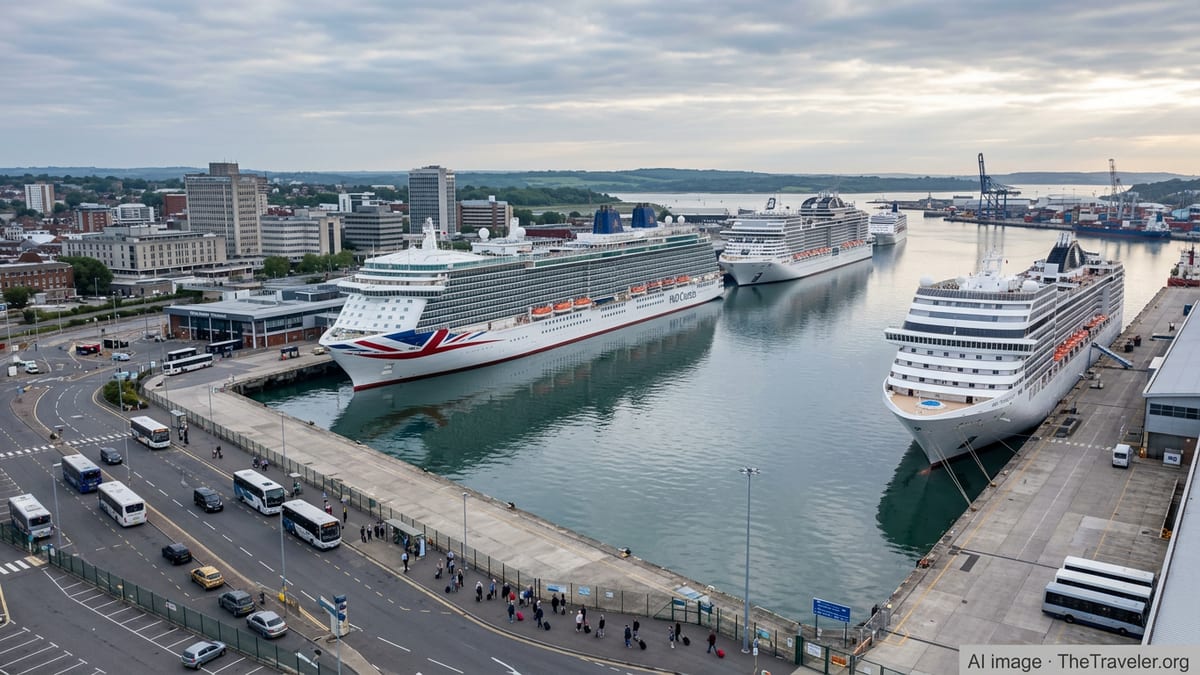
Southampton’s Milestone Underscores Europe’s Cruise Boom
Southampton, already the United Kingdom’s primary cruise gateway, has cemented its position with a record cruise year. Recent figures indicate the port has now crossed the landmark threshold of around three million cruise passengers in a year, consolidating its role as the dominant embarkation point for British holidaymakers and a major turnaround hub for global lines deploying their newest vessels to Northern Europe.
The milestone places Southampton in the same conversation as leading Mediterranean ports such as Civitavecchia, Barcelona and Piraeus, and highlights how quickly European cruise volumes have rebounded from the pandemic pause. Industry data show that Europe’s passenger ports collectively handled hundreds of millions of travelers across all ferry and cruise segments in 2023 and 2024, with cruise accounting for some of the fastest growth thanks to new tonnage and extended sailing seasons.
The surge is especially evident on peak summer weekends, when multiple megaships can be alongside in Southampton at once, each carrying several thousand guests and crew. Transport planners and local authorities are increasingly focused on managing the knock-on effects for city traffic, rail connections to London and air links via nearby airports.
Secondary Ports Like Portland and Taranto Gain Global Profiles
While marquee hubs grab the headlines, smaller ports such as Portland in Dorset and Taranto in southern Italy are quietly emerging as some of the cruise sector’s most dynamic growth stories. Portland reported one of its best seasons on record in 2024, handling more than 117,000 passengers on over 50 ship calls and lining up an even busier schedule for 2025 as major brands add the English Channel port to British Isles and Northern European itineraries.
In Italy, Taranto has moved from relative obscurity into the ranks of the country’s top cruise destinations in just a few years. Traffic data show the port climbing into Italy’s top 20 cruise ports, with 2024 marking an important milestone as it hosted a broader mix of mainstream and premium lines and welcomed multiple ships at berth on peak days. Local officials see cruise tourism as a key component of a wider waterfront redevelopment strategy aimed at diversifying an economy historically dominated by heavy industry.
The rise of these so-called secondary ports reflects a wider trend in nautical tourism. Cruise companies, constrained by congestion and slot scarcity at Europe’s biggest hubs, are spreading capacity to alternative ports that offer deepwater quays, room to expand terminals and access to distinctive regional attractions. For the ports, the payoff is immediate in terms of spending on shore excursions, local guides, transport and port services, but the rapid growth is also testing their planning and environmental safeguards.
Civitavecchia and Piraeus Smash Records in the Mediterranean
In the central and eastern Mediterranean, Civitavecchia, the port of Rome, and Greece’s main port of Piraeus have emerged as emblematic of the cruise industry’s extraordinary momentum. Civitavecchia set a new all-time record in 2024, handling 3,459,238 cruise passengers, an increase of 4.3 percent on its previous high and confirming its status as Italy’s busiest cruise port and one of Europe’s leading turnaround hubs.
Piraeus, serving Athens and a gateway to the Greek islands, has likewise reported record-breaking cruise activity. Provisional figures from the port authority point to more than 1.7 million cruise passengers in the most recent season, significantly higher than the previous year as more ships homeport in Greece and geopolitical tensions in parts of the Eastern Mediterranean redirect itineraries toward Greek waters.
These record volumes amplify both the benefits and the challenges of nautical tourism. On the positive side, they support thousands of jobs in terminal operations, ship services, retail and hospitality and extend the tourist season well beyond the traditional summer peak. Yet they also concentrate very large numbers of visitors into historic urban centers and island destinations already grappling with overtourism, housing pressure and strained transport infrastructure.
Economic Windfall Meets Environmental and Social Strain
The cruise boom delivers impressive headline numbers for port authorities, tour operators and city halls keen to showcase new investment and rising visitor counts. Passenger and crew spending on shore excursions, restaurants, museums and local transport injects billions of euros into coastal economies each year, while port fees and services help finance new quays, terminals and urban regeneration projects along long-neglected waterfronts.
However, the rapid growth is prompting sharper scrutiny of the environmental costs. Large cruise ships are significant sources of air pollutants when running on conventional marine fuels, and residents in neighborhoods bordering port areas in cities such as Southampton, Civitavecchia and Piraeus have raised concerns about local air quality, noise and visual intrusion. Environmental groups warn that a steady procession of ever-larger vessels can intensify underwater noise, disturb marine life and add to cumulative pressures on sensitive coastal and island ecosystems.
Social tensions are also rising in some destinations. As more mega-ships dock simultaneously, narrow streets and small squares in historic centers can become saturated within minutes of disembarkation, leading to friction between visitors and residents and calls for stricter controls on daily visitor numbers. In several Mediterranean cities, cruise tourism has become entangled in broader debates over short-term rentals, housing affordability and the overall carrying capacity of old towns that were never designed to absorb such concentrated flows.
Europe Tests New Rules, Technology and Tourism Models
Faced with record traffic and growing public pressure, European ports and policymakers are accelerating efforts to reshape how cruise tourism is managed. A wave of investments in shore power infrastructure aims to allow ships to plug into the local grid and switch off their engines while alongside, cutting emissions at berth. Ports from Southampton to Piraeus are expanding or planning shore connection projects, often backed by national and European funding, although timelines and grid readiness vary widely.
Regulators are also tightening environmental standards. New fuel rules, carbon pricing mechanisms and emission control zones are pushing cruise operators to retrofit existing ships, invest in newer, more efficient vessels and experiment with alternative fuels. Some ports have introduced differentiated tariffs or priority berthing for ships that meet higher environmental performance benchmarks, effectively rewarding cleaner tonnage.
At the destination level, city governments are exploring tools such as caps on daily cruise arrivals, pre-booking systems for key attractions, and coordinated schedules that stagger ship calls across the week. Smaller ports like Portland and Taranto, eager to avoid the mistakes made by some overcrowded Mediterranean hotspots, are working more closely with local communities to steer passengers toward lesser-known sites, promote off-season calls and encourage longer land stays that spread economic benefits more evenly.
The stakes are high. If managed well, the surge in cruise calls at Southampton, Portland, Civitavecchia, Taranto, Piraeus and dozens of other European ports could underpin a more resilient, higher-value model of coastal tourism. If mismanaged, it risks deepening environmental degradation and social backlash, forcing authorities to act far more aggressively than the industry expects.