

More news on this day
Thousands of passengers across Europe are facing major travel disruption as airports in France, Germany, Austria and neighboring countries report 1,149 delayed flights and 31 cancellations, snarling operations for carriers including KLM, Wizz Air and Finnair at hubs such as Paris and Vienna.
Get the latest news straight to your inbox!
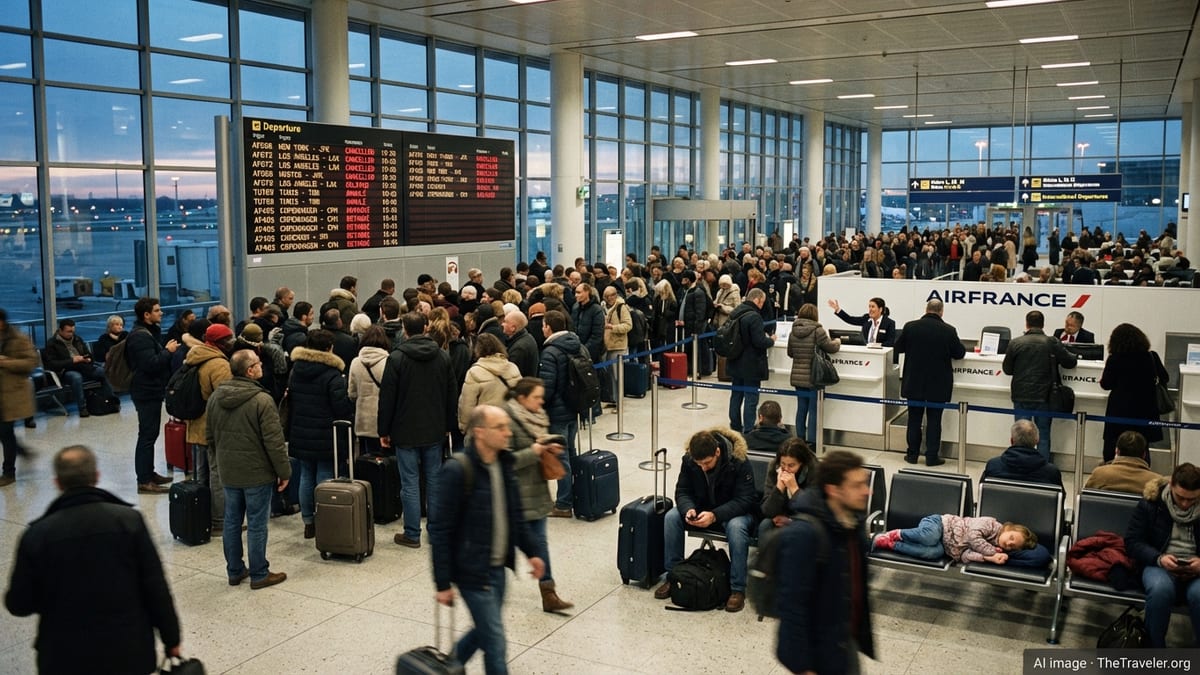
Delays Mount Across Key European Hubs
The latest operational data from European travel tracking and passenger-rights platforms indicates that the disruption is concentrated at major hubs in France, Germany and Austria, with knock-on effects at airports in the Netherlands, Finland, Italy and other nearby markets. Combined figures from several reporting services put current delays at 1,149 flights and cancellations at 31, underscoring the scale of the problem for short- and medium-haul schedules.
Paris Charles de Gaulle and Paris Orly have emerged among the hardest hit, with hundreds of delayed departures and arrivals affecting both domestic and intra-European routes. Vienna International Airport is also experiencing a sharp spike in late-running services and a smaller but still significant number of outright cancellations, particularly on high-frequency regional links.
Germany’s large hubs, including Frankfurt and Munich, are reporting extensive knock-on delays as aircraft and crews arrive late from France and Austria, further complicating already tight turnaround schedules. Operational summaries show that even airports with fewer direct cancellations are absorbing late incoming traffic, which pushes back departure waves and increases congestion through the day.
Publicly available delay dashboards for Europe suggest that the disruption is not limited to one time window but is instead stretching across multiple departure banks. Morning and evening peaks are being hit particularly hard, leaving many travelers facing multi-hour waits, missed connections and last-minute gate changes.
KLM, Wizz Air, Finnair and Others Caught in the Turmoil
Network carriers and low-cost airlines alike are entangled in the disruption. KLM’s closely integrated operations with Air France at Paris Charles de Gaulle and shared traffic flows through Amsterdam mean the Dutch carrier is dealing with both primary and reactionary delays as aircraft struggle to keep to their rosters.
Finnair, which relies heavily on tight connections through its Helsinki hub, is being impacted as inbound flights from Central Europe arrive behind schedule, compressing transfer windows for passengers heading on to Scandinavia and Asia. Historical punctuality data for the airline suggests it typically operates with relatively strong on-time performance, which makes today’s spike in delays stand out more sharply for regular travelers.
Wizz Air’s point-to-point network, stretching from Western Europe into Central and Eastern Europe, is also feeling the strain. The carrier’s practice of intensive aircraft utilization means that a delay on one early rotation can cascade into multiple late departures across the day, particularly on routes linking Paris, Vienna and secondary German cities.
Other European airlines, including Austrian Airlines, SAS, Vueling and regional subsidiaries of larger groups, are also listed among the affected operators. The broad spread of carriers involved highlights that the issue is systemic across the European air traffic system rather than confined to a single airline or alliance.
Weather, Congested Airspace and System Strain Behind Disruption
Reports from aviation analytics firms and travel advisories suggest that the current problems stem from a combination of factors, with weather-related constraints, saturated airspace and ongoing staffing and scheduling pressures all playing a role. Even when conditions improve locally, earlier holds and reroutings can leave aircraft and crews out of position for subsequent flights.
France’s role as a key segment of European airspace is particularly important. Delays or flow restrictions there can ripple north to the Netherlands and Germany and east toward Austria and beyond, forcing airlines to slow operations or briefly suspend some services. Historically, similar patterns have been observed whenever French airspace has faced capacity cuts, whether due to storms, technical issues or labor-related slowdowns.
In Austria and Germany, airport handling capacity has been under scrutiny during recent peaks, with some terminals reporting longer security and ground-handling queues than planned. When arriving flights are already late, these ground-side bottlenecks can stretch turnaround times even further, raising the risk that tightly timed schedules begin to unravel and forcing airlines to consider cancellations to restore balance.
Technology and IT resilience also remain in focus following high-profile system outages in recent years. While there are no clear indications of a single large-scale technical incident driving today’s figures, passenger-rights organizations note that whenever operational margins are thin, even small software or communication glitches can quickly produce disproportionate disruption across interconnected hubs.
Impact on Passengers in Paris, Vienna and Beyond
The immediate impact for travelers has been long queues at check-in and security, crowded departure lounges and a surge in rebooking requests at airline service desks. At Paris airports, passengers on short-haul European routes are facing waits that can stretch from one to three hours beyond scheduled departure times, while some regional services have been consolidated or cancelled altogether.
In Vienna, a mix of delayed departures and inbound aircraft arriving late from France and Germany is complicating connection plans for travelers headed to Central and Eastern Europe. With only limited spare capacity available on alternative flights, some passengers are being rerouted via secondary hubs or rebooked for departures on later days.
Travel experience reports shared on forums and social media platforms describe missed onward flights, overnight stays arranged at short notice and confusion over baggage that has not followed disrupted itineraries. Although airlines are attempting to prioritize long-haul connections where possible, densely scheduled short-haul segments are absorbing much of the disruption.
Rail and long-distance coach operators in affected corridors are beginning to see increased demand from travelers who choose to abandon delayed flights in favor of overland options, particularly on routes such as Paris to Brussels or Frankfurt to Vienna. This secondary shift is adding pressure to alternative networks that were already busy at this time of year.
What Stranded Travelers Can Do Under EU261 Rules
Passenger-rights organizations are reminding travelers that European Union regulations provide specific protections during extensive disruption. Under EU Regulation 261, eligible passengers on flights departing from EU, EEA or Swiss airports, or operated by EU carriers, may be entitled to compensation when long delays or cancellations are not caused by extraordinary circumstances such as severe weather or airspace closures.
Specialist compensation and legal advisory platforms encourage passengers to keep boarding passes, booking confirmations and any written communication from airlines, and to document the length of delays and any out-of-pocket expenses for accommodation, meals or alternative transport. These details are often required when submitting a claim after travel is completed.
Travel experts also highlight the importance of using airline apps and official status pages to monitor live departure information, gate changes and rebooking options. For carriers such as KLM, Wizz Air and Finnair, digital channels can sometimes offer earlier access to self-service rebooking tools than airport service desks during peak disruption.
Given the scale of the current delays and the risk of further knock-on effects in the coming days, travelers with flexible plans are being advised in public guidance to consider adjusting nonessential trips, building in longer connection times, and keeping contingency funds available in case of extended waits or unexpected overnight stays in transit hubs.