

More news on this day
Thousands of travellers across Europe are facing major disruption as a fresh wave of cancellations and delays sweeps through key hubs in Iceland, Sweden, Ireland, England and Germany, with aviation data indicating at least 238 flights cancelled and 1,469 delayed in a single day across Keflavik, Stockholm, Dublin, London, Frankfurt and other airports.
Get the latest news straight to your inbox!
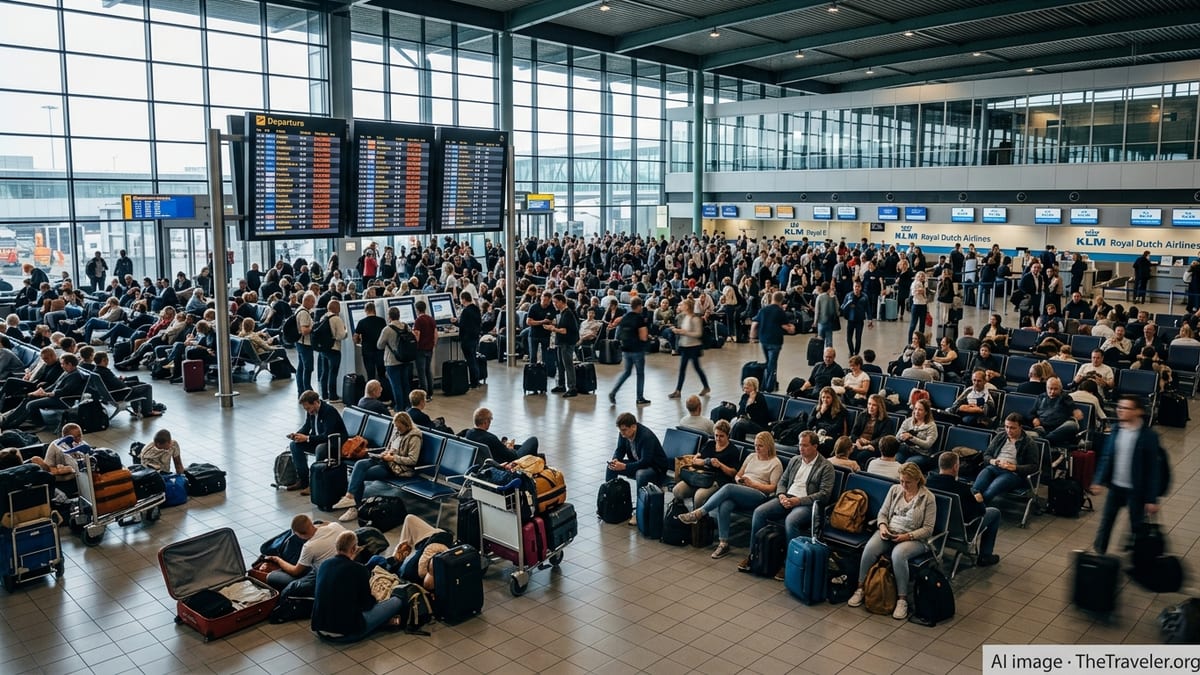
Wave of Disruptions Hits Northern European Hubs
The latest operational data and flight tracking snapshots point to unusually intense disruption at several of Northern Europe’s most important gateways. Airports serving Reykjavik, Stockholm, Dublin, London and Frankfurt have all reported elevated levels of cancellations and late departures, rippling through both intra-European and transatlantic networks.
At Keflavik International Airport in Iceland, a higher than normal number of irregular operations has affected departures to mainland Europe and North America, limiting options for passengers using the country as a key transatlantic connection point. Reykjavik’s main hub has generally reported strong punctuality in recent months, which makes the scale of the current interruption particularly striking for travellers and airlines alike.
In Sweden, operations at Stockholm and other regional airports have also come under strain, with dozens of cancellations and scores of delays logged across a single operating day. Services linking Swedish cities with major European hubs such as Frankfurt and London were among those most affected, complicating travel plans for passengers relying on tight transfer windows.
Dublin and Frankfurt, both crucial transfer points for traffic moving between Europe and North America, have seen knock-on effects from delays elsewhere as well as their own local challenges. Congested departure banks and late-arriving aircraft have contributed to rolling hold-ups, with delays often spreading across multiple rotations for the same aircraft and crews.
Airlines From Icelandair to SAS and easyJet Under Pressure
The disruptions have put significant pressure on both full-service and low-cost carriers. Publicly available schedules and flight status boards indicate that Icelandair, Scandinavian Airlines (SAS), easyJet, CityJet, Helvetic Airways and several other European operators have all faced substantial operational headwinds on affected routes.
Icelandair, which relies heavily on Keflavik as a mid-Atlantic hub, has seen its network exposed whenever a bank of flights is cancelled or heavily delayed. A single disruption window in Iceland can quickly cascade into missed connections for passengers travelling between North America and cities across Scandinavia, Germany, the United Kingdom and continental Europe.
Scandinavian Airlines and other carriers serving Sweden’s main airports have reported multiple cancellations and late departures on routes to and from cities including Copenhagen, Amsterdam, Frankfurt and London. Low-cost competitor easyJet has also been caught up in the wider European turbulence, with flights from London and other UK airports experiencing extended ground times, schedule changes and arrival delays.
Regional and niche operators, such as CityJet and Helvetic Airways, are feeling the strain as well. With smaller fleets and tighter scheduling, a single aircraft going out of rotation due to a technical issue or an extended weather-related delay can force cancellations that are difficult to recover within the same operating day.
Passengers Face Missed Connections and Overnight Stays
The human impact of the disruption is being felt most sharply by travellers with onward connections and limited schedule flexibility. Reports from airports across the affected countries describe long queues at transfer desks and rebooking counters as passengers scramble to salvage itineraries.
Missed connections are proving especially problematic at large hubs such as Frankfurt, London and Dublin, where complex itineraries often depend on short layovers. When an inbound flight arrives late, travellers can find themselves automatically rebooked on later services or even routed through entirely different airports, adding hours to their journeys and, in some cases, requiring overnight accommodation.
On routes served only a few times per day, cancellations can effectively wipe out a day’s worth of options. This is particularly challenging for travellers flying between smaller cities in Scandinavia, regional airports in Germany or secondary airports in the United Kingdom and Ireland, where alternative services may be limited or sold out once a disruption becomes widely known.
Families and leisure travellers heading into the spring holiday period have been advised through airline and airport channels to allow additional time for connections, monitor flight status closely and be prepared for last-minute gate, schedule or routing changes. For many, however, the sheer scale of the irregular operations has left little room for proactive planning.
Weather, Congestion and Operational Constraints Behind the Chaos
The precise mix of causes varies by airport, but several common themes have emerged across the disruptions. Periods of poor weather, including strong winds and low visibility at North Atlantic and Northern European airports, have contributed to temporary airspace restrictions and reduced runway capacity, slowing arrivals and departures.
Congestion at major hubs remains another core driver. London’s airports, Frankfurt and Dublin continue to operate near their practical capacity for much of the day, which means even relatively small disturbances can trigger a cascade of holding patterns, missed slots and delayed turnarounds. When this coincides with busy travel days, the impact on departure and arrival punctuality can be severe.
Operational constraints at airlines, such as aircraft positioning challenges and pressure on crew availability, have also played a role. Once flights begin departing late from early-morning waves in Scandinavia, Iceland or the British Isles, it becomes difficult for carriers to bring their schedules back on track without cancelling selected rotations or trimming frequencies.
Analysts point out that some hubs currently grappling with delays had previously posted relatively strong on-time performance, suggesting that the latest wave of problems reflects a combination of seasonal weather issues and structural tightness in airline and airport operations rather than a single, easily isolated cause.
What Travellers Can Do as Disruption Continues
With disruption levels elevated across several airports on the same day, industry guidance has frequently highlighted the importance of preparation and flexibility for anyone flying to, from or within Europe. Travellers are being encouraged through airline channels and consumer-rights platforms to check flight status early and often, use mobile apps or departure boards for real-time updates and consider carrying essentials in hand luggage in case of unexpected overnight stays.
Under European passenger-rights rules, many travellers experiencing long delays or cancellations on flights operated by European carriers, or departing from airports in the European Union, may be entitled to assistance such as meals, refreshments and hotel accommodation, depending on the length and cause of the disruption. In some cases, compensation may also be available, although exclusions apply when airlines can demonstrate extraordinary circumstances.
Consumer advocates advise passengers to keep boarding passes, booking confirmations and any written communication about schedule changes, as these documents can be necessary for claims submitted after travel. They also recommend that travellers who accept rebooking or rerouting retain a clear record of their final arrival time to assess potential eligibility for compensation under established regulations.
With the European spring travel season building, operational data suggests that further pockets of disruption are possible at congested hubs and weather-sensitive airports. For now, passengers using Keflavik, Stockholm, Dublin, London, Frankfurt and connected regional gateways are likely to face continued irregularities, and many may need to build additional time and backup plans into their journeys.