

More news on this day
Travelers moving through Europe this week are facing another wave of disruption as a mix of winter storms, industrial action and schedule cuts forces airlines including Pegasus Airlines, Aeroflot and British Airways to cancel or delay flights at key hubs such as London, Moscow, Amsterdam and Frankfurt.
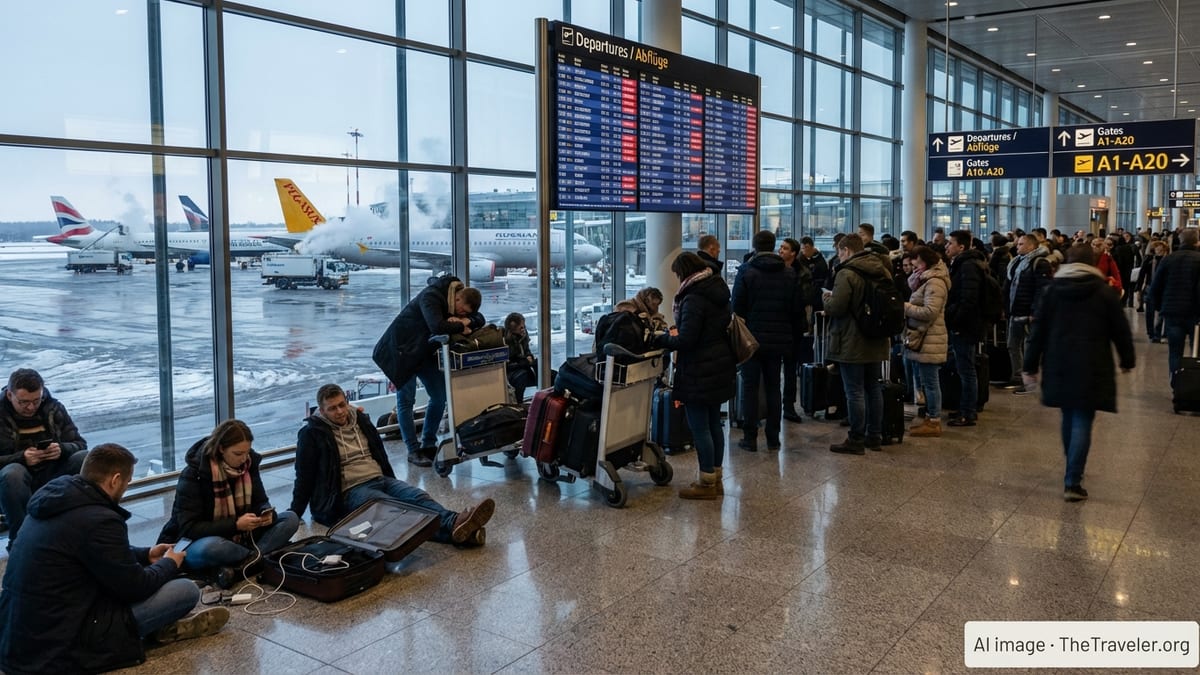
Storm Systems Push Airports and Airlines to Breaking Point
Across the continent, a powerful winter storm system sweeping through northwestern and central Europe has become the catalyst for a fresh round of flight disruption. On February 19, thousands of passengers were stranded as snow, ice and freezing temperatures led to at least 210 flight cancellations and more than 2,700 delays in countries including the Netherlands, the United Kingdom, Germany, Spain, Italy, Belgium and Austria.
Amsterdam Schiphol and Frankfurt International have been among the worst hit, with airport operations slowed by reduced runway capacity, de icing bottlenecks and ground handling suspensions in high winds. Knock on effects are being felt far beyond these hubs, as delayed aircraft and crews ripple through already stretched airline timetables, tightening connections and forcing last minute cancellations on short haul European routes.
British Airways, Lufthansa, Air France and low cost carriers have all reported schedules under pressure, while regional airports in Germany and the Benelux countries are struggling to keep up with constant re planning. For many travelers, the disruption has turned routine city breaks or business trips into overnight ordeals, with hotel capacity around major hubs quickly filling as passengers wait for replacement flights.
British Airways Cancellations Add to Pressure at London Airports
London Heathrow and Gatwick are seeing particularly acute strain as British Airways works through a combination of weather related problems and structural schedule adjustments announced for 2026. On February 21, data compiled by aviation analysts showed more than a thousand flight delays and dozens of cancellations across major European airports in a single day, with London repeatedly cited among the hardest hit.
At the same time, British Airways is pressing ahead with previously announced route cancellations as it reshapes its European network for the upcoming summer season. The carrier plans to end services from London to Cologne, Riga, Stuttgart and Frankfurt by late March, trimming frequencies to cities that have struggled to sustain profitable demand since the pandemic recovery. While these cuts are scheduled and not directly linked to the current storm system, they reduce flexibility at a moment when spare capacity is badly needed to re accommodate disrupted passengers.
For travelers at Heathrow and Gatwick this weekend, the practical impact is the same: fewer alternative seats when flights are scrubbed at short notice. Aviation experts warn that even modest timetable reductions can magnify the effect of weather or staffing shocks, especially during peak periods when aircraft are already flying close to full. London bound and London originating services operated by partner airlines are also feeling the squeeze as they try to absorb stranded passengers holding British Airways tickets.
Pegasus and Regional Carriers Face Operational Strain in Europe
While much of the attention has focused on the continent’s biggest legacy airlines, low cost and hybrid carriers such as Turkish based Pegasus Airlines are also facing mounting challenges. Operating dense point to point networks between Anatolia, the eastern Mediterranean and secondary European cities, these carriers are highly exposed when storms, strikes or airport congestion disrupt tight aircraft rotations.
In recent days, Pegasus has had to consolidate and cancel selected flights on routes linking Turkey with Germany, the Netherlands and the United Kingdom, as aircraft and crews run behind schedule arriving from weather hit hubs. Delays at northern European airports have a direct knock on effect on departures from Istanbul Sabiha Gökçen and other Turkish bases, where turnaround times are typically short and aircraft utilization is high.
Passengers booked on evening and overnight flights to or from regional destinations are often bearing the brunt, with services postponed into the following day or merged with other departures. Travel agents in London, Berlin and Vienna report a spike in rebooking requests for Pegasus services, alongside growing frustration among leisure travelers who have limited flexibility to shift holiday dates or hotel reservations.
Aeroflot Adjusts Moscow Operations Amid Wider Disruption
In Moscow, national carrier Aeroflot is grappling with a different mix of pressures, as winter weather across Russia combines with airspace restrictions and constrained fleet resources. Heavy snow and freezing fog periodically reduce capacity at Moscow’s Sheremetyevo and other airports, slowing arrivals and departures and forcing the airline to reshuffle its domestic and international schedule on short notice.
European bound flights have been particularly vulnerable when previous delays on domestic sectors leave aircraft and crews out of position for onward legs. Several Aeroflot departures between Moscow and key European gateways in recent days have been cancelled or significantly delayed, feeding into the wider pattern of disruption experienced by travelers arriving from or connecting through Russia.
Although Aeroflot has added some extra services on high demand domestic routes to absorb passengers unable to travel as planned, limited spare aircraft make it difficult to restore full schedules quickly once disruptions cascade. For passengers, that often means longer waits in Moscow and a scramble to secure hotel rooms and visa extensions when overnight stays become unavoidable.
Knock On Chaos from Strikes and Industrial Action
Compounding the impact of the weather and operational challenges, a series of strikes across Europe in February has further strained the aviation system. Germany has recently experienced significant walkouts by ground staff and cabin crew at major airports including Frankfurt and Munich, leading to waves of cancellations and delays on both domestic and long haul routes.
Italy has also been hit by nationwide aviation strikes targeting pilots, cabin crew and ground handlers at key carriers and airport service providers. Industrial action on February 16 led to widespread disruption at airports in Rome, Milan, Venice and Naples, affecting both full service airlines and low cost operators. Further walkouts flagged for late February are raising concerns about renewed chaos just as airlines attempt to stabilize timetables after the latest storms.
For carriers such as British Airways, which relies heavily on European feed into its London hubs, and for operators like Pegasus that depend on smooth ground handling at Italian and German airports, these strikes are eroding already thin buffers in the system. Each day of industrial action forces extensive re scheduling, which can take weeks to fully unwind as aircraft and crew rosters are rebuilt.
Rail and Road Disruptions Deepen Travel Headaches
The turmoil is not limited to the skies. In Italy, coordinated sabotage targeting key rail corridors earlier in February, combined with planned rail strikes, has led to days of severe disruption on high speed and regional services linking cities such as Milan, Bologna, Florence and Rome. Passengers attempting to switch from cancelled flights to trains have in many cases found that option either heavily delayed or unavailable.
Elsewhere in Europe, snow and ice have reduced road capacity around major airports, making it harder for travelers to reach terminals or move between cities when flights are cancelled. In countries such as the Netherlands, Belgium and Germany, authorities have issued repeated warnings about treacherous driving conditions, urging travelers to postpone non essential journeys. Long queues for taxis and rental cars have become common sights outside major hubs as passengers search for any route to their destinations.
These multimodal pressures mean that a cancelled flight is no longer a simple matter of rebooking on the next departure or hopping on a train. Instead, many travelers are encountering a gridlocked transport landscape in which every alternative option is already oversubscribed, particularly around major events and school holiday periods.
Global Weather Patterns Add a Long Haul Dimension
The disruption spreading across Europe is also being fuelled by severe weather in other parts of the world, which is tying up aircraft and crews that would otherwise serve European routes. In the United States, a sequence of winter storms and thunderstorms has disrupted operations at major hubs including Atlanta, New York, Los Angeles and Detroit, prompting airlines to impose ground delays and cancel dozens of departures.
Those cancellations have created ripple effects on long haul services linking North America with Europe and North Africa, with flights to and from Paris, London and Marrakech among those affected. Aircraft arriving late or not at all from the United States can leave European carriers short of capacity for onward flights within the continent, especially on routes that rely heavily on transatlantic feed.
Aviation analysts note that modern airline networks are highly interconnected, so that a storm in one region can quickly influence flight availability thousands of kilometers away. For European travelers, this means that even if local weather appears benign, their flight could still be at risk if the aircraft or crew are stuck on the far side of the Atlantic or elsewhere.
Major Hubs Under Scrutiny as Passenger Frustration Grows
With repeated waves of disruption this winter, traveler frustration is rising, particularly at gateways like London, Amsterdam, Frankfurt and Moscow that serve as critical connecting points. Social media feeds have filled with images of crowded terminals, long queues at customer service desks and departure boards dominated by delay notices.
Consumer groups are calling for clearer communication from airlines and airports, arguing that passengers are often left without timely information about their rights to rebooking, refunds or compensation. Regulators in several European countries have reminded carriers of their obligations under existing passenger protection rules, which require them to provide assistance such as meals, accommodation and alternative transport in many cancellation scenarios.
Airports, for their part, insist they are doing everything possible to keep operations running, citing constraints such as security staffing levels, runway snow clearing capacity and strict safety limits on de icing and ground handling in high winds. Yet the accumulation of weather events, strikes and network reductions has exposed lingering vulnerabilities in infrastructure and staffing that were never fully resolved after the pandemic era.
What Travelers Can Expect in the Coming Days
Forecasts suggest that unsettled weather will continue to affect parts of Europe in the short term, raising the possibility of further disruption at already stretched airports. With additional industrial action scheduled in some countries and ongoing schedule adjustments at key airlines, aviation specialists warn that delays and cancellations are likely to remain above seasonal norms.
Travel advisors recommend that passengers booked on Pegasus Airlines, Aeroflot, British Airways and other carriers keep a close eye on airline apps and airport departure boards, consider building extra time into itineraries, and be prepared for schedule changes even close to departure. Where possible, booking earlier flights in the day can provide a larger window for re accommodation if things go wrong, while travel insurance with robust disruption coverage can help soften the financial impact of missed connections and overnight stays.
For now, Europe’s air travel system remains under sustained pressure from a rare combination of meteorological, operational and labor headwinds. Until those forces ease, major destinations from London to Moscow are likely to see recurring periods of disruption, testing the resilience of airlines and the patience of passengers alike.