

More news on this day
Passengers across northern Europe are facing another difficult travel day as widespread disruption at major hubs including Amsterdam Schiphol and Stockholm Arlanda leads to 1,393 delayed flights and 49 cancellations, affecting connections through Denmark, the Netherlands, the United Kingdom, Switzerland and other markets.
Get the latest news straight to your inbox!
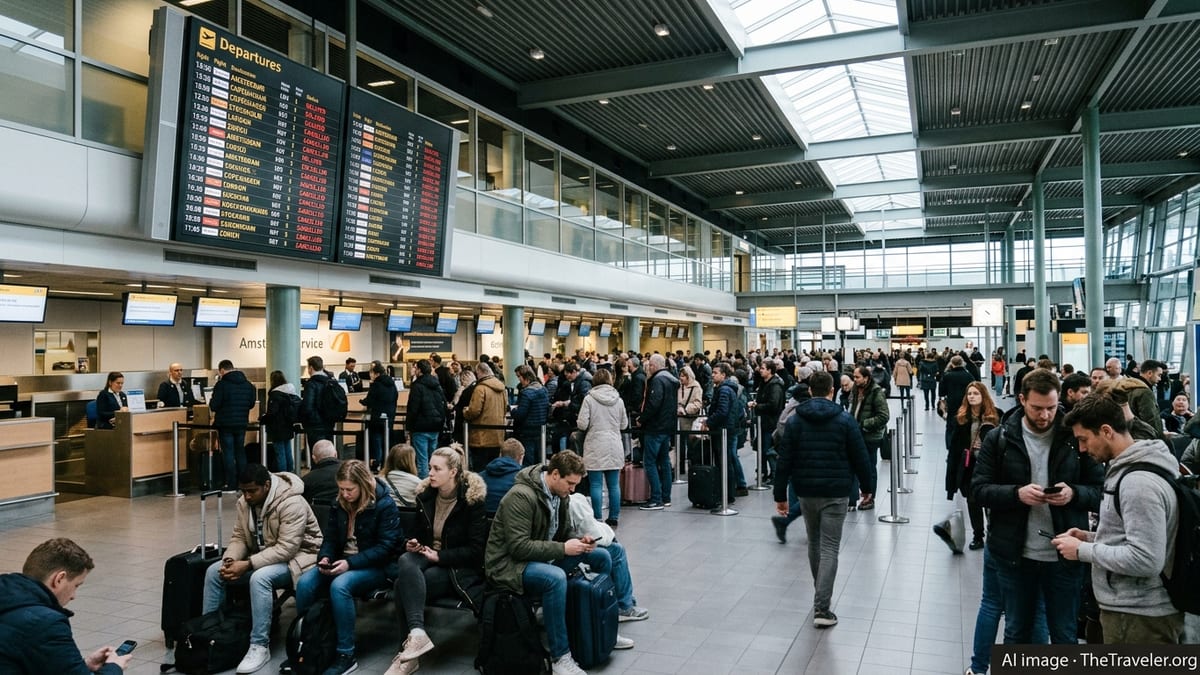
Major Hubs Across Northern Europe Struggle to Maintain Schedules
Publicly available flight-tracking data for Saturday, March 21, 2026, indicates that Amsterdam Schiphol, Stockholm Arlanda and several other key European hubs are operating with significant delays and a smaller but still notable wave of cancellations. The disruption spans short-haul intra-European services and longer routes that rely on these airports as transit points.
Amsterdam Schiphol, one of Europe’s busiest transfer airports, is reporting the largest share of problems, with more than a thousand flights running late and dozens scrubbed from the schedule. Stockholm Arlanda is also experiencing heavy knock-on disruption as aircraft and crews struggle to remain in position after earlier delays.
The impact is radiating across the wider network, touching airports in Denmark, Switzerland, Germany and the United Kingdom. Departures and arrivals at Copenhagen, Zurich, London-area airports and other regional gateways are seeing extended ground times, missed slots and frequent gate changes as operators attempt to recover their timetables.
Operational data shows that while the overall number of outright cancellations is limited compared with previous severe weather episodes, the sheer volume of delayed services is creating long queues at check-in, security and rebooking desks, with many travelers experiencing missed connections and overnight disruptions.
Ryanair, easyJet and Other Carriers Face Cascading Knock-On Effects
Low-cost carriers Ryanair and easyJet are among the airlines most visibly affected, alongside major network operators that use Amsterdam, Stockholm and other hubs as key transfer points. Schedules for routes linking Amsterdam, Copenhagen, Stockholm, Zurich and UK airports are showing a pattern of rolling delays that grow longer as the day progresses.
According to published coverage and live schedules, some point-to-point flights are departing close to on time early in the day but are returning late to base, forcing subsequent rotations to push back well behind their planned departure windows. This is particularly evident on dense intra-European routes where aircraft are scheduled for multiple sectors in quick succession.
Ryanair services through Copenhagen and other Scandinavian gateways are seeing extended turnaround times, while easyJet is contending with late-running rotations at Amsterdam and UK bases that ripple into evening departures. Other carriers, including flag airlines in the Netherlands, Scandinavia and the UK, also show an elevated rate of delays on hub-feeding and regional routes.
Airline operational bulletins emphasize that crews must remain within regulated duty-time limits, which can lead to last-minute cancellations when cumulative delays become too great. This regulatory backdrop, combined with slot restrictions at capacity-constrained airports, is amplifying the overall disruption even where weather conditions appear relatively stable.
Travelers in Denmark, the Netherlands, the UK and Switzerland Feel the Impact
The disruption is being felt most acutely by passengers starting or connecting journeys in Denmark, the Netherlands, the United Kingdom and Switzerland, where Amsterdam, Copenhagen, London and Zurich serve as crucial gateways for both business and leisure travel.
Publicly available information from airport departure boards and flight-status platforms shows long lists of delayed flights to and from Copenhagen and Zurich, many of them tied to late-arriving aircraft from Amsterdam, Stockholm and other northern European hubs. In several cases, relatively modest primary delays are leading to missed onward connections, forcing same-day rebookings or overnight stays.
In the UK, regional airports with strong low-cost carrier presence are reporting clusters of delays on services bound for the Netherlands and Scandinavia. Travelers connecting from these flights onto long-haul services in Amsterdam or other hubs are facing particularly difficult choices, as minimum connecting times are no longer being met and seats on later departures are limited.
For passengers originating in Denmark and Switzerland, the knock-on effect is similar. Travelers aiming to reach destinations across southern Europe or North America via Amsterdam or London are encountering disrupted itineraries, with some airlines advising through their customer channels that re-routing via alternative hubs may be necessary.
Weather, Congestion and Operational Constraints Combine
While conditions on March 21 do not match the extreme storms that have previously hit northern Europe during the 2025–26 winter, reports indicate that a mix of unsettled weather, residual winter conditions and typical spring congestion is straining airport operations. Reduced runway capacity at times, along with de-icing requirements in some regions, has narrowed the margin for on-time performance.
According to recent seasonal analyses of European aviation, the Netherlands and the UK are already among the countries with some of the highest proportions of disrupted departures in the region. When even moderate weather or airspace constraints occur at major hubs like Amsterdam, the effect on airlines and passengers can be outsized.
Operational data from recent months highlights how quickly disruption in northern Europe can escalate. Previous episodes of fog and snowfall at Schiphol and other airports have led to hundreds of cancellations and widespread delays, prompting airlines to thin their schedules and prioritize certain routes in order to stabilize operations.
On March 21, similar dynamics appear to be at work on a smaller scale. Airport and airline information channels are signaling efforts to absorb delays while maintaining as many departures as possible, but crews, slot times and stand availability remain limiting factors. Once delays of an hour or more become commonplace, recovery within the same operating day becomes increasingly challenging.
Advice for Passengers Navigating Today’s Disruption
For travelers already on the move or due to fly later on March 21, publicly available guidance from airlines and airports stresses the importance of monitoring flight status as close to real time as possible. Many carriers are offering limited same-day rebooking options via their websites and apps, though high demand is slowing response times in some cases.
Passengers connecting through Amsterdam Schiphol, Stockholm Arlanda, Copenhagen, Zurich or major UK hubs are being advised in public-facing updates to allow additional time between flights where changes are permitted. Same-ticket connections generally receive priority for rebooking, but heavily disrupted routes may see limited seat availability for the remainder of the weekend.
Travelers whose flights are significantly delayed or cancelled may have entitlements to care, compensation or re-routing under European passenger-protection regulations, depending on the cause of the disruption and the operating carrier. Consumer organizations and official guidance note that documentation such as boarding passes, delay notifications and receipts for meals or accommodation can be useful if a claim is later filed.
With conditions still evolving across the network, the overall picture for the rest of the weekend remains uncertain. However, data trends suggest that once today’s peak of delays and cancellations is worked through, operations are likely to stabilize provided no further weather or airspace constraints emerge in the coming days.