

More news on this day
European travelers are pulling back from holidays in the United States, as security worries, political tensions and fresh travel warnings converge into what analysts describe as a mounting crisis for America’s inbound tourism industry.
Get the latest news straight to your inbox!
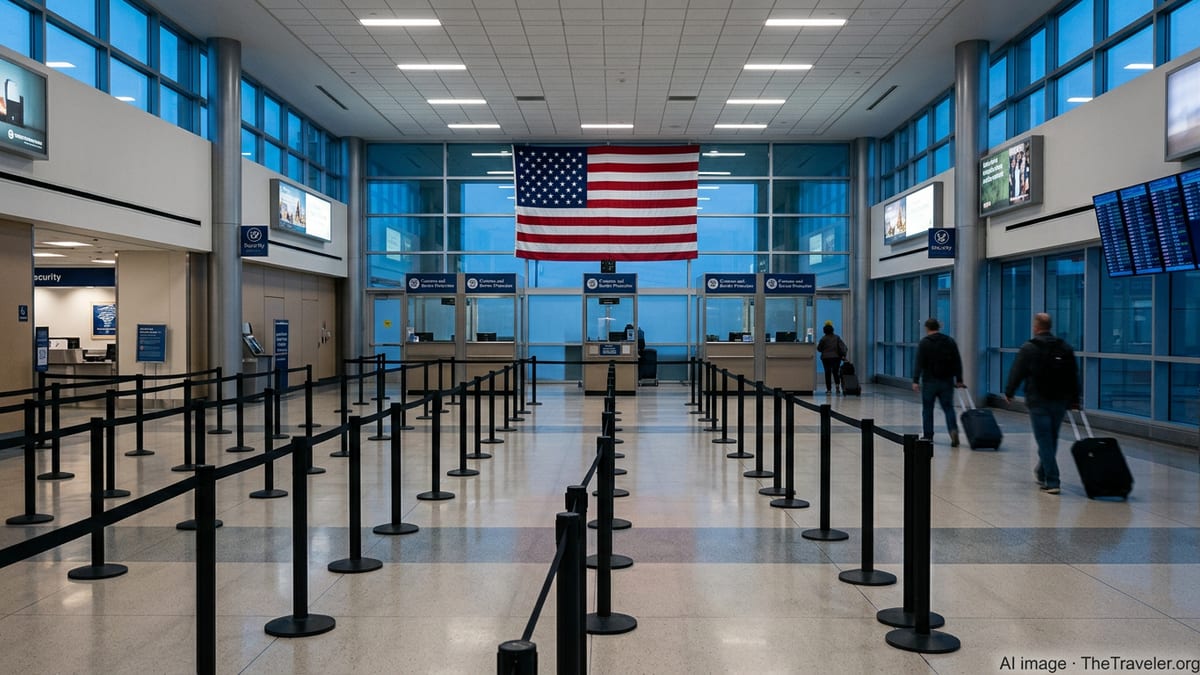
Sharp Drop in European Arrivals Hits U.S. Tourism Revenues
Recent industry and government data point to a sustained decline in visitors from major European markets at a time when global tourism is still expanding. National figures released through 2025 show international arrivals to the United States falling even as worldwide travel volumes rise, with Western Europe consistently singled out as one of the softest source regions. In several key months of 2025, overseas arrivals were down compared to the previous year, with analysts noting that much of the weakness came from Europe.
Reports from tourism consultancies and trade publications indicate that the downturn has accelerated into 2026. One widely cited analysis of January 2026 arrivals found that global visits to the United States fell by nearly 5 percent year on year, with traffic from Europe dropping by just over 5 percent. At the same time, the United Nations tourism barometer has described a broad recovery in international travel, underlining that the United States is underperforming its peers even as the overall market grows.
Country-level figures add detail to the broader shift. Data compiled in late 2025 highlight double-digit declines in visitors from Germany and Spain compared with the previous year, along with steep drops from the United Kingdom and other long-established European source markets. Separate analysis focused on French travelers estimated that visits from France alone fell by nearly 7 percent in 2025, with early booking data for summer 2026 reportedly running about 30 percent below the previous season.
The impact is already visible in spending. International visitor expenditure in the United States is projected by global tourism researchers to fall sharply in 2025, even as most major destinations record gains. Industry forecasts suggest tens of billions of dollars in lost tourism and related export revenue, with reduced European demand playing a central role in that shortfall.
Security Fears and Travel Warnings Shape Perceptions
Travel professionals in Europe point to a shifting security narrative as one of the most powerful deterrents to booking trips to the United States. Media coverage of mass shootings, high-profile violent incidents in popular cities and heated political demonstrations has kept safety concerns in the spotlight, reinforcing a perception among some European travelers that urban America is becoming less predictable for leisure travel. Academic research on the economic impact of mass shootings has also documented declines in visitor activity around affected neighborhoods, adding quantitative support to the idea that such events erode confidence.
These anxieties intersect with evolving travel advisories issued by European governments and supranational bodies. While the United States is not uniformly labeled as an unsafe destination, official guidance from some countries urges heightened vigilance in crowded spaces, major tourist sites, and large public events, citing risks ranging from gun violence to civil unrest. For risk-averse travelers planning long-haul family holidays, such language can be enough to shift consideration toward destinations perceived as calmer or more tightly regulated.
Publicly available consumer surveys in Europe underscore how security is feeding into decision-making. Polling of long-haul travelers conducted in 2025 and early 2026 shows a measurable share of respondents ranking safety as a top concern when choosing a destination, often ahead of price or weather. In follow-up interviews and focus groups reported by European outlets, potential visitors frequently reference gun laws, political polarization and viral images of protests when explaining their reluctance to travel to the United States.
Industry observers note that these concerns are amplified by social media, where isolated incidents can circulate globally within hours. For many European users, curated feeds dominated by footage of shootings, confrontations on public transport or disruptive demonstrations risk distorting the everyday reality experienced by most residents and visitors. Yet from a tourism standpoint, perception is what ultimately drives bookings, and the prevailing image of the United States has become more contested than in previous decades.
Politics, Border Friction and a Chill in Transatlantic Sentiment
The shifting security narrative is unfolding alongside broader political strains that have cooled enthusiasm for trips to the United States among some Europeans. Coverage in European newspapers throughout 2025 details a climate of tension following the return of Donald Trump to the White House, describing new tariffs, combative rhetoric toward allies and a harder edge in border controls. Travel industry analysts quoted in these reports link those developments to a measurable downturn in demand from Western Europe.
Cases of European visitors detained, subjected to extensive device searches or denied entry at U.S. airports have received particular attention in foreign media. Even if such incidents are statistically rare, they resonate strongly with readers and feed worries about unpredictable treatment at the border. For travelers considering destinations with easier entry procedures and fewer perceived risks of humiliation or delays, the friction is increasingly factored into their planning.
Economic research circulated in 2025 suggests that the cumulative effect of these trends may be significant. Forecasts referenced by international broadcasters and financial outlets estimate that foreign travelers avoiding the United States because of political and security concerns could strip tens of billions of dollars from the U.S. economy in a single year, combining reduced tourism receipts with weaker demand for other American exports.
Tensions are also influencing symbolic choices. Commentators note that some European consumers and municipalities have publicly favored non-U.S. brands and destinations in response to policy disputes, while others have directed travel budgets toward countries seen as more aligned with European values on climate, social issues and multilateral cooperation. Although motives vary from traveler to traveler, the overall pattern is one in which the emotional appeal of a U.S. city break or road trip has lost some of its former shine.
Europeans Pivot to Alternative Long-Haul Destinations
As the United States loses ground, other regions are stepping in to capture European long-haul demand. Tourism boards in Asia-Pacific, the Middle East and Latin America report rising arrivals from major European economies, helped by aggressive marketing, new direct air routes and perceptions of greater on-the-ground security. Some Caribbean islands and Mexican coastal resorts, for instance, have been singled out in trade press for strong growth, benefiting from travelers who previously might have chosen Florida or California.
Competitive pricing is another factor. With U.S. cities often ranking among the costliest urban destinations in the world, especially when accommodation, dining and internal flights are included, many Europeans are turning to countries where their holiday budgets stretch further. Industry data indicate that in 2025, the United States became one of the few major destinations where international visitor spending was expected to fall, while rival locations with lower daily costs continued to record robust gains.
Shifts in airline capacity mirror these behavioral changes. Aviation analytics for late 2025 and early 2026 highlight a reallocation of long-haul seats out of some transatlantic routes into services linking Europe with Asia and the Middle East. While total transatlantic capacity remains substantial, the redistribution suggests that carriers are reacting to slower-than-expected demand for certain U.S. gateways, particularly among leisure travelers.
Travel search data reinforce this trend. Platforms that track flight and hotel queries report that European “inspirational demand” for U.S. destinations weakened in 2025 compared with the previous year, even as interest in alternative long-haul trips remained stable or grew. In some markets, searches for specific U.S. cities were outpaced by rising interest in destinations marketed as safe, orderly and culturally rich, from East Asian capitals to Gulf city-states.
Tourism Industry Braces for Prolonged Adjustment
For American tourism businesses, the cooling of European demand represents more than a short-term setback. Analysts warn that once travel habits and emotional associations shift, it can take years and substantial investment to rebuild a destination’s appeal. Hotels, attractions and convention centers in cities that traditionally rely on European guests, such as New York, San Francisco and parts of the Southwest, are already confronting tougher competition for a shrinking pool of long-haul visitors.
Some destinations are responding by refocusing on domestic and regional markets, particularly from Latin America and within North America. Others are attempting to reassure European travelers through messaging that emphasizes neighborhood-level safety, cultural diversity and improved visitor services. However, observers caution that such efforts may struggle to gain traction if they are not accompanied by broader improvements in the political climate and the visibility of security incidents.
Forecasts issued by tourism research firms in late 2025 portrayed a subdued outlook for U.S. inbound travel over the next several years, with only gradual recovery in arrivals from Western Europe even under optimistic scenarios. Structural factors such as exchange rates, higher long-haul airfares and competing infrastructure investments in other regions are expected to weigh on demand, while persistent headlines about crime and political polarization could continue to depress interest.
As global tourism enters a new phase of growth led by markets in Asia, the Middle East and parts of Europe itself, the United States faces the challenge of repairing its image among travelers who once viewed an American holiday as a lifelong aspiration. Whether it can reverse the current slump in European arrivals will depend not only on marketing campaigns and discount fares, but on developments far beyond the travel industry’s direct control.