

More news on this day
European air travel is showing fresh signs of momentum in early 2026, as Ryanair reported a robust increase in February passenger traffic that underscores the strength of leisure demand and the pivotal role of low cost carriers in the region’s recovery.
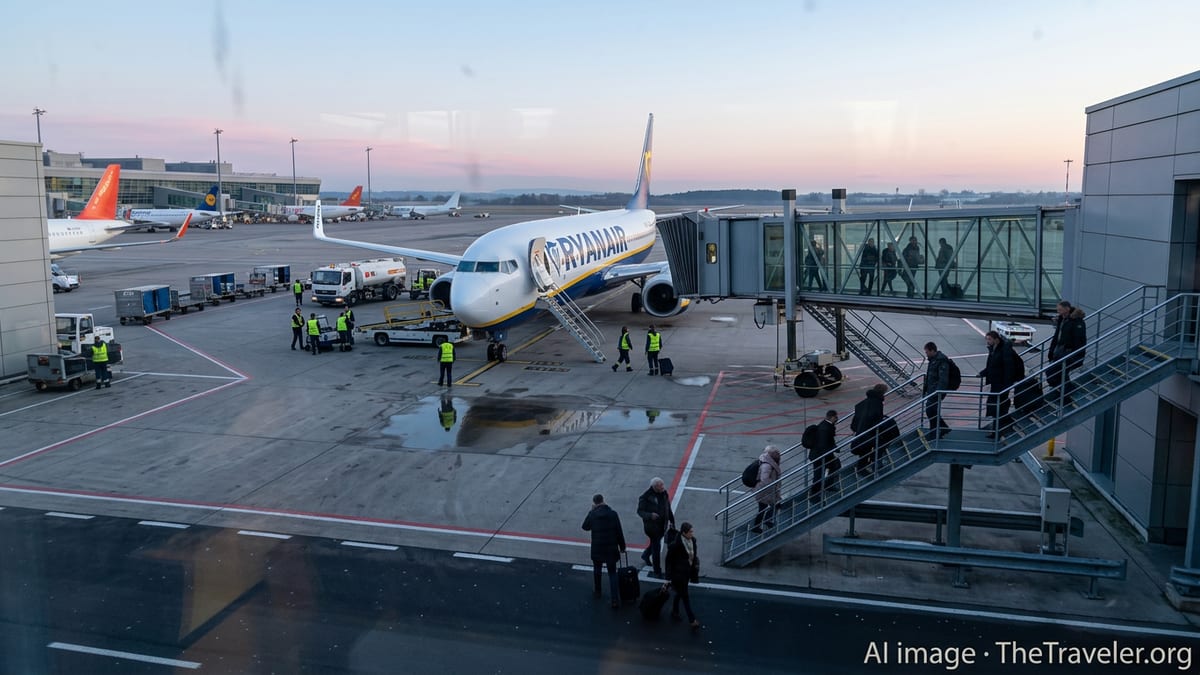
Ryanair Traffic Climbs to 13.3 Million Passengers
Ryanair carried 13.3 million passengers in February 2026, up from 12.6 million a year earlier, a 6 percent year on year increase that cements its position as Europe’s largest low fare carrier by volume. The latest traffic figures, released this week, show the airline continuing to grow even in what is traditionally one of the quieter months of the year for European air travel.
The carrier’s load factor, a key measure of how full its aircraft are, held steady at 92 percent compared with February 2025 despite the additional capacity. That combination of rising passenger numbers and consistently high seat occupancy signals that demand is keeping pace with the airline’s network expansion and aggressive pricing strategy.
On a rolling 12 month basis to the end of February, Ryanair’s traffic reached roughly 207.6 million passengers, about 4 percent higher than the equivalent period a year earlier. Industry analysts say those volumes keep the Irish group comfortably ahead of legacy rivals and other low cost competitors in Europe’s intensely contested short haul market.
Signs of a Broader European Air Travel Recovery
Ryanair’s performance comes against a backdrop of improving passenger traffic across European airports and airlines. Data from industry bodies indicate that flights to, from and within Europe have continued to rise in early 2026 following record passenger volumes at many airports in 2025, with low cost carriers capturing a growing share of the market.
The International Air Transport Association has reported that European carriers entered 2026 with solid momentum, as overall passenger demand continued to grow and average fares were expected to ease in real terms over the year. That trend is helping stimulate discretionary trips, particularly for price sensitive leisure travelers who form the core of Ryanair’s customer base.
Airport groups have also pointed to resilient international traffic and a strong tourism pipeline into the upcoming summer season. While performance varies by country and airport, leisure oriented destinations and secondary city airports served by low cost airlines are generally seeing the fastest rebounds, reinforcing the central role of budget carriers in rebuilding Europe’s air connectivity.
Low Fares and Network Expansion Drive Passenger Growth
Ryanair’s February traffic gains are closely tied to its continued push into new routes and bases across Europe, supported by a growing fleet of fuel efficient narrow body aircraft. The airline has been deploying additional capacity on leisure routes, as well as strengthening its presence in key markets such as Spain, Italy, Poland and Central and Eastern Europe, where demand for short haul travel remains strong.
Industry reports highlight that Ryanair’s low cost structure allows it to keep fares competitive while still filling a high proportion of seats. The flat 92 percent load factor in February suggests that passengers are responding to those fares even in the shoulder season, when many airlines traditionally struggle to maintain profitability.
Network decisions are not uniform across the continent. Ryanair has trimmed or withdrawn services from some regional airports where taxes and charges have risen, even as it doubles down on growth at others that offer a combination of strong local demand, tourism potential and supportive airport partnerships. The net effect remains positive for its overall traffic, with growth in larger and more dynamic markets more than offsetting reductions elsewhere.
Operational Pressures and Capacity Constraints Remain
The rebound in European air travel is not without challenges. Air traffic control bottlenecks, staffing shortages and infrastructure constraints at some major hubs have continued to generate delays and operational pressures, particularly during peak hours. Recent monitoring by regional aviation authorities points to rising flight volumes in early 2026 that are testing the resilience of Europe’s air traffic management system.
For Ryanair and its peers, the need to protect punctuality while flying fuller schedules is becoming more acute. High aircraft utilization is central to the low cost model, but congestion in key airspace and at busy airports can quickly erode operational buffers. Airlines are responding through schedule adjustments, additional turnaround time at pressure points and closer coordination with airports and controllers.
There are also cost headwinds, including fuel price volatility and a patchwork of environmental levies and aviation taxes across European states. Carriers such as Ryanair argue that higher charges risk dampening demand in price sensitive markets, though so far the impact has been outweighed by travelers’ appetite for affordable short haul trips as household budgets remain under strain.
Outlook: Leisure Demand Poised to Shape Summer 2026
Looking ahead, Ryanair’s solid February figures are being read by analysts as an early indicator of another busy summer for European travel in 2026. Forward booking trends for leisure routes remain encouraging, and the industry expects tourists from within Europe and key long haul markets to keep filling flights to coastal, island and city break destinations.
Low cost carriers are expected to continue leading capacity growth, with Ryanair in particular using its scale to negotiate favorable airport deals and to redeploy aircraft quickly to the best performing routes. If demand holds up, the airline’s strategy of adding capacity while holding load factors in the low nineties could further reinforce its market share.
At the same time, the broader European aviation sector will be watching for potential risks, including geopolitical tensions, economic uncertainty and any renewed pressure on consumer spending. For now, however, Ryanair’s February 2026 traffic report offers a clear snapshot of a market where travelers are still willing to fly, provided they can find the right price and network, and where the continent’s largest low fare carrier remains firmly in growth mode.