

As December approaches, Europe’s most famous Christmas markets begin to open, drawing travelers from around the world in record numbers. Interest in winter trips is increasing, with destinations like Vienna, Berlin, Strasbourg, and Prague seeing dramatic increases in searches for holiday experiences. These cities are now among the most popular places in Europe for festive lights, seasonal food, handcrafted gifts, and traditional market squares.
Below, you’ll find an overview of the 2025 opening dates, key attractions, local traditions, and useful travel tips for each of these four Christmas market destinations, helping you plan a memorable winter getaway.
TL;DR
- Europe’s Christmas market season is booming in 2025, with Berlin, Strasbourg, Vienna and Prague among the most searched festive destinations.
- Berlin offers 60+ markets, including Charlottenburg Palace’s illuminated fair and historic Gendarmenmarkt/Bebelplatz.
- Strasbourg, the “Capital of Christmas”, fills its Old Town with 13 markets, a 30m tree at Place Kléber and centuries-old Alsatian traditions.
- Vienna surrounds its palaces and squares with 20+ markets, led by the Rathausplatz Christkindlmarkt and Schönbrunn’s New Year’s market.
- Prague runs markets from late November to January 6, centered on Old Town Square and Wenceslas Square, with nightly tree light shows.
- December weather is cold everywhere; pack warm layers, good shoes and use public transport to hop efficiently between markets.
Berlin
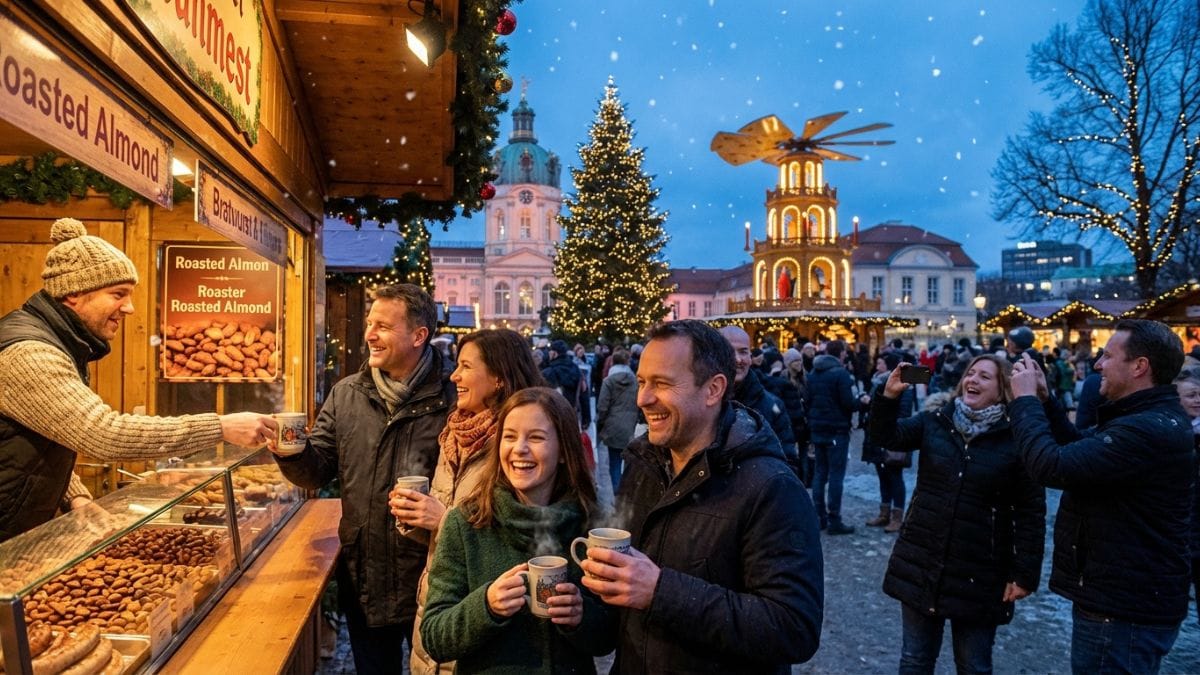
Berlin greets the season with over 60 Christmas markets citywide, ranging from intimate neighborhood gatherings to grand affairs. The German capital’s first holiday fairs actually launch in late October (Potsdamer Platz’s Winter World) and early November, but the major markets opened on November 24, 2025 and will run through New Year’s Eve.
Visitors can find every style of market here: historic backdrops, trendy design fairs, and even LGBTQ+ friendly festivities. The atmosphere is as varied as the city itself – twinkling lights and cozy wooden huts set against Berlin’s mix of old and new architecture.
One of Berlin’s crown jewels this year is the Charlottenburg Palace Christmas Market, back in full swing amid the Baroque palace gardens. This romantic market dazzles with sparkling lights in a majestic setting and a giant illuminated Christmas pyramid.
Each evening, the palace façade comes alive with a magical video-mapping light show accompanied by classic brass band carols , creating an unforgettable Advent atmosphere. Over 100 vendors offer high-quality handicrafts – from wooden toys to nutcrackers – and a mouthwatering array of foods (think roasted almonds, stollen, chimney cakes, and even venison burgers for the adventurous palate).
Meanwhile, in the city center, the Weihnachtszauber at Gendarmenmarkt (relocated to nearby Bebelplatz) pampers visitors with gourmet treats and artisan goods in a luxurious setting.
Families flock to the Berliner Weihnachtszeit by the Red Town Hall, where a Ferris wheel spins above an ice rink encircling the Neptune Fountain – a scene straight out of a winter fairytale.
And for a modern twist, Berlin’s alternative spirit shines at the Christmas Avenue in Nollendorfplatz, an LGBTQ+ market brimming with flashy light displays, live stage entertainment, and inclusive cheer.
- 2025 Dates: Most Berlin markets opened in late November (many on Nov 24, 2025) and run until Dec 24, with several big ones continuing through Dec 31 or even into the first days of January. (For example, the Breitscheidplatz market by the Kaiser Wilhelm Memorial Church stays open till Jan 4, 2026.)
- Festive Highlights: Stroll under glittering arches at Gendarmenmarkt/Bebelplatz, known as Berlin’s prettiest market with premium crafts. Enjoy an alpine vibe at Potsdamer Platz Winter World (open since October) with its ice slide and curling rink.
Don’t miss Charlottenburg Palace for the city’s most enchanting lights and cultural program – from children’s carousels to classical concerts. Berlin also hosts niche events like an International Market showcasing global holiday traditions and the offbeat Lucia Market in a 19th-century brewery, celebrating Nordic Christmas customs with Scandinavian food and music.
- Local Treats: Warm up with steaming Glühwein (mulled wine) or Feuerzangenbowle (rum punch) at virtually every market. Snack on Berlin’s famous Bratwurst and currywurst, gingerbread Lebkuchen, and gebrannte Mandeln (candied almonds) as you wander.
At Charlottenburg, you can even try exotic bites like flame-grilled salmon or wild game burgers alongside traditional Christmas cookies. For something sweet, look out for Pfannkuchen (Berlin doughnuts) or hot Apfelstrudel sold from cozy chalet stalls.
- Travel Tips: Dress in layers – Berlin’s December days are brisk, averaging around 3–5°C (37–41°F) with frequent overcast skies. Snow is possible but usually light; more often you’ll get crisp cold air perfect for enjoying hot drinks. The city’s excellent public transport (U-Bahn, S-Bahn, trams) makes market-hopping easy – consider a transit day-pass, since markets are spread out from Alexanderplatz to Spandau.
Berlin’s new BER Airport connects directly by train to downtown, and the central Hauptbahnhof station is a hub for European rail travelers. Many markets are centrally located, but plan your route and go in late afternoon for the best mix of atmosphere (twinkling lights at dusk) and manageable crowds.
Strasbourg
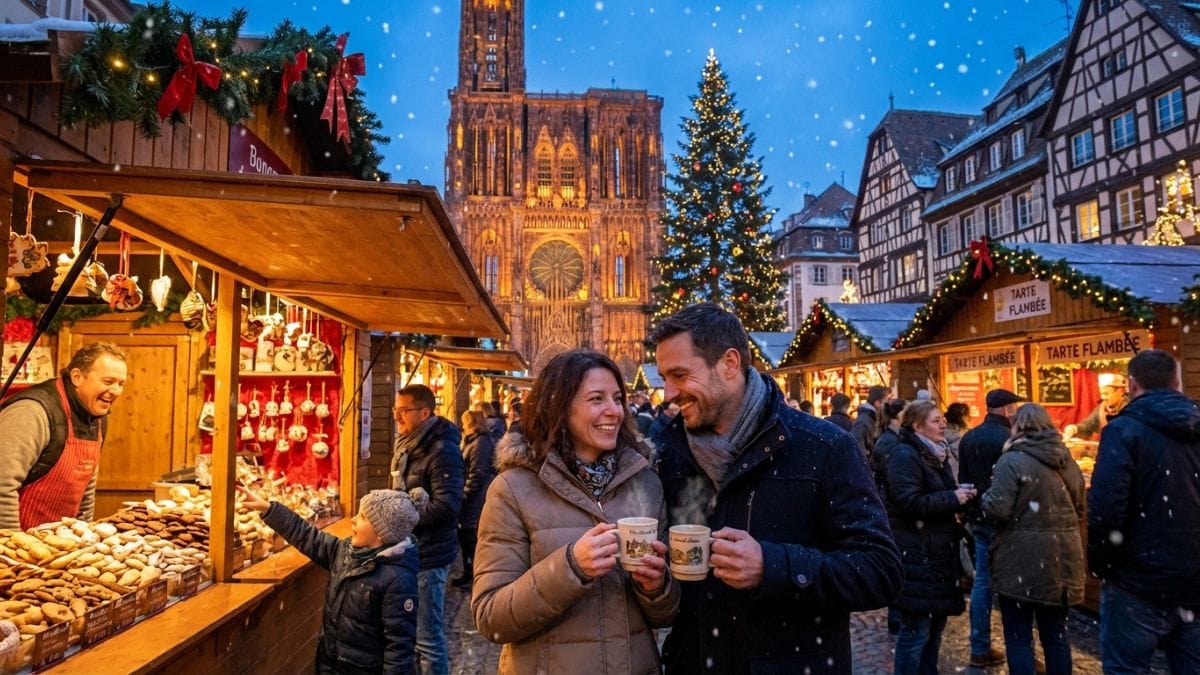
Strasbourg proudly bills itself as the “Capital of Christmas,” and in 2025 it’s easy to see why. This historic Alsatian city has been hosting Christmas markets since 1570, making it France’s oldest festive market tradition.
The entire storybook Old Town transforms into a winter wonderland of lights, music, and aromas from late November onward. Strasbourg’s 13 distinct markets opened with much fanfare on November 26, 2025 at 2 PM , and will fill the city with holiday cheer daily until Christmas Eve (Dec 24).
In the charming plazas around its Gothic cathedral and half-timbered houses, over 300 wooden chalets invite visitors to experience an authentic Alsatian Christmas.
At the heart of it all is the Christkindelsmärik at Place Broglie – France’s most famous Christmas market, continuously held for over 450 years. Strolling its narrow aisles, you’ll find traditional wooden toys, hand-carved nativity figures, blown glass ornaments, and myriad regional delicacies.
Place Kléber nearby is home to Strasbourg’s stunning centerpiece: a towering 30-metre Christmas tree, touted as the tallest decorated tree in Europe. Each evening, crowds gather as this “Grand Sapin” shimmers with thousands of lights and ornaments, a truly magical sight against the backdrop of historic facades.
Every street in the city centre is decked out – facades are draped in twinkling lights, giant wreaths and red ribbons adorn windows, and cheerful animated displays (like teddy bears, gingerbread men, and sleighs) hang above the cobbled lanes. The ambiance is undeniably romantic and festive, as choir music wafts through the air and the scent of spice hangs in the cold.
Strasbourg also adds unique cultural touches to its Christmas events. Each year, the city invites a guest region or country to showcase its specialties; in 2025 the guest of honor is Corrèze, a rural French region known for its crafts and cuisine. You can visit the guest country’s stalls (often in Place Gutenberg) to sample their products – an extra layer of discovery atop Alsace’s own offerings.
Community and charity are emphasized too: a “Sharing Village” market focuses on local charities, and a “Solidarity Christmas Tree” initiative encourages donations of gifts for children. These traditions of generosity reflect Alsatian values and make the experience feel warm and inclusive for all.
- 2025 Dates: Strasbourg’s markets run Nov 26 – Dec 24, 2025 (daily roughly 11am–8pm, later on weekends). Note that on Dec 24 most stalls close by 6pm for Christmas. After Christmas, a few smaller craft markets and food stalls remain open between Dec 26 and New Year, but the main event winds down for the season on Christmas Eve.
- Festive Highlights: Place Broglie’s Christkindelsmärik – the oldest market – is a must for its historical vibe and endless rows of chalets selling ornaments and bredele cookies. Cathedral Square hosts another gorgeous market under the rose window of Notre-Dame de Strasbourg, often featuring a life-size Nativity scene. At Place Kléber, be sure to admire the gigantic Christmas tree (and snap a photo in front of the illuminated “Strasbourg, Capitale de Noël” arch).
Smaller markets each have their own charm: La Petite France quarter glitters with lights reflecting in canals, and Place du Château offers an aroma-filled “Alsatian delights” market with local farm products, wines, and cheeses. An “Off” Christmas market in Place Grimmeissen even caters to eco-conscious and arty gifts, showcasing regional artisans in a more bohemian atmosphere.
- Local Specialties: Alsace is famous for its gastronomy, and the markets don’t disappoint. Don’t leave without trying vin chaud blanc – hot mulled white wine made from local Alsatian white wine (a twist on the usual red mulled wine). Nibble on bredele (buttery Christmas biscuits flavored with almond, cinnamon, or orange) which are ubiquitous – these golden butter cookies are the soul of Advent in Alsace and pair perfectly with a mug of mulled wine.
Other treats to seek out: Flammekueche (tarte flambée) sold as a quick bite, spicy pain d’épices (gingerbread loaf) often packaged for gifts, bretzels (soft pretzels) both sweet and savory, and hearty choucroute (Alsatian sauerkraut with sausages) to warm you up.
For something sweet, try mannele (little brioche men) or kouglof cake sold by local bakers at the market. And in the spirit of cross-cultural exchange, you might find regional goodies from Corrèze this year – perhaps walnut cakes or foie gras – at the guest region’s stands.
- Travel Tips: Strasbourg’s weather in December is cold and often damp. Average highs are around 5°C (41°F) and lows near freezing. Snow is possible but not guaranteed; more often you’ll get crisp air with occasional light rain, so a waterproof winter coat, hat, and gloves are essential.
The compact city center is easily walkable, and pedestrian-only zones during the market make for a lovely stroll (wear comfy boots for the cobblestones!). To reach Strasbourg, consider the train: it’s just ~1h45 from Paris by TGV and about 5 hours from London (via Eurostar & TGV). The city’s Gare Centrale station is a short walk or tram ride from the Old Town.
If driving, use park-and-ride lots on the outskirts as central parking is limited during this busy period. Weekday mornings are the quietest time to visit the markets , while evenings and weekends see large crowds (over 2 million visitors come each season ). Finally, don’t miss the nightly illumination – wandering Strasbourg’s streets after dark, under miles of lights and decorations, is when the Capitale de Noël truly earns its name.
Vienna
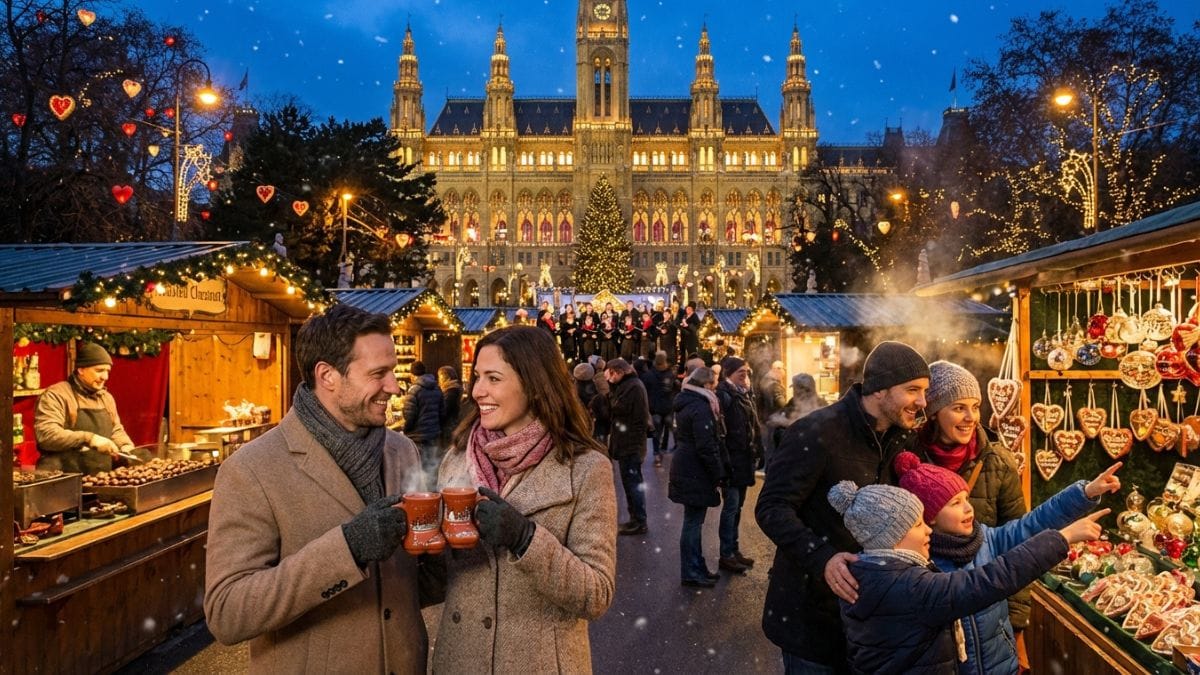
Vienna practically glows in the holiday season, blending imperial elegance with gemütlich (cozy) charm at its many Advent markets. The Austrian capital has a centuries-old Christmas market tradition – dating back to 1296, when Albrecht I granted the city rights to hold a December market – and today over 20 markets pop up around town.
2025’s festivities kicked off early: the first markets opened by November 6, 2025, and all major ones were running by mid-November. Vienna’s headline event, the Viennese Dream Christmas Market at Rathausplatz, opened on 14 November 2025 and runs until 26 December , anchoring a season of merriment that extends through New Year’s at a few locations.
The city’s holiday appeal has not gone unnoticed – Vienna was ranked the #1 trending Christmas market destination worldwide in 2025 , and tourism is booming with hotels and flights filling up fast.
Visiting Vienna’s main Christkindlmarkt is like stepping into a postcard. Set in the grand square before the Neo-Gothic City Hall, the market is lined with 144 wooden stalls offering high-quality gifts and treats. Above them, trees in the adjacent park twinkle with over a million lights, including heart-shaped lanterns and stars dangling from branches.
A massive Christmas tree donated from an Alpine region towers over the crowd, and at night the Rathaus’s facade is illuminated, often with projections or a warm festive glow. Unique to Vienna, the City Hall’s ground floor hosts a Children’s World where kids can decorate cookies, make candles, and enjoy craft workshops , while the whole family can glide along the illuminated ice-skating trail that winds through the park – a magical ice path framed by lights and music.
As you wander, you’ll hear international choirs singing carols on weekend evenings, a beloved tradition with free entry that adds to the international spirit. It’s this blend of storybook setting and interactive fun that gives Vienna’s markets their special allure.
Beyond the Rathausplatz, Vienna offers a constellation of markets each with its own vibe. The Christmas Village at Schönbrunn Palace is a highlight, set against the Schönbrunn’s golden-yellow façade (former Habsburg residence) – here you’ll find elegant handicrafts, blown glass ornaments, and a distinctly romantic atmosphere. Schönbrunn’s market even stays open until January 6 as a New Year’s market, extending the cheer into the first week of 2026.
The Belvedere Palace market (Nov 14 – Dec 31) is similarly gorgeous, spread in front of the baroque palace and reflecting in its ornamental pond. For a more local feel, the Spittelberg market threads through narrow Biedermeier lanes, selling artisan crafts and warming drinks in a neighborhood setting.
And art lovers shouldn’t miss the Art Advent on Karlsplatz, known for its creative crafts and live art installations (and even a petting zoo) beneath the illuminated Karlskirche – it’s a market with a funky, modern twist (open through Dec 23).
With each district offering something, Vienna truly caters to every taste, from the quaint Altwiener Markt at Freyung (traditional old Viennese market with an enormous crib display) to the contemporary Christmas lounges popping up on trendy shopping streets.
- 2025 Dates: Vienna’s major markets opened mid-November – for example, the iconic Rathausplatz Christkindlmarkt runs Nov 14 – Dec 26, 2025. Most other markets also began between Nov 8–21 and end on Dec 23 or 26. A few exceptional ones continue into the New Year: Schönbrunn Palace and the Wintermarkt at Riesenradplatz (Prater) both extend to Jan 6, 2026 for holiday week fun.
Plan accordingly if you’re visiting right after Christmas – you can still catch some markets. Christmas Eve (Dec 24) in Vienna typically has limited hours (closing by 2–4pm) , and markets are closed by dinnertime so vendors can celebrate.
- Festive Highlights: The Rathausplatz market is a must-see showstopper – enjoy the tree lighting and skating trail under Vienna’s towering City Hall , and pop inside the Rathaus to see kids baking cookies (a great family activity). At Schönbrunn, soak up imperial Christmas flair with classical music performances in the courtyard and maybe pick up some Viennese handicrafts or scented beeswax candles.
Don’t miss the giant Advent wreath and lantern display at Karlsplatz Art Advent, or the Life-Size Nativity and advent illuminations at Stephansplatz (under the shadow of St. Stephen’s Cathedral) which runs through Dec 26. Many markets also offer special events like Gospel choir concerts, brass ensembles, and even a New Year’s Eve trail on Dec 31 where stands sell punch and snacks late into the night. Tip: each district’s market might have a signature punch flavor – see how many you can try!
- Local Specialties: Glühwein and Punsch are essential in Vienna. Glühwein is the classic hot spiced red wine, while Weihnachtspunsch (Christmas punch) is often a fruitier concoction – look for variations like orange-punsch, cherry, or even eggnog punch, often topped with whipped cream. The aroma of roasting chestnuts and almonds fills the air at every turn.
Try a Käsekrainer (cheese-filled sausage) or Bratwurst from a grill stand, followed by sweet treats like Apfelstrudel or Sachertorte sold in miniature form. Traditional Viennese baked goods are a highlight: Vanillekipferl (vanilla crescent cookies) are a local Christmas cookie you’ll often find – in fact, at the Schönbrunn market the smell of fresh Vanillekipferl wafts delightfully among the stalls.
Also seek out Lebkuchen hearts, Linzer torte, and gingerbread. Many stands sell punch in souvenir mugs shaped like boots or decorated with Vienna motifs; you pay a deposit and can keep the mug – a perfect keepsake. And for a savory bite, don’t miss raclette-brot (bread topped with melted cheese), potato pancakes (Kartoffelpuffer), and Lángos (fried dough with garlicky toppings) which have become staples at Viennese markets.
- Travel Tips: Vienna is easy to navigate and welcoming in winter. The weather is cold – average highs around 2–4°C (mid-30s°F) and nights often below freezing – so pack that coat, gloves, and maybe thermal layers. Snow is not uncommon; a light dusting on Vienna’s palaces makes the scene even more magical (but also watch for occasional icy sidewalks).
The city’s public U-Bahn and trams can get you within a short walk of almost every market – for example, take the U2 or U3 line to reach Rathausplatz, or trams 1 and 2 which loop the Ringstrasse for many central spots. If you plan to visit multiple markets in one day, group those that are close by (e.g. combine Freyung, Am Hof, and Stephansplatz on a walking circuit in the old city; or do Schönbrunn and Spittelberg in one go using the U3/U6).
Vienna’s popularity means weekends, especially the long weekends around early December, get very crowded – visiting on a weekday or early in the day (markets usually open by 10–11am) can make for a more relaxed experience.
Lastly, consider pairing your market stroll with some indoor Vienna delights: a classical Advent concert in a palace, warming up in a coffee house with a Wiener Melange, or an evening at the Prater giant ferris wheel (which has its own winter market) to see the city lights from above.
Prague
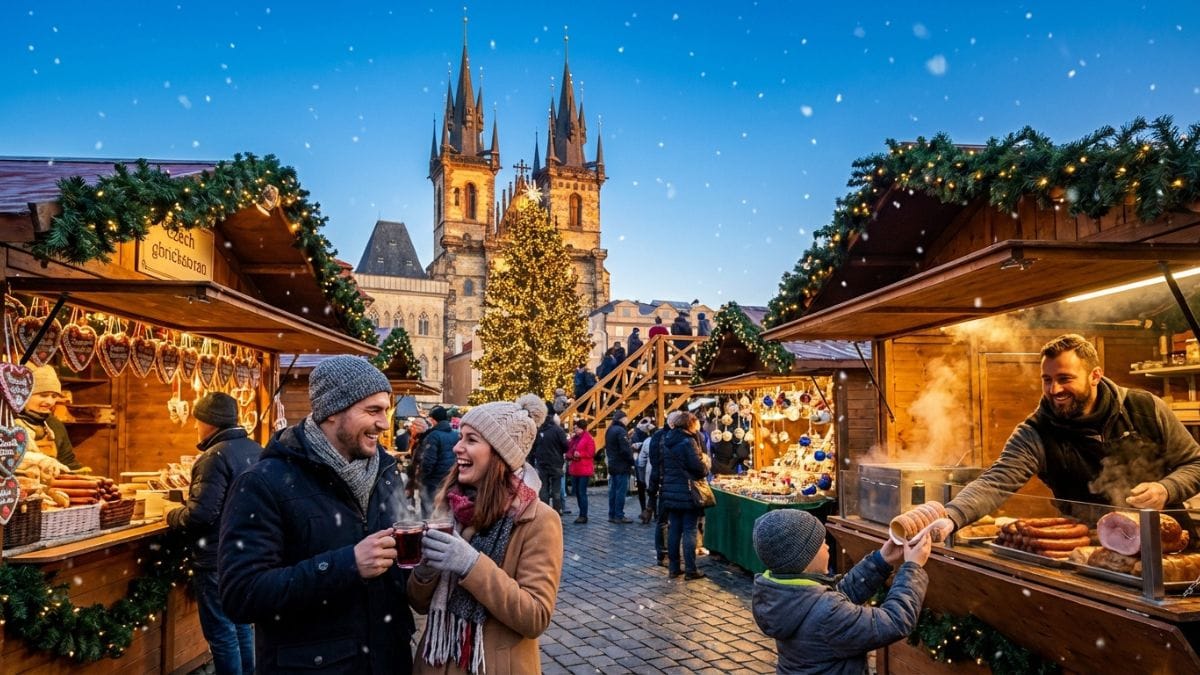
In Prague, the holiday spirit takes over the entire city center, turning the Czech capital into a scene from a Christmas card. The medieval squares of Prague Old Town and Wenceslas Square host the most celebrated markets in Central Europe – routinely ranked among the world’s most beautiful Christmas markets for their stunning setting and charm.
2025 is no exception: Prague’s main markets opened with a festive flourish on November 29, 2025 and will run through January 6, 2026, spanning the Advent period and even the Orthodox Christmas and New Year. This year Prague is especially in the spotlight, named among Europe’s top Christmas destinations and seeing a notable uptick in international visitors drawn by its storybook atmosphere.
At the center of it all is the Old Town Square (Staroměstské náměstí) Market, set against Prague’s ancient Týn Church spires and colorful baroque buildings. Here you’ll find one of Europe’s grandest Christmas trees, a 22-meter spruce that was ceremonially lit on the first Advent weekend (Nov 29) to oohs and aahs from a huge crowd.
The tree is decked with hundreds of glittering ornaments and nearly 9 kilometers of lights programmed in a show that creates a “falling snow” illusion. Every evening from 4:30pm to 9:30pm, on the half-hour, the tree comes alive in a musical light show – this year choreographed to a Czech Christmas song by pop singer Ewa Farna.
The spectacle of the hourly tree lighting, set to music and surrounded by the joyous buzz of the crowd, is truly the magic moment of Prague’s holiday season. All around the square, dozens of festooned huts sell traditional Czech crafts (wooden toys, Bohemian crystal, garnet jewelry, straw ornaments) and seasonal foods that blend comfort and indulgence.
Just a few blocks away, Wenceslas Square hosts another large market (opening the same dates as Old Town’s). This long boulevard – Prague’s historic shopping street – fills its lower half with market stalls and an extra illuminated tree.
Wenceslas Square’s market has a bit more space to breathe and often features an entertainment stage with daily live performances: expect everything from children’s choirs singing Czech carols to folk dance troupes and even visits from St. Nicholas in early December.
Smaller neighborhood markets add to the fun across the city: for instance, Náměstí Míru (Miru Square) opens even earlier, on Nov 20, and is beloved by locals for its cozy atmosphere in front of a neo-gothic church.
There’s also Republic Square (Náměstí Republiky) near the Powder Tower, Jiřího z Poděbrad in a residential quarter (known for good food stands), and Prague Castle’s courtyard market for a regal backdrop. But the Old Town Square remains the star attraction, marrying Prague’s fairytale architecture with holiday merriment.
- 2025 Dates: Prague’s main Christmas markets run Nov 29, 2025 – Jan 6, 2026, encompassing Christmas and New Year. Old Town and Wenceslas Square markets are open daily from 10:00 to 22:00 (with food stalls often open later, even until midnight on busy days).
Note some special hours: on Dec 24 (Christmas Eve) markets typically close early (around 2pm) , and on Dec 25–26 they open later in the day (noon) to allow vendors holiday mornings. The first Advent market actually launched as early as Nov 20 at Náměstí Míru , leading the way for the others. If you stay beyond New Year’s, Prague even has a charming Three Kings procession on January 6 to close out the season.
- Festive Highlights: The Old Town Square Tree Lighting Ceremony is a highlight — if you were lucky enough to be there on Nov 29, you witnessed thousands filling the square as the giant tree lit up at 4:30pm accompanied by a children’s choir. Even after opening day, make a point to watch the tree’s nightly light show (every hour, on the hour) , which never fails to inspire awe.
Take a spin around the square to see the life-size Nativity scene with live animals (a petting zoo with sheep and donkeys is often present for kids), and climb up the small bridge in the center of the market — it offers a nice elevated view of the stalls and tree, perfect for photos.
At Wenceslas Square, enjoy the slightly more modern vibe; in late December, that market sometimes features an ice sculpture or an “ice bar.” Also, check out the decorations spanning the city: the Charles Bridge is draped in soft lighting, and the streets of Old Town are strung with elegant lights, especially the Paris Street shopping avenue which looks like a scene from a luxury holiday movie.
Prague also has daily Advent concerts in many churches (great for ducking in from the cold) – you’ll find everything from Baroque music by orchestra to traditional Czech Christmas songs in chapel settings.
- Local Specialties: Czech Christmas cuisine is hearty and delicious. At the markets, you’ll encounter the irresistible smell of svařák – Czech mulled wine similar to Glühwein – simmering with cinnamon and citrus. For something stronger, try horká medovina (hot mead made from honey wine) which packs a sweet punch.
On the savory side, Prague’s markets offer grilled sausages (klobása) galore, usually served with mustard on a paper plate; seek out the Hungarian sausage stand for an extra spicy one. You can sample trdelník, the famous spit-roasted pastry rolled in sugar and walnut – it’s not originally Czech (more a regional treat) but has become a symbol of Prague’s street food, often marketed as “chimney cake”.
Locals might line up for bramboráky (crispy potato pancakes) or halušky (stir-fried potato dumplings with cabbage and bacon) from big sizzling pans. As Christmas nears, you’ll also see the components of the Czech traditional Christmas Eve dinner on offer: fried carp fillet and potato salad !
Indeed, some stalls specifically serve golden fried carp in a bun – surprisingly tasty, if you’re game to try this Czech holiday staple. Save room for sweets: perníčky (iced gingerbread cookies) shaped like hearts or stars make great snacks or souvenirs, and Trubičky (rolled wafer sticks filled with cream) are a delight mentioned among Old Town market’s treats.
Also look for Oštiepok (grilled Slovak cheese) topped with cranberry sauce, roasted chestnuts sold in a cone, and warm apple cider to drink if you want a break from wine. Prague’s Christmas markets truly offer a feast for all the senses and a chance to try both Czech classics and fun international bites (you might even spot a churro or crêpe stand for variety).
- Travel Tips: Prague’s weather in December is cold – often around 0°C to 2°C during the day, and dipping below freezing at night. Snow is possible (Prague under a light snowfall is pure magic), though statistically there are just a few snowy days each December. Dress warmly, and note that cobblestones + ice can be tricky, so wear good shoes.
The city center is fairly compact; you can walk between Old Town and Wenceslas Square in 5–10 minutes. Public transport (metro and trams) is efficient for reaching outer markets or your hotel – for instance, take Metro A to Náměstí Míru, or tram 5/17 to Prague Castle.
If you’re staying in Old Town, be mindful that the area gets extremely crowded in evenings; plan to explore some less busy spots in the afternoons or early morning (when you can enjoy the tree nearly all to yourself at sunrise). Currency: The markets mostly use Czech Koruna – some vendors may accept euros, but it’s handy to have korunas for food and souvenirs (and better exchange rates in town than at the airport).
Safety-wise, Prague is generally safe but watch for pickpockets in the dense crowds, as you would in any popular tourist spot. Lastly, immerse yourself in Czech holiday traditions: you might catch a St. Nicholas Day event on Dec 5 with costumed devils and angels in the squares, or taste a vánočka (Christmas bread) from a bakery. With its blend of fairytale scenery and festive warmth, Prague in 2025 is capturing hearts as an ideal winter escape.
FAQ
Q1. When do the main Christmas markets open in Berlin in 2025?
Most major Berlin markets opened around 24 November 2025. Some early events began in October or early November, and a few remain open through New Year.
Q2. How long do Strasbourg’s Christmas markets run in 2025?
Strasbourg’s main markets run from 26 November to 24 December 2025. A few smaller stalls and food stands continue between Christmas and New Year.
Q3. What are the must-see markets in Vienna?
Rathausplatz Christkindlmarkt, Schönbrunn Palace, Belvedere Palace, Spittelberg, and Karlsplatz Art Advent are among Vienna’s most atmospheric markets.
Q4. How late into January do Prague’s Christmas markets last?
Prague’s main markets at Old Town Square and Wenceslas Square run from 29 November 2025 to 6 January 2026, spanning Christmas and New Year.
Q5. Which city is best for a traditional old town Christmas market feel?
Strasbourg and Prague are especially renowned for their storybook historic centers, Gothic and half-timbered architecture, and classic Advent atmosphere.
Q6. What local foods should I try at these markets?
Berlin: Glühwein, bratwurst, Lebkuchen, candied almonds
Strasbourg: vin chaud blanc, bredele cookies, flammekueche, kouglof
Vienna: Glühwein, Punsch, Vanillekipferl, Apfelstrudel
Prague: svařák, trdelník, klobása, bramboráky, fried carp
Q7. Are these Christmas markets family-friendly?
Yes. All four cities offer kid-friendly features such as carousels, skating rinks, children’s craft zones, petting zoos, Nativity scenes, and family concerts.
Q8. How cold is it in these cities in December?
Temperatures often range from about 0 to 5 degrees Celsius (32 to 41 degrees Fahrenheit), with nights frequently below freezing. Warm coats, hats, gloves, and good shoes are essential.
Q9. Is it better to visit on weekdays or weekends?
Weekdays and earlier hours are quieter. Evenings and weekends are more crowded but offer the fullest ambiance and the best light displays.
Q10. What is the best way to get around between markets in each city?
Walk within the historic centers, and use local trams, metros, or U-Bahn networks for longer distances. Examples include Berlin’s U and S-Bahn, Vienna’s U-Bahn, Strasbourg’s tram, and Prague’s metro and trams.