

More news on this day
From France’s revitalized cultural calendar to Slovenia’s green tourism boom, a group of European destinations is reshaping how travelers experience the continent’s history, cities and wild landscapes.
Get the latest news straight to your inbox!
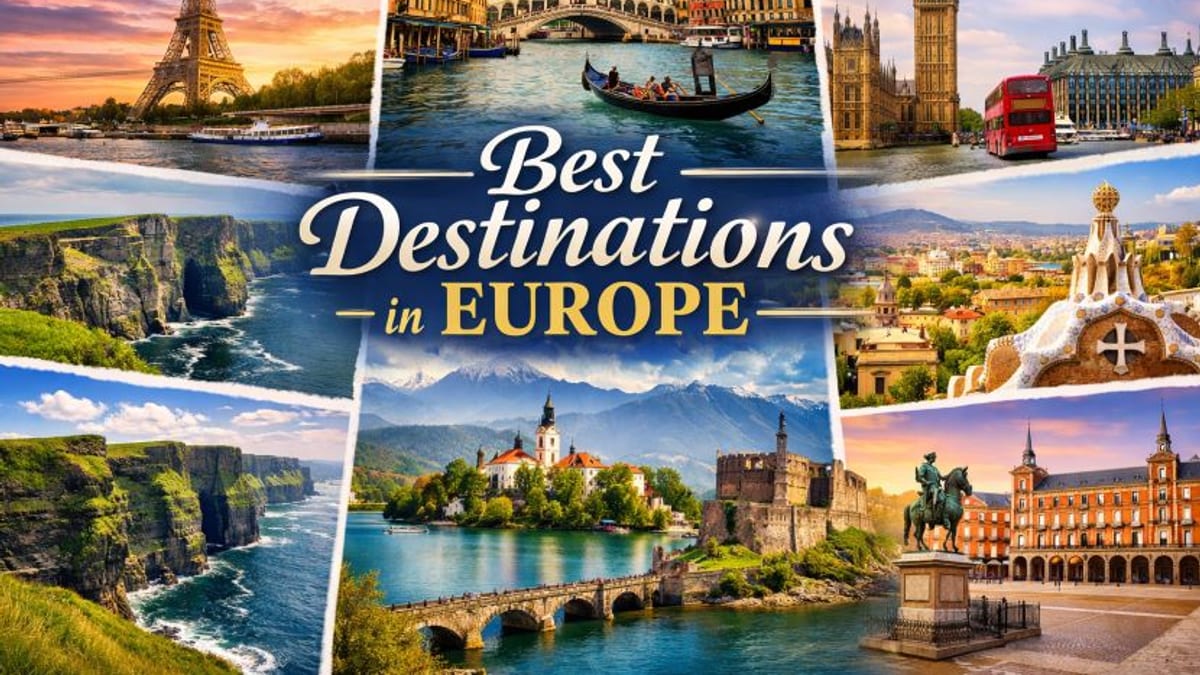
Image by Travel and Tour World – Tourism, Airline, Destination, MICE, Gobal Travel Market, Hotel news that you will find only over here.
France Puts Culture, Heritage and Wine Regions in the Spotlight
France is entering 2026 with a dense calendar of cultural openings, anniversaries and regional experiences that are drawing travelers beyond the traditional Paris circuit. National tourism promotion for this year highlights new venues, major exhibitions and heritage-focused events, positioning the country as a hub for art, architecture and gastronomy-led itineraries. Publicly available information points to upcoming projects in Paris alongside a renewed emphasis on regional festivals and cultural routes across the country.
Recent coverage of France’s cultural scene notes that 2025 and 2026 are strong years for new or redesigned spaces, with contemporary art venues and reimagined museums opening in major cities. In parallel, wine regions from Champagne to Bordeaux are leaning more heavily on wine tourism, using tastings, festivals and vineyard trails to offset pressure on traditional exports and encourage longer, more immersive stays in rural France.
Reports also indicate that regions such as Champagne are capitalizing on their World Heritage status and maturing tourism infrastructure, with dedicated visitor pavilions, curated cellar tours and art events that encourage travelers to spend time in smaller towns. Urban initiatives, including innovative transport projects around Paris and seasonal cultural programming in cities like Nantes, are guiding visitors toward underexplored neighborhoods and riverfront districts.
At the same time, major attractions are adapting to high visitor demand with new pricing structures and capacity management. Media coverage has highlighted ticket adjustments at headline museums, encouraging travelers to reserve in advance, explore off-peak hours or pair big-name galleries with lesser-known institutions in nearby districts.
Italy, Spain and Slovenia Embrace Slower and More Sustainable Travel
Across southern Europe, Italy, Spain and Slovenia are leaning into slower, more sustainable styles of travel that match broader global trends toward depth over quantity. Industry analyses for 2026 point to continued interest in rail journeys, agritourism, hiking and cycling routes that connect villages and regional parks instead of only the best-known city centers.
Spain has been at the center of a debate over overtourism, with widely reported demonstrations in popular coastal and urban destinations since 2024. These protests have accelerated discussion about visitor caps, zoning changes and diversification toward inland cultural and nature-based tourism. Travelers heading to Spain in 2026 are increasingly encouraged by public information campaigns to discover lesser-known provinces, local food traditions and smaller heritage towns rather than concentrating solely on a few crowded hotspots.
Slovenia has emerged as one of Europe’s clearest examples of a sustainability-led tourism strategy. National tourism data for 2025 shows travel exports rising alongside a strong focus on quality, environmental standards and the expansion of its national Green Scheme label. Several Slovenian destinations now feature on global rankings of sustainable places to visit, while the city of Maribor has been recognized as a leading green capital, reinforcing the country’s profile as a model for low-impact travel.
Italy continues to balance its timeless appeal with new experiments in rural revitalization and heritage preservation. Many regions promote lesser-known hill towns, wine roads and refurbished historical estates that encourage visitors to stay longer in one area. Reports indicate that rail connections, regional food festivals and small-scale cultural events are central to drawing travelers away from the heaviest flows around Venice, Florence and Rome.
England, Scotland and Ireland Highlight Heritage and Nature
In the British and Irish Isles, tourism boards and regional initiatives are underscoring heritage routes, coastlines and landscapes that offer a contrast to busy capitals. England continues to market historic cities such as York, Bath and Oxford alongside new museum projects and waterfront redevelopments in ports and former industrial centers, encouraging travelers to combine London with rail-based side trips.
Scotland is benefiting from renewed global interest in ancestry tourism and outdoor adventure. Travel trend reporting for 2026 cites Scotland as a destination for clan gatherings, genealogy research and multi-day hiking routes across its national parks and islands. Visitors increasingly pair time in Edinburgh and Glasgow with road trips along the North Coast 500, boat excursions to the Hebrides or wildlife watching in the Highlands.
Ireland, meanwhile, is advancing its well-established coastal touring routes and cultural trails. The Wild Atlantic Way, Ancient East and other branded corridors continue to feature heavily in promotional material, but recent coverage points to more emphasis on local crafts, food producers and community-led festivals in smaller coastal towns. Rural guesthouses, traditional music venues and dark-sky areas are being promoted as reasons to linger in the countryside rather than using Dublin as a brief city break.
Across England, Scotland and Ireland, national parks, coastal paths and restored heritage railways are playing a growing role in itineraries. These experiences allow visitors to connect iconic historical sites with less crowded landscapes, while also answering increasing demand for low-impact activities such as hiking, cycling and nature photography.
History-Rich Cities, Regional Capitals and Emerging Cultural Hubs
Europe’s classic capitals remain central to most itineraries, but regional cities are increasingly shaping travel patterns. In France, cultural programming in cities like Nantes and Lyon showcases how former industrial districts can be transformed into arts corridors and riverside promenades. In Italy, secondary cities such as Bologna, Turin and Lecce are drawing attention for their food culture and architecture, offering a quieter alternative to Italy’s most visited destinations.
Spain’s regional capitals, including Valencia, Bilbao and Malaga, are benefiting from new museums, upgraded waterfronts and improved transport links. Coverage of European city rankings frequently highlights these hubs for their balance of historic centers and contemporary design, making them attractive bases for travelers interested in combining day trips with longer stays.
In the United Kingdom, cities like Manchester, Liverpool and Glasgow continue to invest in music, design and cultural districts, widening the map for visitors who previously focused primarily on London and Edinburgh. Ireland’s Cork, Galway and Limerick are similarly positioning themselves as gateways to surrounding peninsulas, islands and rural trails, blending urban culture with quick access to the outdoors.
Across Central Europe, Ljubljana and Maribor in Slovenia exemplify how compact cities can become platforms for green travel. Well-developed cycling infrastructure, pedestrian cores and access to nearby mountains and lakes make these cities appealing to visitors seeking car-free itineraries that connect culture and nature in a single trip.
Practical Trends Shaping European Trips in 2026
As demand for Europe remains high, several cross-cutting trends are shaping how travelers approach France, Italy, England, Spain, Ireland, Slovenia and Scotland. Industry reports indicate a clear shift toward traveling outside peak summer months, with spring and autumn now heavily promoted for city breaks, food and wine tourism, and walking holidays.
There is also a growing preference for multi-country itineraries linked by rail, reflecting both climate concerns and the convenience of Europe’s expanding high-speed and regional networks. Travelers are increasingly encouraged to pair large gateways such as Paris, London or Milan with smaller hubs in neighboring countries, making it feasible to experience France and Spain in one trip, or to link Italy and Slovenia via cross-border routes.
On the ground, cities and regions are experimenting with digital tools to manage visitor flows, from timed-entry systems at major attractions to promoted “alternative circuits” that guide visitors toward quieter neighborhoods and rural communities. Public information campaigns in several countries frame these measures as part of a broader move toward more resilient, community-friendly tourism.
Together, these developments suggest that Europe’s most storied destinations are not resting on their reputations. By combining deep historical and cultural assets with sustainable planning and diversified routes, France, Italy, England, Spain, Ireland, Slovenia and Scotland are offering travelers more meaningful, flexible and responsible ways to experience the continent.